
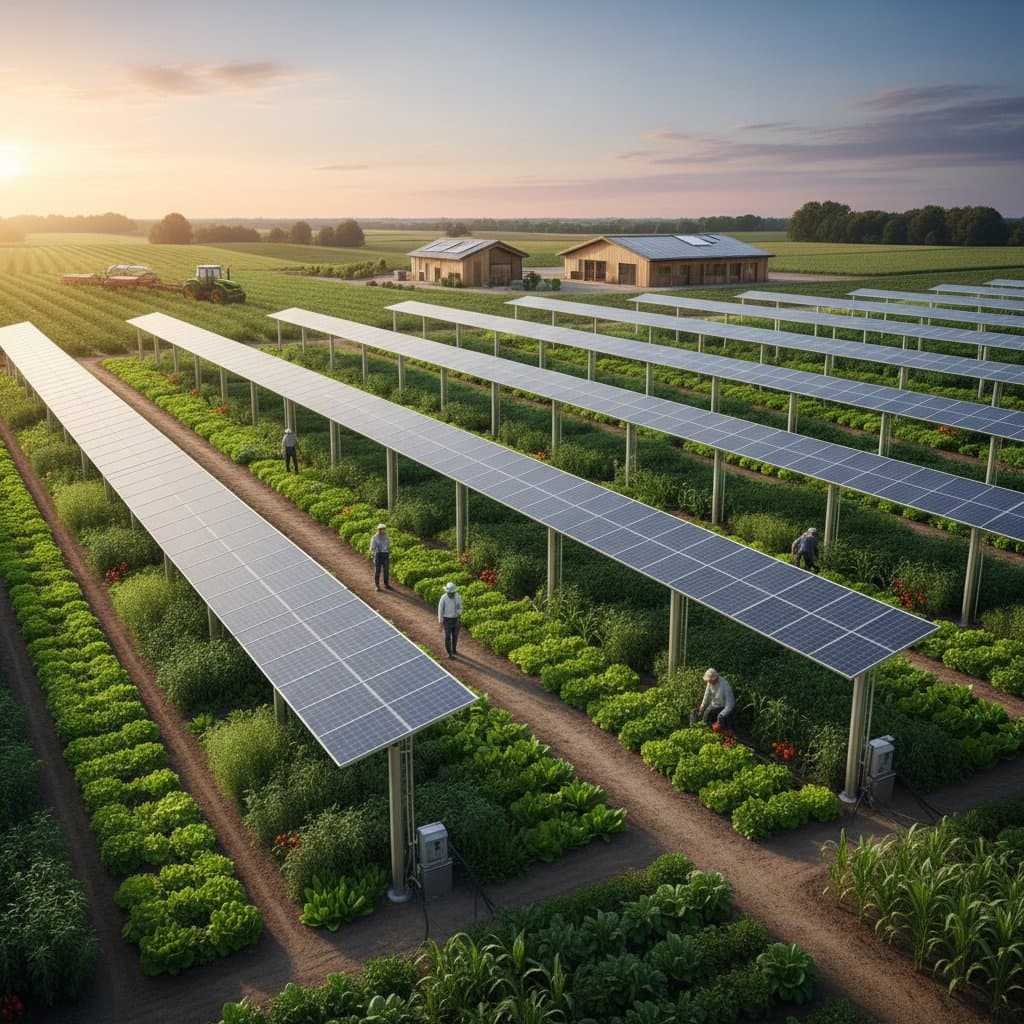
Agrivoltaics Emerges: Crops Flourish Beneath Solar Panels in 2026
Solar installations increasingly incorporate agricultural activity, with vegetables and other crops growing directly under panels. Known as agrivoltaics, this integration merges renewable energy production with farming on shared land. Such systems alleviate pressure on arable acreage, enhance economic stability in rural areas, and promote reliable clean power. For individuals and communities considering solar options, agrivoltaics demonstrates the harmony between energy independence and food production.
Core Principles of Agrivoltaics
Conventional solar arrays frequently claim territory suitable for cultivation or livestock. Agrivoltaic designs address this by elevating panels to permit plant growth or animal grazing below. Sunlight captured by the panels generates electricity, while diffused light reaches the ground for photosynthesis. This setup optimizes land productivity and sustains agricultural traditions.
Studies from agricultural universities and energy research centers reveal that panels form protective microclimates. These environments shield crops from excessive heat and evaporation. Shade-tolerant varieties like lettuce, spinach, and berries yield abundantly in these conditions, particularly in sun-intense, water-scarce regions.
Electrical Safety in Agrivoltaic Environments
Deploying electrical infrastructure amid active farmland requires rigorous safety protocols. Licensed electricians alone manage wiring, grounding, and inverter installations. Landowners may perform basic visual assessments but avoid accessing electrical enclosures or disconnecting components.
Primary risks include:
- Accidental contact with live conductors, heightened during watering operations.
- Compromised wiring or conduits from machinery impacts.
- Elevated conductivity in moist soil leading to shock hazards.
Recommended landowner inspections encompass:
- Checking for unsecured cables, fractured protective tubing, or unstable supports.
- Confirming seals on outlet covers and disconnect switches.
- Employing a non-contact voltage detector prior to handling any covered areas.
Upon detecting unusual sounds, warmth, or dampness around electrical elements, halt activities immediately and summon a qualified electrician. Compliant setups demand certified connectors, sealed enclosures resistant to weather, and grounding aligned with requirements from the local authority having jurisdiction.
Panel Benefits for Crop Health
Elevated solar arrays function as semi-transparent shelters. They filter intense sunlight and preserve soil humidity underneath. This coverage aids plant endurance in arid conditions. During winter, panels mitigate frost exposure, fostering consistent growth.
Agricultural data indicates that under-panel cultivation cuts water usage by as much as 40 percent. Cooler soil temperatures curb evaporation, encouraging robust root systems. Field experiments in diverse regions confirm these advantages across varying weather patterns.
Grazing animals, such as sheep, also prosper in these setups. They remain at lower temperatures and naturally manage undergrowth, minimizing the need for mechanical trimming. This synergy yields continuous land utilization throughout the year.
Economic Advantages and Community Impacts
Dual-purpose solar sites provide rural areas with diversified income sources. Property owners secure consistent payments from energy providers alongside ongoing crop revenues. Nearby markets benefit from reliable fresh harvests, while the electrical grid incorporates more renewables. These projects fortify agricultural operations against volatile market fluctuations.
In proximity to urban centers like Philadelphia, agrivoltaics supports broader sustainability initiatives for energy and nutrition. Planning commissions typically approve such ventures when they involve collaborations with local farmers. The model lessens ecological footprints and garners stronger community endorsement for solar development.
Essential Design and Upkeep Strategies
Developing an agrivoltaic installation demands input from electrical specialists, structural engineers, and agricultural experts. Priorities focus on integrating safety, light access, and operational feasibility for farming equipment.
Critical design elements consist of:
- Sufficient panel elevation to accommodate vehicle passage and worker movement.
- Orientation aligned east-west to promote uniform shading.
- Safeguarded wiring via elevated conduits or underground pathways to evade collisions.
- Integrated drainage systems preventing water accumulation near power sources.
Ongoing care includes surface cleaning of panels, control of surrounding foliage, and periodic electrical evaluations. Avoid directing water streams toward active components. Professionals test ground integrity and examine joints for degradation. Applying calibrated torque to fasteners maintains secure connections and averts thermal issues.
Adherence to Technical Specifications
All components must carry approvals for exterior agricultural applications. Essential features encompass ground-fault interruption devices, surge suppression, and disconnect mechanisms. The National Electrical Code outlines requirements for swift system deactivation and clear circuit identification. Local authorities may mandate extra approvals or geotechnical assessments prior to building.
Grid-tied configurations adhere to utility guidelines, incorporating safeguards against unintended energization and validated power converters. Certified experts handle final connections and validations.
Lessons for Residential Solar Enthusiasts
Large-scale agrivoltaics may exceed typical home lots, yet core ideas scale down effectively. Elevated residential arrays can cover garden plots, safeguard delicate flora, and prolong harvest periods.
Those curious about the practice should tour shared solar initiatives with farming elements. Witnessing the interplay among electricians, growers, and designers imparts insights into balanced, secure implementations.
Implementing Agrivoltaics Securely
To pursue integrated solar-agricultural projects:
- Engage a certified electrician for initial property assessment.
- Confirm compliance with zoning regulations and farming allowances.
- Develop strategies for irrigation and electrical safeguards.
- Collaborate with agricultural consultants on crop selection and layout.
Agrivoltaics redefines solar landscapes as vibrant agricultural hubs. Through meticulous engineering, robust protections, and interdisciplinary teamwork, renewable energy and nourishment emerge from unified terrain, delivering enduring benefits for land, economy, and environment.