
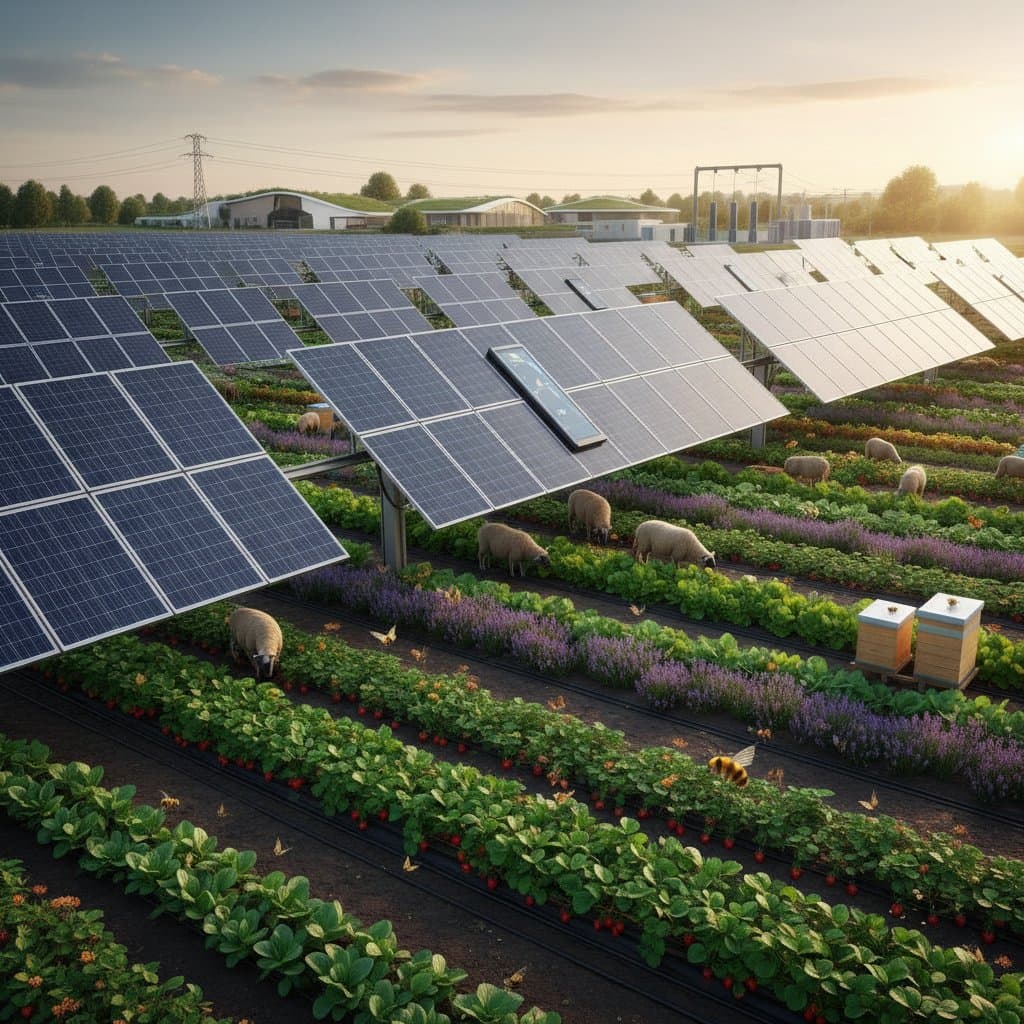
Agrivoltaics: Integrating Solar Power with Agriculture
Solar energy adoption presents challenges for landowners who balance clean power generation with agricultural productivity. Homeowners and farmers often hesitate to commit due to concerns over lost farmland or diminished yields. Agrivoltaics, known also as dual-use solar, addresses these issues by merging solar installations with ongoing farming activities. Elevated panels coexist with crops, pollinator habitats, or grazing livestock, creating landscapes that produce both renewable energy and food.
Mechanisms of Dual-Use Solar Systems
Dual-use solar farms feature panels mounted several feet above the ground, permitting sunlight penetration to the soil below. This elevation accommodates farm machinery and livestock movement while optimizing light exposure. Panels align in rows with increased spacing compared to conventional utility-scale arrays, promoting balanced shading, ventilation, and access.
Sunlight interacts with panel surfaces to generate electricity through photovoltaic processes, where photons excite electrons in silicon cells to produce direct current. Inverters then transform this into alternating current suitable for grid integration. Simultaneously, diffused light beneath the panels aids plant growth; shade-tolerant varieties such as lettuce, spinach, and peppers benefit from moderated temperatures and enhanced soil moisture retention, which mitigates drought stress.
Alignment with Current Agricultural and Energy Needs
Farmers encounter pressures from volatile weather patterns, escalating input expenses, and fluctuating commodity prices, which compress profit margins. Solar developers struggle to secure suitable sites proximate to transmission lines without encroaching on arable land. Agrivoltaics bridges these gaps, enabling farmers to lease portions of their property for panels while preserving crop cultivation or animal husbandry. Lease agreements provide reliable revenue streams, and properties retain agricultural designations under zoning regulations.
From an energy standpoint, this integration expands renewable capacity without sacrificing farmland. For instance, a 100-acre agrivoltaic site could support 20 to 25 megawatts of solar generation alongside viable crop production or pollinator support. Such configurations enhance land resilience, yielding compounded benefits over decades.
Economic Analysis and Projections
Evaluating viability requires concrete figures. A five-megawatt dual-use installation typically yields approximately 1,300 kilowatt-hours per kilowatt annually, translating to 6.5 million kilowatt-hours per year. Valued at an average retail rate of 13 cents per kilowatt-hour, this output equates to roughly 845,000 dollars in annual electricity revenue.
Land leasing at 1,000 dollars per acre for a 30-acre array generates 30,000 dollars yearly. The balance of the property continues to produce crops, potentially valued at several hundred dollars per acre based on selections and regional factors. Across a 20-year lifespan, cumulative energy sales and lease proceeds surpass 17 million dollars, underscoring the model's financial robustness.
Ecological Advantages and Societal Contributions
Partial shading from panels cools the soil and preserves moisture, cutting irrigation demands by up to 20 percent for certain crops, according to research findings. Structures also protect vegetation from intense sunlight or torrential downpours. In turn, underlying plants reduce ground-level heat, marginally boosting panel performance through natural cooling.
Incorporating pollinator-friendly zones between rows draws bees and butterflies, elevating pollination services for adjacent fields and orchards. Grazing sheep manage undergrowth efficiently, eliminating the need for mechanical trimming and minimizing equipment wear. These elements transform solar sites into biodiverse ecosystems that bolster rural livelihoods.
Local communities benefit from decentralized power production, which reduces reliance on fossil fuels and injects clean electricity into the grid. This diversification helps moderate electricity prices long-term. Opportunities arise in construction phases, ongoing maintenance, and integrated farming tasks, fostering employment in agrarian regions.
Investment Costs and Return Timelines
Initial expenses for agrivoltaic setups exceed those of traditional ground-mount systems by 10 to 15 percent, owing to reinforced supports, extended framing, and adaptive components. Nevertheless, returns justify the premium; projects recoup costs within seven to ten years, influenced by available subsidies, terrain specifics, and electricity tariffs.
Government initiatives, including federal tax credits and state grants, substantially lower upfront burdens. Certain utilities provide premiums for agriculturally compatible renewables. Layered with consistent leasing and harvest revenues, these factors render agrivoltaics attractive for developers and property owners alike.
Implementation Strategies and Ongoing Care
Prospective participants start with comprehensive site assessments, examining soil composition, hydrology, and microclimate influences. Solar specialists simulate production forecasts, while agricultural experts recommend crop varieties and layouts to safeguard outputs. Collaborative planning ensures harmony between energy capture and farming efficiency.
Sustained operations demand vigilant upkeep: regular panel cleaning, electrical inspections, and vegetation control via grazing or pruning. Digital monitoring dashboards oversee performance metrics and flag anomalies promptly. With diligent management, these systems deliver reliable service for 25 years or longer, followed by module recycling and potential upgrades to advanced technologies.
Sustaining Dual-Use Success
Agrivoltaics exemplifies innovative land stewardship, harmonizing energy independence with food security. Farmers and developers who adopt this approach secure diversified income while advancing environmental goals. As adoption grows through 2026, these projects promise enduring value for participants and surrounding ecosystems.
FAQ
Which crops perform optimally beneath solar panels?
Shade-adapted options like leafy greens, berries, and root crops generally excel. Selections vary by regional climate, soil type, and sunlight patterns.
Does panel installation diminish overall food output?
Yields may adjust modestly for some species, yet supplemental lease earnings and reduced water use more than compensate.
Is grazing feasible under solar arrays?
Affirmative; sheep prove ideal, navigating low clearances to control weeds without harming infrastructure.
What elevation do dual-use panels typically achieve?
Designs position arrays four to six feet off the ground, facilitating equipment passage and air circulation.
How are damaged panels addressed?
Units feature robust construction against environmental stresses. Replacements occur seamlessly, minimizing disruption to agricultural activities.