
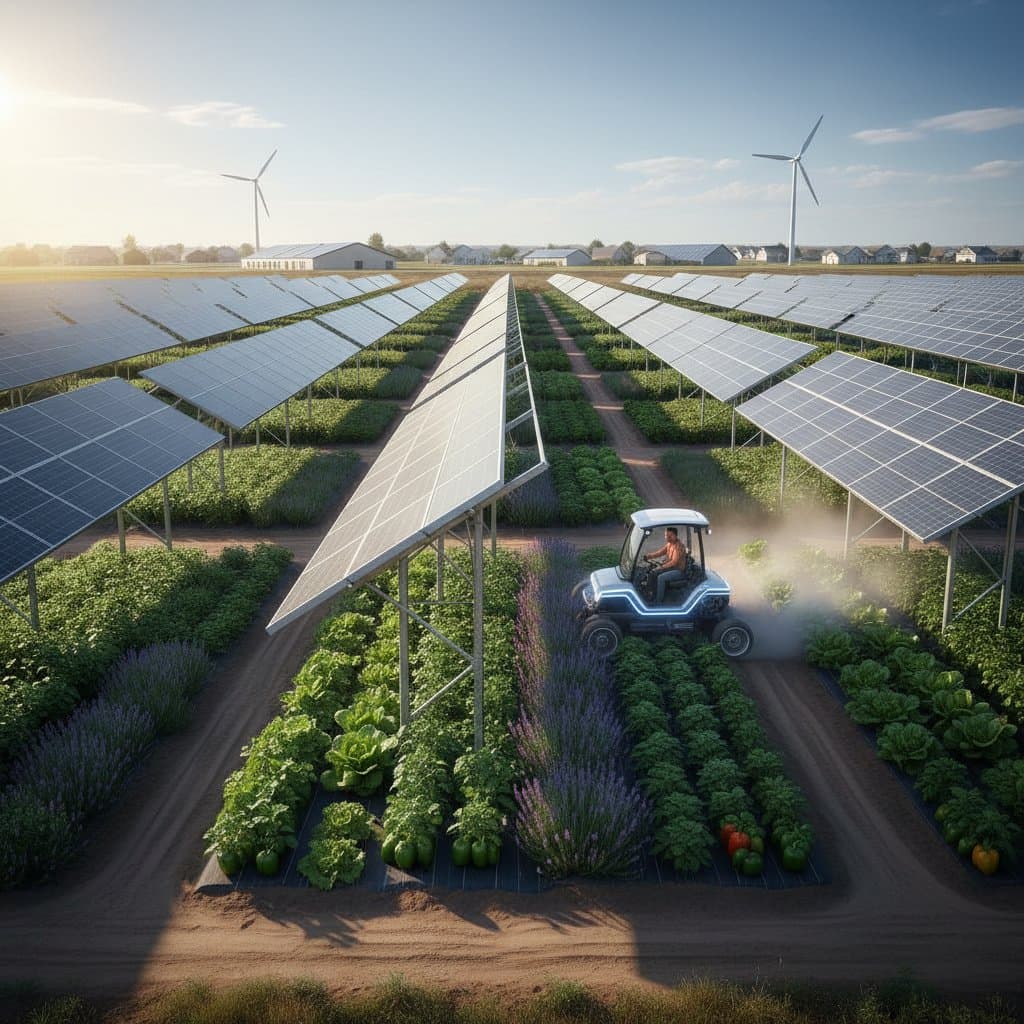
The 2026 Agrivoltaics Surge: Solar Energy Supports Crop Production
Farmers and landowners increasingly seek ways to maximize land productivity amid escalating energy prices, erratic weather patterns, and narrowing profit margins. Agrivoltaics, also known as dual-use solar, emerges as a viable solution. This method integrates food production with renewable energy generation on the same acreage, allowing farmers to cultivate crops alongside solar installations.
Agrivoltaics represents a practical innovation rather than a speculative concept. Solar panels and agricultural activities coexist, sharing sunlight and delivering enduring advantages. The anticipated expansion in 2026 redefines perspectives on energy and agriculture, enabling fields to produce both electricity and crops while bolstering farm stability and reducing carbon footprints.
The Significance of Agrivoltaics
Agriculture and solar development have traditionally vied for limited land resources. Valuable farmland raises concerns in communities about diminished local food supplies from expansive solar arrays. Agrivoltaics shifts this dynamic by positioning panels above or amid crops, fostering a symbiotic environment where both sectors flourish.
Farmers secure additional income through electricity sales or land leases. Crops receive shelter from intense heat and evaporation. Communities benefit from proximate energy sources and employment opportunities. Land utilization doubles, yielding widespread advantages.
Studies indicate that partial shading from panels decreases soil moisture loss by 15 to 30 percent. Irrigation demands lessen, particularly in arid areas. Shade-tolerant crops such as lettuce, spinach, and peppers exhibit improved growth, avoiding excessive heat and hydration challenges.
Operational Principles of Agrivoltaics
Agrivoltaics operates on a straightforward premise. Installers elevate solar panels or increase spacing beyond conventional configurations, permitting sunlight penetration to underlying crops while preserving energy output efficiency.
Configurations adapt to specific crops. Low-growing plants like leafy greens or berries accommodate beneath elevated panel frames. Livestock, including sheep, navigates between rows of ground-level panels. Advanced systems incorporate sun-tracking mechanisms to optimize daily light allocation.
A representative one-acre agrivoltaic array supports a 300-kilowatt installation. Annual output reaches approximately 390,000 kilowatt-hours, assuming 1,300 kilowatt-hours per kilowatt. Valued at 20 cents per kilowatt-hour, this equates to roughly 78,000 dollars in energy savings or revenue annually, prior to deductions for upkeep and charges.
These figures vary by region, yet they highlight substantial potential. Thoughtful integration allows energy and agriculture to occupy identical spaces effectively.
Financial Considerations and Support Mechanisms
Agrivoltaic systems incur higher initial expenses than traditional solar setups due to reinforced elevations, extra supports, and customized cabling. Costs typically span 2.20 to 2.80 dollars per watt. A 300-kilowatt project thus requires 660,000 to 840,000 dollars before rebates.
Available incentives mitigate these outlays. Federal and state tax credits, alongside rural energy programs and favorable financing, alleviate financial pressures. With 30 to 50 percent cost reductions, return on investment shortens to 7 to 10 years, influenced by local energy prices and enhanced crop performance.
Landowners opting to lease to developers encounter a distinct model. Annual payments range from 400 to 1,200 dollars per acre, contingent on site specifics and grid proximity. Such reliable funds buffer against seasonal volatility.
Project Planning and Execution
Initiating an agrivoltaic venture begins with comprehensive site evaluation. Professionals assess solar exposure, soil composition, terrain gradients, wind patterns, and irrigation methods. The objective ensures the system enhances rather than hinders ongoing farming operations.
Standard procedures encompass:
- Feasibility analysis: Assess energy yield prospects and agricultural synergies.
- Engineering design: Select elevations, intervals, and orientations to harmonize illumination and coverage.
- Regulatory approvals: Obtain utility connections and zoning clearances.
- Construction phase: Erect frameworks, integrate panels, and link to the electrical grid.
- Ongoing oversight: Monitor outputs and adapt to evolving farm conditions.
Many farmers pilot projects on limited parcels to gauge crop reactions and refine practices like irrigation timing or planting arrangements.
Evaluating Crop and Energy Outcomes
Results hinge on regional weather and chosen varieties. Shade-resilient options perform optimally. Leafy greens, legumes, and tubers sustain or exceed yields beneath panels. In warm climates, moderated soil temperatures prolong cultivation periods and curb water needs.
Power generation experiences minor declines from wider panel separations, often 5 to 10 percent below optimal. This compromise proves worthwhile, given sustained agricultural productivity and ecological gains from multifunctional land use.
Additional Advantages
Beyond energy and yields, agrivoltaics enhances labor environments by mitigating heat risks for workers. It creates habitats for pollinators and biodiversity. Panels also shield crops from wind erosion.
Structures buffer rain impacts, curbing soil degradation and sustaining fertility over years. In peri-urban settings, added revenue discourages farmland conversion to development, preserving agricultural heritage.
Upkeep and Performance Tracking
Routine care mirrors conventional solar maintenance, augmented by agricultural integration. Cleaning panels, safeguarding cables from machinery and wildlife, and regulating plant heights prevent excessive shading.
Integrated sensors monitor power flows and soil metrics. Connecting these to automated irrigation optimizes water delivery via current data, conserving resources and labor.
Broader Implications for Lifestyles and Communities
Agrivoltaics aligns with sustainable living principles. Homeowners draw parallels to rooftop solar for efficiency and savings. Rural areas achieve self-sufficiency in food and power simultaneously.
Adopting farmers serve as local advocates, demonstrating renewable-agricultural harmony. On-site tours foster understanding, garnering support for initiatives that uphold farming traditions.
Scalable Implementation Strategies
Properties vary in suitability for comprehensive setups. Graduated approaches match diverse scales and resources.
Large-scale initiatives
- Extensive arrays on arable fields
- Canopies over pastures or fruit groves
- Integrated storage for farm machinery
Moderate enhancements
- Solar-driven perimeter security and pumps
- Biodiversity plantings beneath arrays
- Cooperative solar ventures on marginal sites
Accessible entry points
- Modular shades with charging capabilities
- Precision sensors for water management
- Partnerships with regional solar groups for guidance
These options build energy security, cost efficiencies, and emission reductions incrementally.
Practical Actions for Prospective Adopters
Landowners exploring agrivoltaics should proceed methodically:
- Compile 12 months of utility and irrigation records.
- Map sun-rich zones free from obstructions.
- Engage agricultural solar specialists.
- Review eligibility for energy and rural aid programs.
- Inspect operational sites for tangible insights.
Sustained viability demands vigilance. Clean components regularly, control overgrowth, and log dual outputs. These practices ensure long-term profitability, bolstering food systems and environmental objectives.
Frequently Asked Questions
What defines agrivoltaics?
Agrivoltaics involves co-utilizing land for solar power and farming activities.
Do crops thrive beneath solar panels?
Select varieties gain from moderated conditions, stabilizing or elevating outputs based on type.
What elevations apply to agrivoltaic panels?
Mountings range from 6 to 12 feet, facilitating machinery passage and crop illumination.
Does agrivoltaics impact energy efficiency?
Modestly, with potential 5 to 10 percent reductions from adaptations, offset by overall land gains.
What upkeep does it require?
Periodic surface cleaning, growth management, and structural checks, synchronized with farm routines.
Is grazing compatible under panels?
Affirmative; sheep and similar animals maintain vegetation without harming infrastructure.
Which incentives exist?
Tax rebates, rural funding, and loans substantially lower initial investments.