
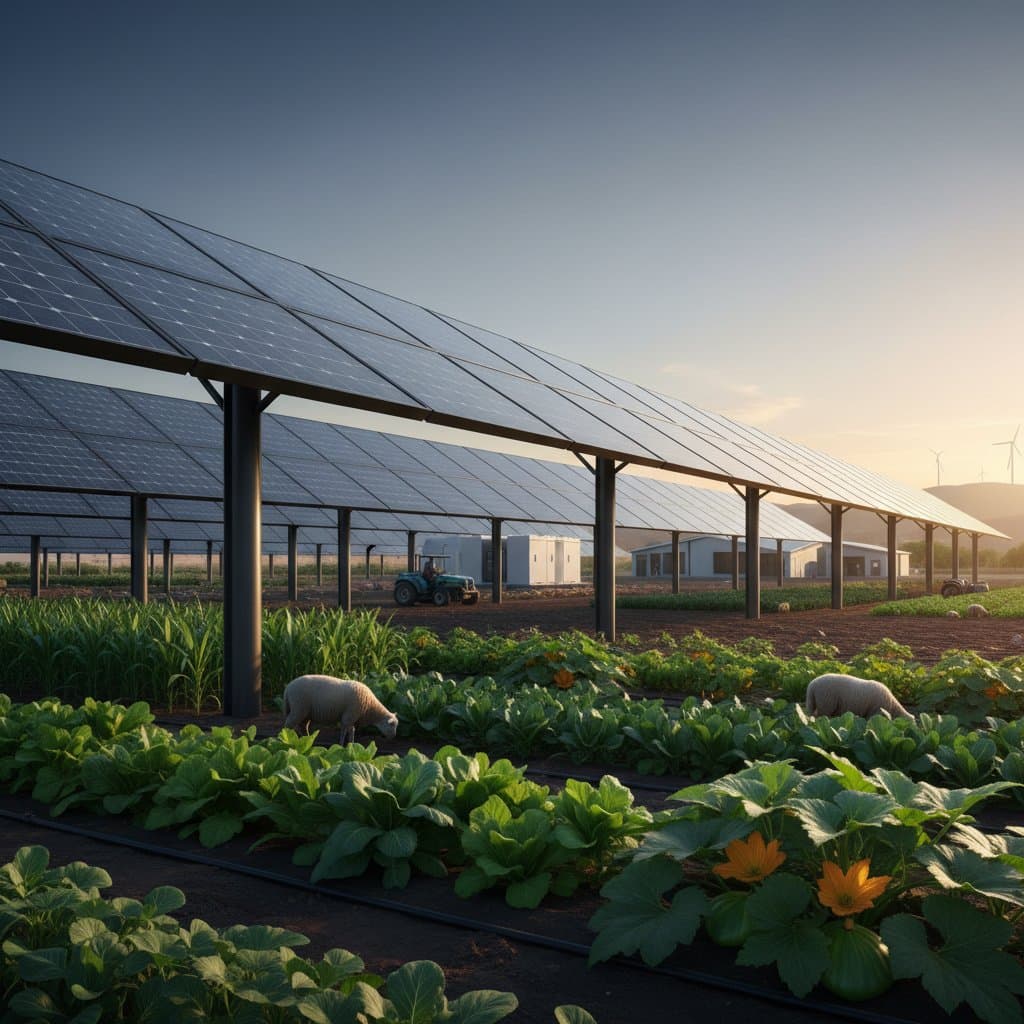
The Rise of Agrivoltaics: Solar Integration for Higher Crop Yields by 2026
Farmers and rural property owners seek reliable income sources that maintain land productivity. Agrivoltaics, known also as dual-use solar, provides a solution that advances both energy generation and farming. Solar panels mount at heights that permit crops or animals to flourish below, maximizing value from each acre. This method gains traction rapidly, with initial data indicating elevated crop outputs, reduced water demands, and reliable renewable energy production.
The Importance of Agrivoltaics in Modern Farming
Conventional solar installations frequently convert farmland into energy-only sites, sidelining food production. Agrivoltaics alters this dynamic through strategic panel placement. Engineers adjust heights, intervals, and angles to allow sufficient sunlight for plants while optimizing energy capture. The resulting shade mitigates crop heat exposure and minimizes evaporation from soil, enhancing endurance against rising temperatures. Such integration bolsters regional food availability alongside objectives for sustainable power.
In regions with intense sunlight and variable rainfall, this approach proves particularly valuable. For instance, midwestern and eastern states experience prolonged dry spells that stress traditional fields. Agrivoltaics addresses these challenges by creating microclimates that favor consistent growth. Policymakers recognize its potential, incorporating it into broader plans for agricultural innovation and carbon reduction.
Mechanics of Dual-Use Solar Systems
Photovoltaic panels transform solar rays into usable electricity through semiconductor materials. In agrivoltaic setups, these panels elevate to two or three meters above the soil surface, accommodating machinery passage or animal movement. System design varies by crop selection and environmental factors. Shade-tolerant varieties, such as kale, cucumbers, and strawberries, thrive under diffused light. Research from agricultural universities demonstrates yield increases of 10 to 20 percent for vegetables like basil and chilies, attributed to moderated temperatures that prevent bolting or wilting.
Livestock integration adds another layer of efficiency. Goats navigate the space easily, controlling undergrowth that might otherwise compete with panels. Poultry operations benefit from cooler environments that reduce heat-related mortality. Developers collaborate with agronomists to model light penetration, ensuring panels align with seasonal sun paths. This customization maximizes dual outputs without compromising either sector.
Financial Considerations and Return on Investment
Initial setup for agrivoltaic systems exceeds standard ground-mounted arrays by 30 to 50 percent, owing to elevated structures and durable materials. However, diversified income offsets these expenses. A one-megawatt installation generates approximately 1.3 million kilowatt-hours annually under optimal conditions. Valued at 18 cents per kilowatt-hour in wholesale markets, this translates to roughly 234,000 dollars in yearly revenue, prior to transmission costs.
Crop revenues compound these gains. Shaded fields often require 20 to 30 percent less irrigation, lowering operational expenses. Leasing arrangements allow landowners to receive fixed payments from energy firms while retaining agricultural rights. Self-owned projects qualify for tax credits that accelerate recovery, with many achieving break-even within eight to ten years. Sensitivity analyses account for fluctuating energy prices and crop markets, projecting net present values that exceed traditional farming alone.
Available Incentives and Regional Prospects
Government initiatives at federal and state levels fund agrivoltaic endeavors via grants, rebates, and favorable financing. The U.S. Department of Agriculture administers programs targeting rural electrification and conservation. Utility companies in solar-friendly areas provide net metering or feed-in tariffs that reward excess production. In Pennsylvania, where farming covers vast expanses and solar adoption accelerates, state policies align incentives with economic development goals.
Landowners face choices between partnership models. Leasing to developers simplifies involvement, yielding passive income with minimal oversight. Direct ownership demands upfront capital but offers control over operations and profits. Local cooperatives facilitate group installations, spreading costs across multiple farms. Eligibility often hinges on land size, with minimums around five acres for viability.
Maintenance and Daily Management
Agrivoltaic sites demand regular attention to sustain performance. Tasks encompass weed control, electrical inspections, and surface cleaning to remove dust accumulation. Farmers leverage existing expertise in pest management and nutrient application. Digital platforms track panel efficiency alongside environmental data, such as humidity and yield metrics. Adjustments, like temporary shading adjustments during peak heat, optimize results.
Panel efficiency declines gradually, at 0.5 percent annually, necessitating replacement planning after 25 to 30 years. Insurance policies cover weather events, while warranties protect against manufacturing defects. Training programs from installers equip staff for hybrid oversight, blending solar and agronomic practices seamlessly.
Practical Steps for Landowners
- Assess available land for solar exposure and infrastructure proximity.
- Analyze energy consumption records to project savings or sales.
- Solicit proposals from certified contractors experienced in dual-use designs.
- Confirm access to subsidies and comply with local regulations.
- Evaluate liability coverage and grid connection protocols.
Frequently Asked Questions
Which crops suit agrivoltaic environments?
Shade-adapted options include lettuce, herbs, peppers, and fruit-bearing plants like raspberries.
Is grazing compatible with solar panels?
Affirmative. Compact animals such as sheep and chickens integrate well, managing vegetation effectively.
How does shading influence soil quality?
It promotes moisture retention, fostering diverse soil organisms and reducing erosion risks.
Building Resilient Farms Through Integrated Solar
Agrivoltaics merges essential elements of nourishment, resource management, and power innovation. Every treated acre contributes to stable food systems and powers communities with green electricity. Early adopters position themselves at the forefront of an evolving agricultural landscape, where sunlight fuels prosperity for generations.