
Solar Tariffs in 2026: Why Homeowners Face Higher Panel Prices
Solar research often grows complex amid news of tariffs and trade policies intertwined with installation estimates. Homeowners frequently question sudden price jumps of thousands of dollars from one season to the next. Tariffs, which are import duties on solar panels and components, drive these increases by affecting the supply chain, elevating equipment costs, and occasionally delaying projects.
Despite these challenges, solar installations provide enduring benefits for energy expenses. Knowledge of tariff operations, market influences, and mitigation strategies empowers homeowners to select optimal investments.
Understanding Solar Tariff Mechanics
Tariffs function as fees on imported goods designed to safeguard domestic industries or address trade imbalances. In the solar sector, they typically target crystalline silicon modules, cells, and occasionally inverters. Importers, distributors, and installers either absorb these fees or transfer them to end users.
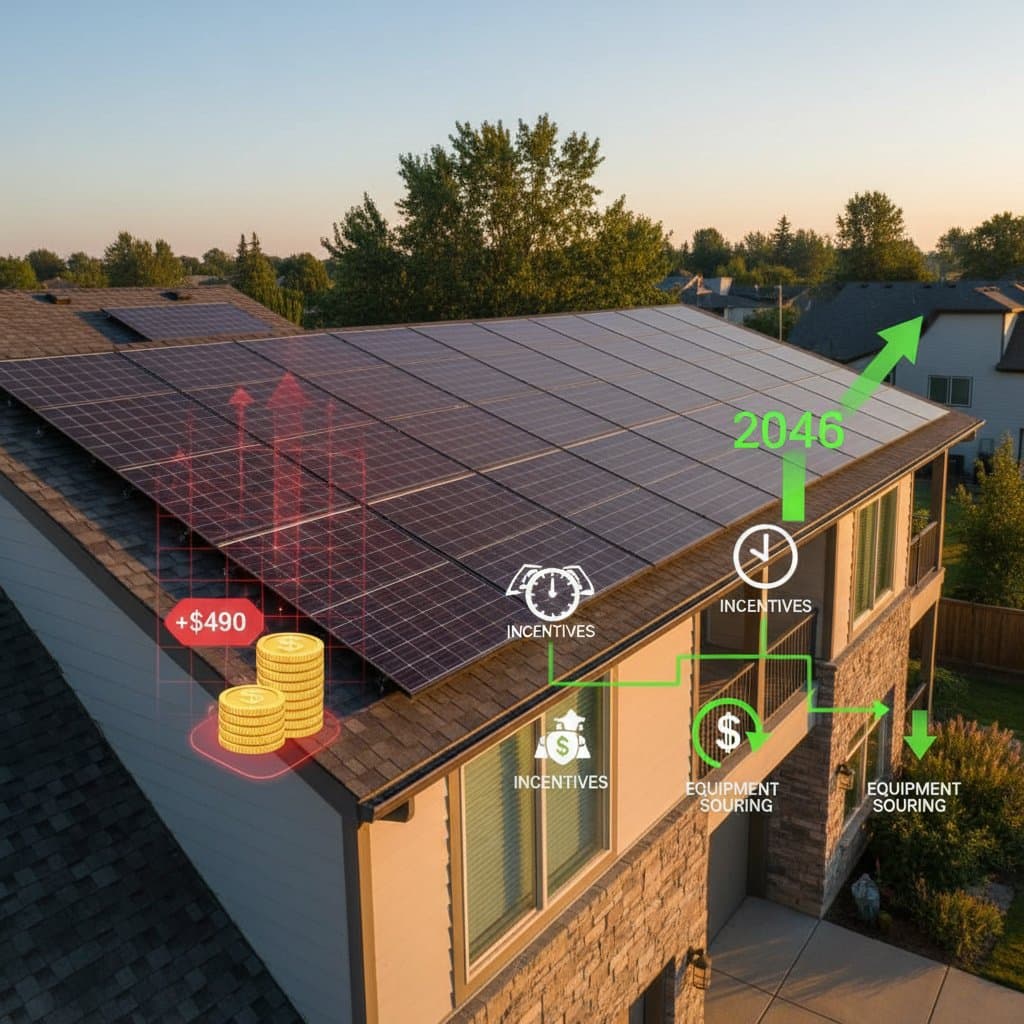
Consider a 400-watt solar panel sourced at 35 cents per watt. A 20 percent tariff raises this to 42 cents per watt. For a 7-kilowatt system requiring approximately 18 panels, the material cost rises by nearly $490 prior to additional expenses like shipping, distributor margins, or labor. These factors can amplify the total system price increase to $700 through $900 for the homeowner.
Reasons Governments Impose Solar Tariffs
Authorities apply tariffs to foster local solar equipment production. Such measures aim to generate employment, bolster national supply chains, and lessen reliance on foreign imports. While beneficial for certain manufacturers, these policies elevate expenses for installers and buyers.
The worldwide solar supply chain involves intricate connections. Silicon originates from specific areas, cells from others, and final assembly elsewhere. Tariffs interrupt this network, complicating procurement and inflating prices despite ample global manufacturing output.
Direct Cost Implications for Homeowners
Regional variations and system scales influence price changes, yet tariffs manifest prominently in overall quotes. A typical residential setup costs about $2.80 per watt. Tariffs may push this to $3.00 per watt, shifting a 7-kilowatt system from $19,600 to $21,000.
This adjustment prolongs the payback period by one to two years, based on local electricity rates and available rebates. A system that recouped costs in eight years might require nine or ten thereafter. Nevertheless, the extended lifespan of solar arrays, often exceeding 25 years, preserves significant lifetime returns.
Calculating the Financial Breakdown
Examine a straightforward scenario for a 7-kilowatt system generating 1,300 kilowatt-hours per kilowatt annually, totaling 9,100 kilowatt-hours yearly. With an average utility rate of 18 cents per kilowatt-hour, annual savings reach $1,640.
Post-tariff installation at $21,000, a 30 percent federal tax credit reduces the net expense to $14,700. Dividing $14,700 by $1,640 yields a nine-year payback. Beyond this point, savings accumulate to over $30,000 in avoided utility bills across the system's duration.
Broader Market Disruptions from Tariffs
Beyond panel pricing, tariffs introduce volatility that hampers solar project funding. Installers might postpone large orders to navigate fluctuating rates. Distributors could hoard inventory, leading to supply gaps for smaller firms and localized price surges.
Conversely, tariffs can stimulate progress. Companies may relocate production to unaffected nations or adopt automation for efficiency. Local manufacturers might scale operations, creating jobs and minimizing transportation-related emissions.
Strategies for Homeowners to Counter Elevated Costs
Homeowners possess multiple avenues to address tariff-driven hikes.
- Leverage available incentives. The federal tax credit substantially reduces initial outlays. Layer on state programs and utility rebates to accelerate payback timelines.
- Solicit multiple bids. Installer pricing differs significantly. Review at least three comprehensive quotes to identify variations in materials and services.
- Inquire about sourcing details. Equipment from tariff-free zones may lower costs. Knowledgeable installers can outline options within global networks.
- Explore financing alternatives. Solar-specific loans or home equity options distribute expenses, often aligning payments below energy bill reductions.
- Time installations strategically. Policies evolve rapidly. Securing agreements before tariff implementations secures prevailing rates.
Contextual Factors in Solar Pricing
Tariffs represent just one element in pricing dynamics. Fluctuations in aluminum, glass, and silicon commodities play roles. Installation delays from labor constraints arise, alongside diverse interconnection and permitting fees across municipalities. These elements yield broad price spectra even regionally.
Economically, tariffs may temper immediate solar uptake but seldom alter downward trajectories. Scaling production and technological advances frequently counteract duties over time. Enhanced panel efficiency allows equivalent output with reduced module quantities.
Sustaining Value Through Maintenance and Durability
Higher initial prices do little to diminish solar's appeal when upkeep stays low. Annual or biannual cleaning and routine inverter inspections suffice for optimal function. Warranties from producers typically span 25 years, assuring at least 80 percent capacity retention.
Advanced monitoring tools enhance reliability. Installer-supplied digital interfaces display live production metrics. Early detection of issues such as shading or connections prevents output losses.
Steps to Secure Your Solar Investment
Prospective solar adopters in coming seasons benefit from informed action. Tariff landscapes evolve, yet prolonged delays forfeit potential savings. Obtain fresh estimates, verify component stocks, and compute incentive-adjusted returns. Solar upgrades endure as premier choices for enhancing home equity and achieving energy autonomy.
FAQ
What defines a solar tariff?
A solar tariff constitutes a duty on imported panels or cells that elevates their entry cost into the nation.
In what ways do tariffs impact typical homeowners?
Tariffs raise panel expenses and may postpone projects as suppliers adapt procurement.
Do tariffs apply universally to solar products?
No. Certain inverters, batteries, or modules from designated areas escape duties per trade regulations.
Can locally produced panels evade tariffs?
Yes. Domestic manufacturing sidesteps import fees, although underlying material prices may influence costs.
Do tariffs render solar investments unwise?
No. Payback extends modestly, yet enduring savings prove robust.
How might installers circumvent tariffs lawfully?
Direct evasion proves impossible, but sourcing from exempt locales or pre-stocked suppliers offers pathways.