
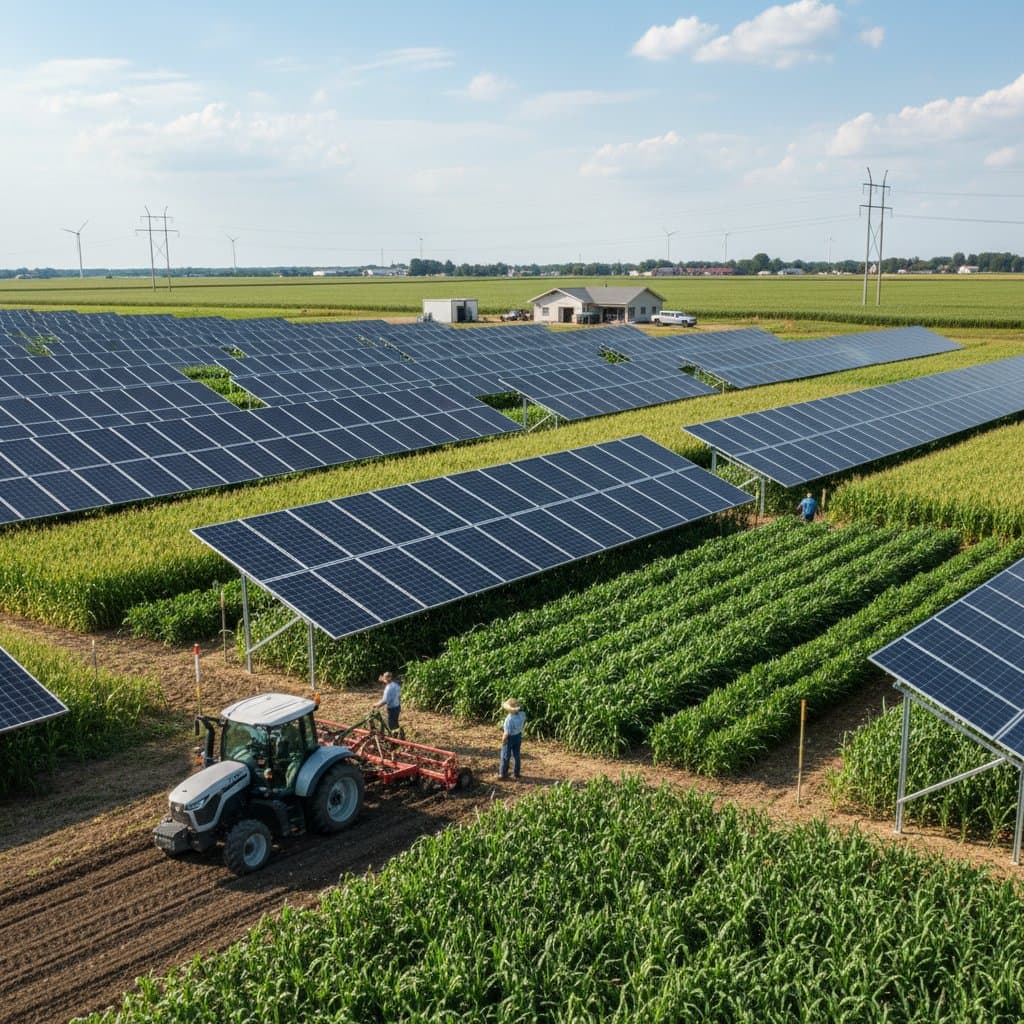
Farming Under Solar Panels: Doubling Land Value Through Dual Income
Farms throughout the United States are adopting an innovative approach that integrates solar energy production with traditional agriculture. By elevating solar panels above active crop fields or grazing lands, landowners create a dual-use system known as agrivoltaics. This method enables a single parcel of land to yield both food and renewable energy, significantly enhancing overall productivity.
The financial upside is substantial. Agricultural economists estimate that by 2026, agrivoltaic setups could nearly double the value of farmland compared to conventional uses. This increase stems from diversified revenue streams, including crop sales and energy generation, which provide greater stability in volatile markets.
What Is Agrivoltaics?
Agrivoltaics refers to the strategic combination of photovoltaic systems with agricultural practices. Unlike traditional ground-mounted solar arrays, these installations feature panels raised on sturdy racks, typically 6 to 10 feet above the ground. This elevation permits sunlight, rainfall, and airflow to penetrate to the plants below, minimizing interference with farming operations.
Certain crops perform exceptionally well in this environment. Shade-tolerant varieties like lettuce, spinach, kale, strawberries, and certain herbs benefit from the partial shade, which filters intense sunlight and reduces water loss through evaporation. For livestock operations, sheep or goats can roam beneath the panels, naturally controlling weeds and grasses, which cuts down on mowing expenses and herbicide use.
Planning plays a crucial role in success. Site assessments should evaluate soil type, sunlight patterns, and crop compatibility. Engineers design panel spacing—often 10 to 15 feet apart—to optimize both energy capture and agricultural access, ensuring machinery can navigate the rows without damage.
Advantages for Farmers and Landowners
Adopting agrivoltaics delivers multiple tangible benefits that extend beyond immediate financial gains.
- Enhanced land valuation: Dual outputs from crops and electricity can increase property worth by up to 90 percent, according to recent studies from land appraisal experts.
- Soil and water conservation: Shade from panels lowers soil temperatures by 5 to 10 degrees Fahrenheit, preserving moisture and reducing irrigation needs by as much as 20 percent in arid regions.
- Cost efficiencies: Integrating grazing animals eliminates much of the vegetation maintenance, potentially saving thousands in annual labor and equipment costs.
- Income diversification: Long-term power purchase agreements with utilities offer fixed payments, buffering against fluctuating commodity prices for produce.
- Crop yield improvements: In hot climates, moderated microclimates under panels can boost yields for sensitive crops by 10 to 30 percent by alleviating heat stress.
These advantages make agrivoltaics particularly appealing for mid-sized farms facing pressure from rising input costs and climate variability. When evaluated against standalone solar farms or traditional agriculture, the hybrid model consistently outperforms in total economic output per acre.
Essential Planning and Safety Measures
Transitioning to agrivoltaics demands meticulous preparation to safeguard operations and comply with regulations. Begin by consulting local zoning boards to verify that the project aligns with agricultural preservation laws and land-use policies. Soil engineers should analyze bearing capacity and drainage to support the added weight of panel structures.
Safety remains paramount during installation and operation. All electrical components must adhere to the National Electrical Code, with systems grounded to prevent faults. Engage a certified solar installer experienced in agricultural settings to handle panel mounting, wiring, and inverter placement.
Pre-Installation Safety Checklist
- Conduct a geotechnical survey to assess soil stability and flood risk.
- Secure permits from local authorities, including environmental impact reviews if required.
- Select racking systems engineered for regional weather extremes, such as high winds over 90 mph or snow loads exceeding 50 pounds per square foot.
- Install UL-listed connectors and conduits to protect wiring from rodents, moisture, and mechanical damage.
- Implement grounding electrodes and surge protection devices to mitigate lightning risks.
- Plan access paths for farm equipment, ensuring at least 8-foot clearances between panel rows.
Post-installation, monitor for issues like panel tilt from soil settling or vegetation overgrowth. If breakers trip or unusual heat is detected at connections, isolate the system immediately and summon a licensed electrician. Annual inspections by qualified professionals help maintain reliability and extend system lifespan to 25 years or more.
Broader Economic and Environmental Outcomes
Agrivoltaics fosters a symbiotic relationship between energy and agriculture, amplifying benefits for communities. The generated electricity—often 200 to 500 kilowatts per acre—powers local grids or off-grid applications, reducing reliance on fossil fuels and lowering carbon emissions by thousands of tons annually per farm.
Environmentally, the setup promotes biodiversity. Shaded areas create habitats for pollinators and beneficial insects, while reduced tillage under panels preserves soil health and sequesters carbon. Farmers report consistent crop quality due to protection from extreme weather, such as hail or excessive sun exposure.
Economically, this model revitalizes rural areas. Lease agreements with solar developers provide upfront capital for farm improvements, while energy sales create jobs in installation, maintenance, and monitoring. Extension services from universities like those in California and Minnesota highlight how such projects enhance food security without sacrificing arable land.
Implementing Agrivoltaics on Your Farm
To launch an agrivoltaic project, start with a comprehensive feasibility analysis. Solar resource maps from the National Renewable Energy Laboratory can identify high-potential sites, while agronomists evaluate crop suitability. Financial projections should factor in incentives like federal tax credits, which cover 26 percent of installation costs through 2032.
Partner with vetted professionals: a NABCEP-certified installer for the solar components and an agricultural engineer for integration. Budget for initial outlays, which range from $1 to $2 per watt for the array, offset by grants from programs like the USDA's Rural Energy for America Program.
Ongoing management involves balanced upkeep. Trim vegetation quarterly, inspect electrical systems biannually, and track metrics such as kilowatt-hours produced and bushels harvested. Adjust panel angles seasonally if feasible to fine-tune shade levels for optimal crop growth.
By embracing agrivoltaics, farmers position their operations for enduring success. This approach not only elevates land value and income but also contributes to a sustainable future, harmonizing energy needs with agricultural heritage.