
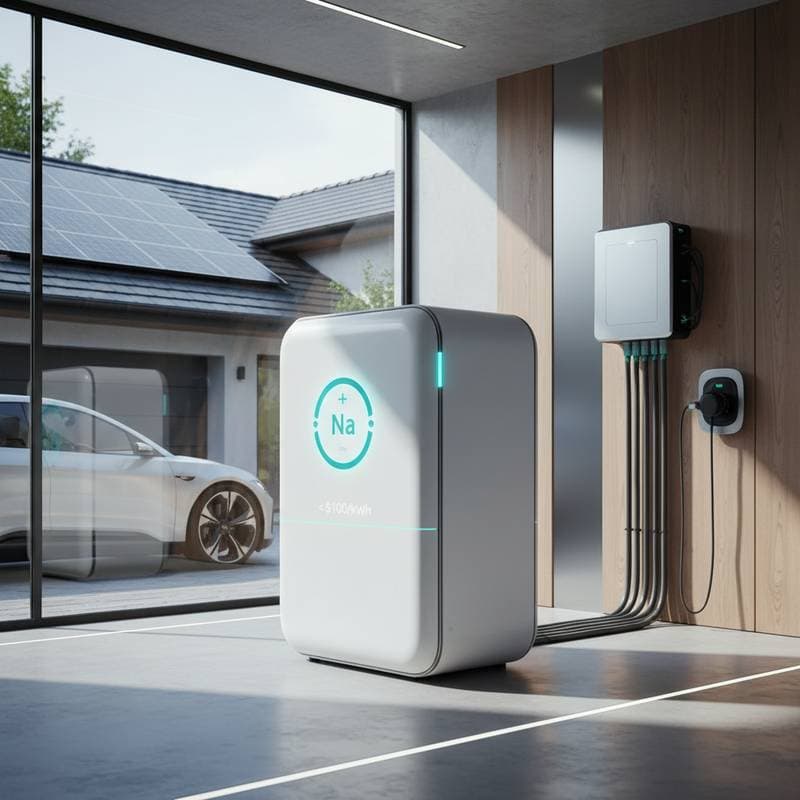
Sodium-Ion Batteries: A Cost-Effective Challenger to Lithium Dominance
Solar energy advancements often introduce promising battery technologies that capture attention. Homeowners pairing systems with rooftop solar panels typically consider lithium-ion options, which power vehicles, residential units, and devices. However, sodium-ion batteries present a viable alternative through reduced costs and reliable operation. Although energy density lags behind lithium currently, the advantages in affordability and material availability position sodium-ion as a strong candidate for future residential and utility-scale storage.
The Significance of Sodium-Ion Technology
Lithium battery prices have declined over the last decade, yet they represent a substantial expense in solar-plus-storage setups. A standard 10-kilowatt-hour residential battery ranges from $5,000 to $10,000 prior to installation. Key contributors include lithium, nickel, and cobalt, which involve costly extraction and processing, with supplies concentrated in select regions.
Sodium offers a stark contrast as one of the earth's most plentiful elements, derived from everyday salt. Production of sodium-ion batteries avoids lithium's supply limitations, potentially lowering material expenses and mitigating geopolitical vulnerabilities. For residential users, this results in stable pricing and faster deployment timelines.
Fundamentals of Sodium-Ion Operation
Rechargeable batteries rely on ion movement between electrodes during charge and discharge cycles. Lithium-ion batteries shuttle lithium ions from cathode to anode during charging, reversing the process upon discharge. Sodium-ion batteries follow this principle, substituting sodium ions for lithium.
Larger sodium atoms deliver marginally less energy by weight compared to lithium. Engineers counter this through innovative electrode designs that facilitate smoother ion transport. Typical configurations feature hard carbon anodes paired with layered oxide or polyanionic cathodes, optimizing energy capacity, expense, and durability.
The process unfolds as follows:
- Charging Phase: Electrical input drives sodium ions from the cathode to the anode, embedding them within the carbon framework.
- Discharge Phase: Ions return to the cathode via the electrolyte, producing electricity for external use.
This cycle sustains thousands of repetitions with limited degradation, provided materials remain stable and temperatures stay within operational limits.
Performance and Cost Evaluation
Direct comparisons highlight sodium-ion's potential. Lithium-ion residential batteries achieve 150 to 200 watt-hours per kilogram. Current sodium-ion variants attain 100 to 160 watt-hours per kilogram, varying by formulation. The gap narrows for stationary applications, where weight and volume constraints prove less demanding than in vehicles.
Sodium-ion excels in cost forecasts. Projections indicate pack prices below $100 per kilowatt-hour at volume production. Lithium systems, despite established processes, frequently exceed this level due to material expenses. Expanded sodium-ion manufacturing could reduce overall system costs by 20 to 30 percent relative to equivalent lithium setups.
Durability advances as well. Initial prototypes endured under 1,000 cycles, whereas recent models surpass 3,000 cycles before capacity drops to 80 percent. For daily residential discharge, this supports approximately eight years of use prior to significant decline. Developers aim for extended longevity via enhanced coatings and sophisticated management protocols.
Practical Integration in Solar Homes
Imagine a residence equipped with a 7-kilowatt solar array. In an area yielding 1,300 kilowatt-hours annually per kilowatt, the system produces about 9,100 kilowatt-hours yearly. With household demand at 10,000 kilowatt-hours, solar meets most needs, but excess daytime generation feeds the grid while evenings draw retail-priced power.
A 10-kilowatt-hour sodium-ion battery alters this dynamic by storing midday surplus for evening release. Shifting 30 percent of grid reliance to stored solar equates to 3,000 kilowatt-hours saved per year. At 18 cents per kilowatt-hour, savings reach $540 annually. For a $5,000 installed unit, payback occurs in roughly nine years, accelerating with rebates or peak pricing strategies.
Sustainability and Supply Benefits
Sodium-ion batteries incorporate less hazardous, more recyclable components than certain lithium variants. They eliminate cobalt and nickel, metals linked to mining controversies. Sourcing from abundant reserves minimizes extraction impacts and logistics demands.
Recycling processes simplify further, bypassing intensive heat treatments required for lithium. This approach conserves energy and cuts end-of-life expenses. Such attributes support sustainable production aligned with resource循环 principles.
Safety Features in Residential Settings
Safety remains paramount for home installations. Lithium batteries risk thermal runaway, leading to overheating. Sodium-ion designs mitigate this through reduced energy density and robust electrolytes, diminishing fire hazards.
Even under puncture or overcharge, sodium cells warm gradually and self-regulate without combustion. This reliability streamlines installation, permitting versatile placement in enclosed spaces while adhering to rigorous standards.
Utility-Scale Applications and Market Outlook
On a broader level, sodium-ion enables utilities to manage renewable fluctuations economically. Variable solar and wind generation benefits from scalable storage. Material affordability allows large deployments independent of lithium scarcity, enhancing grid reliability and renewable integration.
Residential markets expand accordingly, introducing sodium options beside lithium. Heightened competition fosters innovation and clearer pricing, aiding consumers at all adoption stages.
Overcoming Technical Hurdles
Sodium-ion faces hurdles in energy density and cold-weather efficiency. Ion mobility slows in low temperatures, impacting rates. Solutions include tailored electrolytes and anodes that preserve performance across climates.
Shifting production from lithium lines demands retooling for material and control adaptations. Established facilities promise rapid cost reductions, mirroring lithium's trajectory.
Guidance for Prospective Buyers
For those considering solar-plus-storage, monitor sodium-ion developments closely. Key indicators include:
- Standards Compliance: Verify adherence to established safety and efficiency benchmarks akin to lithium certifications.
- Guarantee Provisions: Seek coverage for at least 3,000 cycles or eight to ten years, ensuring long-term reliability.
- System Compatibility: Confirm inverter and monitoring alignment, potentially requiring updates for seamless operation.
Pathways to Broader Accessibility
Achieving $80 per kilowatt-hour could price a 10-kilowatt-hour system below $4,000 pre-incentives. Combined with declining solar costs, this setup rivals or beats grid rates in numerous areas, promoting widespread self-sufficiency.
Economic analyses confirm that sub-$100 per kilowatt-hour storage tips solar-plus-storage economics favorably. Sodium-ion positions to achieve and sustain this milestone.
Ongoing Maintenance Practices
Post-installation care for sodium-ion batteries proves simple. Position units in controlled environments between 50 and 90 degrees Fahrenheit. Manufacturer updates refine charge optimization and balance.
Monthly app reviews track diagnostics. Schedule yearly professional checks for connections, airflow, and software. Maintain cleanliness to support cooling, and control humidity to avoid corrosion in damp locations.
At end-of-life, leverage installer or community recycling, benefiting from sodium-ion's straightforward, low-risk handling.
Frequently Asked Questions
What Drives the Affordability of Sodium-Ion Batteries Over Lithium-Ion?
Abundant sodium requires minimal refinement costs. In contrast, lithium, nickel, and cobalt incur higher expenses and supply risks, elevating lithium system prices. These factors enable sodium-ion to approach budget-friendly levels.
How Does Sodium-Ion Energy Storage Compare to Lithium-Ion?
Sodium-ion variants store 70 to 90 percent of lithium-ion's energy density. In home settings, this disparity matters little, as space and portability rank lower priorities.
Do Sodium-Ion Batteries Suit Residential Applications Safely?
Affirmative. Lower operating voltages and stable electrolytes reduce overheating and ignition risks, ideal for household use.
When Might Sodium-Ion Residential Batteries Gain Widespread Availability?
With scaling production and completed certifications, consumer access anticipates soon. Installers will integrate options parallel to lithium as supplies increase.