
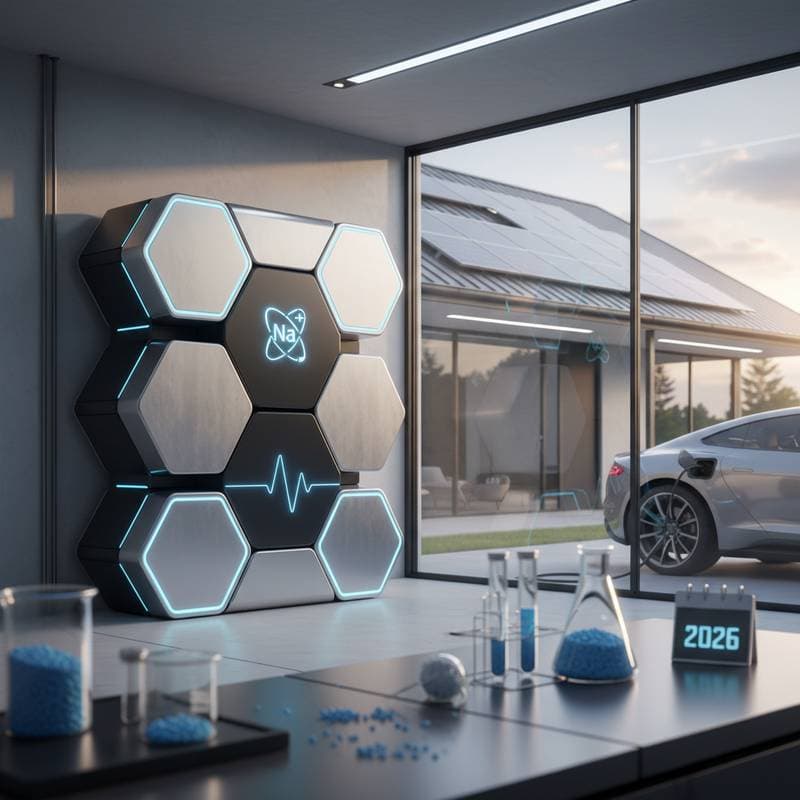
Sodium-Ion Batteries: A Cost-Effective Alternative to Lithium Mining
Lithium-ion batteries power much of the modern world, from electric vehicles to renewable energy storage. However, reliance on lithium raises concerns about supply chain vulnerabilities, environmental impacts, and escalating costs. Sodium-ion batteries emerge as a promising alternative, leveraging abundant sodium to deliver comparable performance at lower prices.
This technology draws from everyday table salt, making it accessible and scalable. As research advances, sodium-ion batteries position themselves to disrupt the energy storage market by 2026. Homeowners, businesses, and manufacturers stand to benefit from this shift toward more sustainable options.
Understanding Sodium-Ion Batteries
Sodium-ion batteries operate on principles similar to lithium-ion counterparts. They use sodium ions that move between a cathode and anode during charge and discharge cycles. The cathode often consists of layered metal oxides, while the anode may employ hard carbon materials.
Unlike lithium-ion batteries, which require rare metals like cobalt and nickel, sodium-ion versions rely on widely available elements. Sodium constitutes about 2.6 percent of the Earth's crust, far more plentiful than lithium's 0.006 percent. This abundance reduces dependency on geopolitically sensitive mining regions.
Development focuses on optimizing energy density and cycle life. Early prototypes achieve around 150-200 watt-hours per kilogram, approaching lithium-ion levels. Researchers continue to refine electrode materials to enhance efficiency and longevity.
Advantages Over Lithium-Ion Batteries
Sodium-ion batteries offer several compelling benefits that address key limitations of current technologies.
Lower Production Costs
Manufacturing sodium-ion batteries costs 20-30 percent less than lithium-ion equivalents. The primary reason lies in raw material prices; sodium compounds sell for a fraction of lithium carbonate. Additionally, production processes avoid expensive purification steps required for lithium.
Economies of scale further drive down prices as production ramps up. By 2026, experts predict sodium-ion cells could retail at under 50 dollars per kilowatt-hour, compared to lithium-ion's current 100 dollars or more. This affordability opens doors for widespread adoption in consumer products.
Enhanced Safety Features
Safety remains a top priority in battery design. Sodium-ion batteries exhibit greater thermal stability, reducing risks of thermal runaway or fires. They operate effectively up to 60 degrees Celsius without degradation, unlike lithium-ion batteries that falter above 45 degrees.
In accident scenarios, sodium-ion cells release less heat and generate non-flammable gases. This characteristic makes them ideal for high-density applications like electric vehicles. Regulatory bodies already view them favorably for meeting stringent safety standards.
Sustainability and Environmental Benefits
The environmental footprint of sodium-ion batteries proves smaller throughout their lifecycle. Mining sodium avoids the water-intensive and habitat-disrupting processes associated with lithium extraction in regions like South America's Lithium Triangle.
Recycling sodium-ion batteries requires less energy and yields higher recovery rates for materials. Sodium-based cathodes dissolve easily in aqueous solutions, simplifying disassembly. Overall, this technology supports global efforts to reduce carbon emissions and promote circular economies.
Superior Performance in Cold Climates
Cold weather challenges lithium-ion batteries, causing capacity loss of up to 20 percent below freezing. Sodium-ion batteries maintain 90 percent efficiency at minus 20 degrees Celsius. Their electrolyte formulations resist solidification, ensuring reliable operation in harsh conditions.
This advantage proves crucial for electric vehicles in northern latitudes and off-grid solar systems in variable climates. Users experience consistent power delivery, minimizing downtime during winter months.
Current Challenges and Ongoing Solutions
Despite their promise, sodium-ion batteries face hurdles in matching lithium-ion performance fully. Energy density lags slightly, limiting range in applications like long-haul EVs. Larger cell sizes also pose design challenges for compact devices.
Researchers address these issues through material innovations. For instance, Prussian blue analogs serve as cathodes to boost voltage and capacity. Anode developments, such as tin-based alloys, improve ion intercalation rates.
Collaborations between universities and companies accelerate progress. Pilot plants in China and Europe test scaled production, resolving manufacturing bottlenecks. With investments surpassing 1 billion dollars annually, solutions emerge rapidly.
Timeline for Commercial Viability
The path to market maturity unfolds steadily. In 2023, several firms launched small-scale sodium-ion products for stationary storage. By 2025, automotive integrations appear in entry-level electric vehicles.
Projections indicate full commercialization by 2026. Major players like CATL and Faradion plan mass production, targeting 10 gigawatt-hours annually. Supply chains solidify with sodium sourcing from salt lakes and industrial byproducts.
This timeline aligns with global renewable energy goals. Governments incentivize adoption through subsidies, hastening deployment in solar farms and urban grids.
Practical Applications Across Industries
Sodium-ion batteries suit diverse uses, enhancing energy independence.
Electric Vehicles
Automakers explore sodium-ion for affordable models. A mid-size EV could achieve 300 miles of range at 20,000 dollars, democratizing access. Fleet operators benefit from lower maintenance and faster charging times under 30 minutes.
Solar Energy Storage
Pairing sodium-ion with photovoltaic systems stores excess daytime power efficiently. Home installations handle daily cycles without degradation, supporting net-zero homes. Utilities deploy them in microgrids for resilient power distribution.
Residential and Commercial Energy Independence
Homeowners install sodium-ion units to offset peak electricity rates. A 10-kilowatt-hour system powers essentials during outages, sized for average households. Businesses reduce operational costs by 15-20 percent through on-site storage.
Embracing a Sodium-Powered Future
Sodium-ion batteries herald a transformative era in energy storage. They deliver cost savings, safety, and sustainability without compromising performance. As adoption grows, individuals gain greater control over their energy needs.
The shift promises reduced reliance on finite resources, fostering innovation in renewables. Early adopters position themselves at the forefront of this green revolution. With commercial breakthroughs on the horizon, the benefits extend to economies and environments alike.