
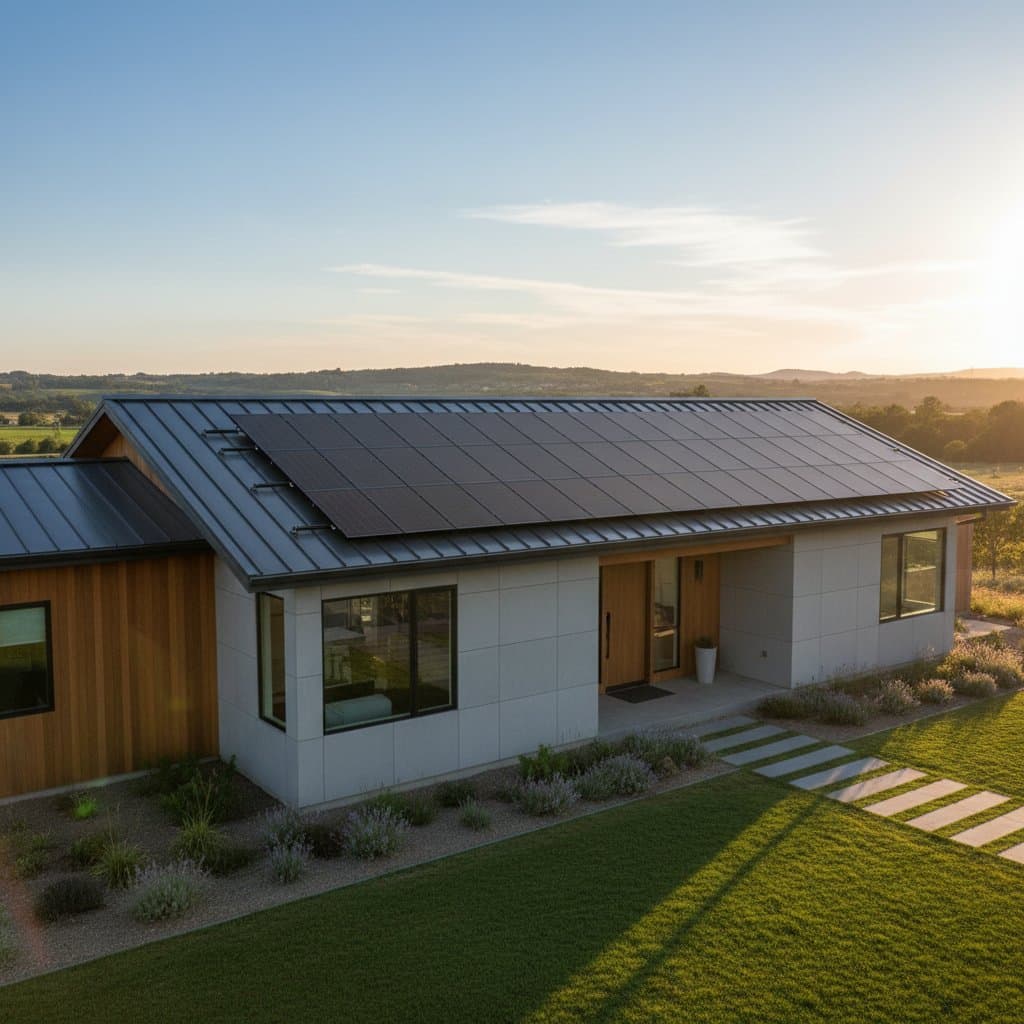
The 50-Year Payback from Metal Roofs and Solar Panels
Homeowners considering solar installations frequently encounter a critical decision: whether to replace the existing roof prior to mounting panels. The choice often hinges on the roofing material in place. When solar panels integrate with a standing seam metal roof, the outcome represents one of the most enduring and least demanding energy systems on the market. This combination delivers exceptional efficiency and reliability over decades.
This guide details the ways in which metal roofs prolong the lifespan and effectiveness of solar setups. It also outlines the financial returns spanning half a century and clarifies the distinction between simple homeowner responsibilities and tasks reserved for certified professionals. Prioritizing safety, longevity, and regulatory adherence remains essential throughout the process.
Safety and Structural Considerations
Mounting solar panels on a metal roof entails working with high-voltage electricity and securing components at elevated positions. Such activities demand strict precautions. While homeowners can perform preliminary surface evaluations, only certified electricians and roofing specialists should plan and execute the full installation.
Cease activities and contact a licensed electrician immediately if:
- Damaged or corroded wiring appears near roof penetrations
- Fasteners or clamps make unintended contact with energized metal surfaces
- Circuit breakers activate upon connecting the panels
- Grounding or bonding configurations cannot be confirmed as adequate
Metal materials conduct electricity with ease. Faulty connections or ungrounded elements pose significant risks of electrical shock. According to the National Electrical Code, all conductive roofing components adjacent to solar installations must connect to the equipment grounding system. A qualified electrician alone can verify and ensure full compliance.
Payback Over Five Decades
The term '50-year payback' signifies the extended operational lifespan of a metal roof paired with a solar array, rather than a precise timeline for financial recoupment. Energy bill reductions, elimination of roof replacement needs, and minimized upkeep drive the economic advantages over this period.
Key long-term financial gains encompass:
-
Avoidance of roof replacements: Traditional shingle roofs typically necessitate two or more full replacements within 50 years, each requiring the temporary removal and reinstallation of solar panels. Sidestepping these interventions can prevent costs amounting to several thousand dollars.
-
Stabilization of energy expenses: Solar production directly reduces reliance on utility-supplied power, shielding owners from escalating electricity rates.
-
Access to tax credits and incentives: Numerous regions provide rebates or deductions that accelerate the path to positive returns.
-
Enhanced property resale value: Residences featuring resilient roofs and operational solar systems generally command premium appraisals and sell more quickly.
Research from leading roofing and solar organizations indicates that properly coated metal roofs maintain more than 90 percent of their initial reflectivity and resistance to weathering even after prolonged exposure. This enduring quality underpins steady solar panel output.
Maintenance and Inspection Guidance
Regular assessments preserve the safety and output of both the roof and solar components. Homeowners may conduct straightforward visual examinations, yet electrical diagnostics require expert intervention.
Tasks suitable for homeowners include:
- Examining roof seams and mounting clamps for any loose fasteners.
- Clearing accumulated debris from beneath the panels.
- Ensuring downspouts and gutters stay unobstructed.
- Identifying early indications of corrosion or coating degradation on surfaces.
- Tracking inverter displays for unexpected declines in energy production.
Responsibilities designated for professionals involve:
- Evaluating the continuity of bonding and grounding mechanisms.
- Verifying the torque levels on all electrical connections and lugs.
- Assessing entry points for conduits and seals against weather exposure.
- Confirming ongoing adherence to applicable codes for every element.
Upon detecting wiring corrosion, signs of electrical arcing, or moisture entry near installation points, halt all checks and summon a certified electrician without delay. Homeowners must avoid dismantling covers or severing electrical connections independently.
Environmental and Material Sustainability
Both metal roofing and solar technology promote environmental stewardship through their material compositions and longevity. Metal panels frequently incorporate substantial recycled materials and prove entirely recyclable upon decommissioning. Their extended durability curtails landfill contributions relative to repeated shingle installations.
Non-penetrating mounting methods for solar arrays safeguard the roof's protective coatings, thereby decreasing requirements for repairs or material discards. Together, these elements foster greater energy autonomy while conserving natural resources.
Insights from the Metal Construction Association reveal that highly reflective metal roofs can diminish cooling demands by as much as 25 percent in hotter regions. Integrating this with solar power generation amplifies the ecological benefits across the system's lifespan.
DIY Boundaries and Professional Support
Licensed electricians must exclusively handle:
- Linking solar panel strings to inverters or distribution boxes
- Altering main service panels or adding circuit breakers
- Integrating the metal roof into the overall grounding framework
- Troubleshooting inverter issues or arc-fault detection systems
Next Steps for Homeowners
- Evaluate current roof status. Should the existing roof approach the conclusion of its useful life, opt for a standing seam metal replacement prior to solar integration to avert subsequent interruptions.
- Engage a roofing contractor alongside a solar specialist. Collaborative design accounts for panel dimensions, seam alignments, and load-bearing capacities.
- Seek comprehensive warranties. Established metal roof producers provide protections for coatings and weather resistance that align with or surpass solar system guarantees.
- Arrange recurring professional reviews. Every three to five years, a certified electrician should affirm the electrical system's soundness.
- Maintain thorough records. Organize all permits, warranty documents, and inspection reports to facilitate ongoing maintenance or property transactions.
Proper installation and upkeep transform a standing seam metal roof with solar panels into a enduring energy resource. This alliance guarantees consistent power supply, limited upkeep demands, and robust economic outcomes.