
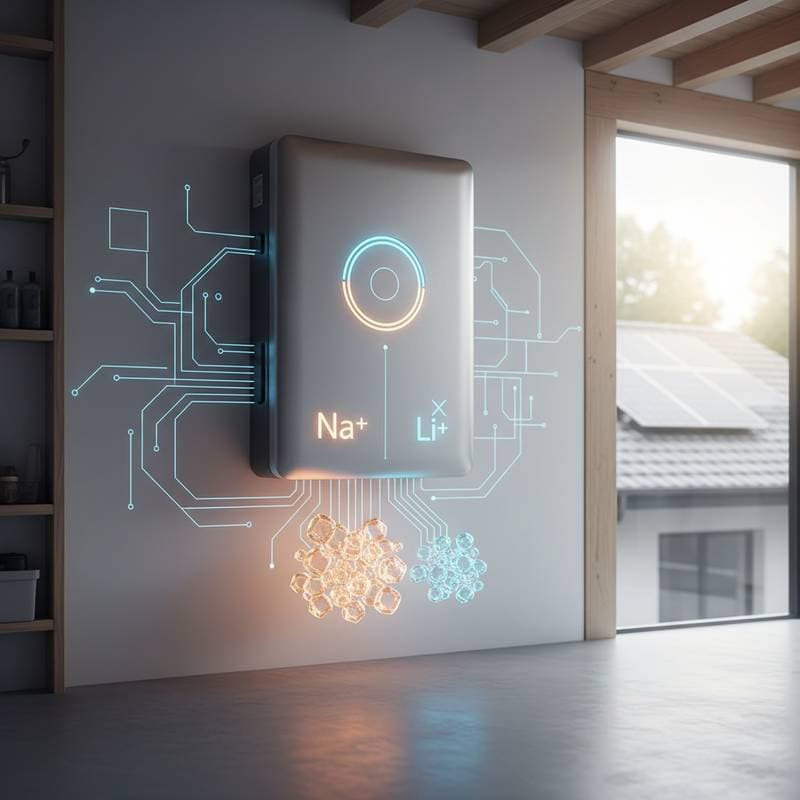
Sodium-Ion Batteries: A Cost-Effective Future for Solar Storage in 2026
Solar energy advancements often introduce complex technologies that challenge homeowners. While lithium-ion batteries remain familiar, sodium-ion batteries emerge as a promising alternative. These batteries offer lower expenses, reliable supply chains, and effective storage for residential and commercial solar systems. Grasping the distinctions of sodium-ion technology empowers informed decisions for upcoming solar enhancements.
The Importance of Battery Chemistry
Battery performance hinges on its chemical composition. Current market leaders, lithium-ion batteries, achieve high energy density through lithium, cobalt, and nickel, which facilitate ion movement between anode and cathode for energy storage and release. However, these materials drive up expenses and complicate sourcing due to limited availability.
Sodium-ion batteries substitute sodium, an element plentiful in salt and seawater, for lithium. Electrodes and electrolytes follow comparable designs yet utilize more affordable components. This change addresses cost barriers, as raw materials constitute a significant portion of overall battery pricing. Comparable performance at reduced costs positions sodium-ion for rapid market growth.
Mechanics of Sodium-Ion Batteries
Sodium-ion batteries operate similarly to their lithium counterparts. During charging, sodium ions travel from cathode to anode via an electrolyte. Upon discharge, ions return, generating electrical current. Variations arise from sodium's larger atomic size and greater weight, resulting in modestly lower energy storage per unit mass. Consequently, sodium-ion batteries may require more volume for equivalent capacity.
In stationary applications like home solar storage, bulkiness poses minimal issues compared to mobile uses such as electric vehicles. Sodium-ion cells typically deliver 100 to 160 watt-hours per kilogram, below the 250 watt-hours per kilogram of advanced lithium cells, yet sufficient for consistent daily operations. These batteries excel in cold conditions and endure complete discharges with limited degradation.
Projected Costs and Financial Benefits
Affordability accelerates technology uptake. A standard 10-kilowatt-hour lithium-ion system, including installation, averages 12,000 dollars, with battery costs ranging from 1,000 to 1,200 dollars per kilowatt-hour when factoring in hardware, labor, and inverters.
Initial sodium-ion deployments anticipate 30 to 40 percent reductions in these figures. Consider a 10-kilowatt-hour sodium-ion setup at 700 dollars per kilowatt-hour, totaling 7,000 dollars for the battery alone. Adding installation and inverter costs brings the full price to approximately 9,000 dollars, saving thousands compared to lithium options. Over 10 years of daily use, such savings shorten payback periods by one to two years, influenced by local utility rates and available incentives.
Durability and Operational Reliability
Longevity defines practical value. Lithium-ion home batteries generally sustain 5,000 cycles before capacity drops to 80 percent. Sodium-ion prototypes match this with 3,000 to 5,000 cycles, maintaining steady voltage and slight capacity fade. Residential demands typically span a decade or longer under routine conditions.
Safety enhancements further distinguish sodium-ion batteries. Their sodium-based salts resist thermal runaway more effectively than lithium variants, enduring elevated temperatures without ignition risks. This trait streamlines installation designs and alleviates insurance requirements.
Sustainability and Resource Advantages
Sodium-ion batteries bypass cobalt entirely and lessen reliance on lithium extraction. Global sodium abundance supports scalable supply without geopolitical tensions or ecological strain. Production processes can incorporate aluminum current collectors over copper, further decreasing expenses and carbon footprints.
Sustainability-minded homeowners benefit from this approach. Recycling proves simpler, as sodium-ion cells feature fewer hazardous metals and straightforward electrolytes, fostering a circular economy.
Seamless Solar System Compatibility
Sodium-ion batteries integrate effortlessly with existing solar infrastructures. They pair with hybrid inverters, monitoring software, and safety mechanisms identical to lithium systems. Primary adjustments involve accounting for lower density, potentially increasing enclosure space by 20 to 30 percent for matching capacity.
A 7-kilowatt solar array generates roughly 9,100 kilowatt-hours annually, assuming 1,300 kilowatt-hours per kilowatt. A 10-kilowatt-hour sodium-ion battery captures surplus daytime output, powering evening needs and minimizing grid reliance. Although round-trip efficiency might reach 88 percent against lithium's 92 percent, upfront savings typically offset this minor gap.
Preparing for Sodium-Ion Adoption
Production scaling by key manufacturers will drive further price declines. Homeowners should track developments via accredited solar professionals and incentive programs. As leading brands introduce sodium-ion options with comprehensive warranties, these batteries will suit both new installations and system retrofits.
Maintenance routines align with lithium protocols. Update inverter software regularly, ensure proper ventilation, and monitor state-of-charge metrics monthly. Dedicated applications will continue to log performance data, temperatures, and cycle counts for optimal management.
Frequently Asked Questions
What factors contribute to the lower cost of sodium-ion batteries?
Abundant sodium replaces scarce lithium, cobalt, and nickel, reducing material acquisition and processing expenses.
Can sodium-ion batteries integrate with current solar setups?
Yes, contemporary hybrid inverters support sodium-ion storage through straightforward software adjustments.