
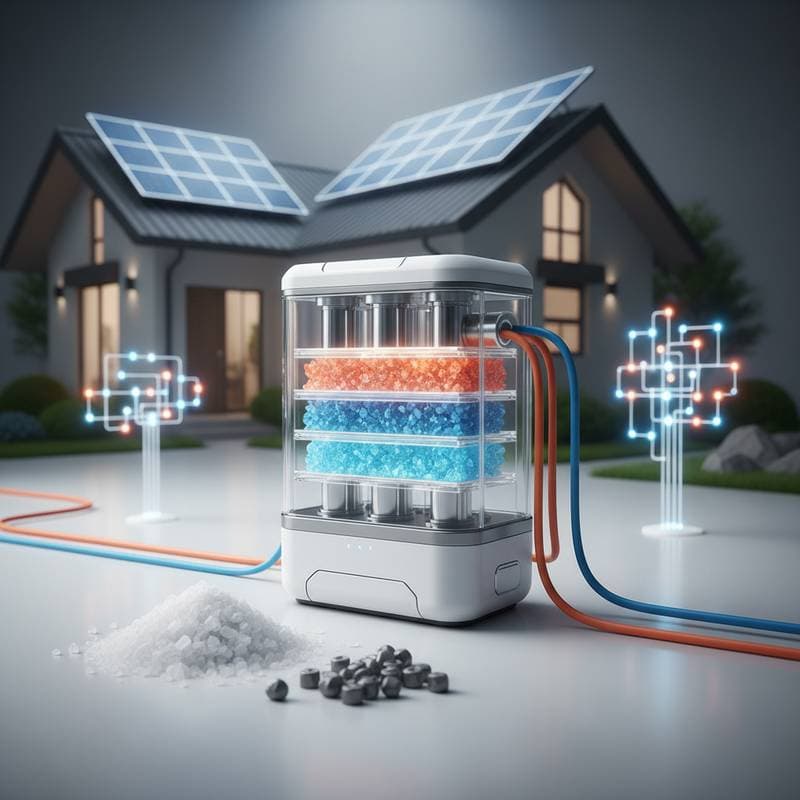
How Sodium-Ion Batteries Could Slash Solar Storage Costs by 2026
Solar energy research often presents a complex landscape, particularly regarding storage solutions. Homeowners frequently encounter lithium-ion batteries and seek more economical options that maintain high performance. Sodium-ion batteries emerge as a viable alternative, positioned to lower energy storage expenses in the coming years. This technology addresses the requirements of residential solar users and utility grid managers effectively.
Understanding Homeowner Priorities in Storage Costs
Effective energy storage determines the usability of solar power generation. Batteries store surplus energy produced during daylight hours for release in the evening. They also provide backup during power disruptions or periods of elevated electricity tariffs. However, the expense of lithium-ion batteries frequently influences residential installation decisions. Complete systems typically range from four hundred to six hundred dollars per kilowatt-hour, with costs increasing for high-end models or integrated monitoring capabilities.
Sodium-ion batteries alter this financial dynamic. Their composition relies on readily available materials, which mitigates supply chain disruptions that inflate lithium prices. This advantage enhances accessibility for individuals pursuing energy self-sufficiency without excessive expenditure.
The Fundamentals of Sodium-Ion Battery Operation
Sodium-ion and lithium-ion batteries function through a comparable process. Ions shuttle between the cathode, or positive electrode, and the anode, or negative electrode. During charging, ions migrate to the anode; during discharge, they return to the cathode, generating electric current.
Key distinctions arise in material selection. Sodium exceeds lithium in atomic size and availability, derived primarily from salt sources worldwide. Although sodium ions possess greater mass and thus lower energy capacity by weight, they suit stationary applications well. Advances in electrode design facilitate efficient ion movement, ensuring battery stability and longevity over thousands of charge-discharge cycles.
Evaluating Performance Metrics and Pricing
Energy density measures the energy capacity per unit of mass in a battery. Standard lithium-ion units achieve two hundred to two hundred fifty watt-hours per kilogram. Emerging sodium-ion models approach one hundred fifty watt-hours per kilogram. While this appears reduced on initial review, stationary installations prioritize affordability and durability over compact size.
Cost represents the primary benefit. Components such as nickel and lithium carbonate exhibit high and fluctuating prices. In contrast, sodium, iron, and carbon offer low costs and ample supply. With anticipated production scaling, sodium-ion packs may attain seventy to one hundred dollars per kilowatt-hour. This reduction could cut expenses for certain lithium-based setups by nearly half. For a ten-kilowatt-hour residential battery, installation might total eight thousand dollars rather than fifteen thousand.
Implications for Broader Solar Integration
Decreased storage expenses reshape solar economics rapidly. Consider a seven-kilowatt rooftop array generating approximately nine thousand one hundred kilowatt-hours annually, based on one thousand three hundred kilowatt-hours per kilowatt. If the owner utilizes half directly and sells the remainder via net billing, credits often fall short of retail value. Affordable batteries enable greater self-use, elevating consumption rates from fifty percent to eighty percent.
At sixteen cents per kilowatt-hour utility pricing, the additional two thousand seven hundred kilowatt-hours saved yield four hundred thirty dollars annually. For an eight-thousand-dollar battery with a twelve-year lifespan, payback occurs in under nineteen years from savings alone. Incorporating rebates or federal tax credits shortens this to ten years or fewer.
Assessing Safety and Durability Factors
Sodium-ion designs avoid the flammable liquid electrolytes found in select lithium-ion variants. Stable chemical formulations resist thermal runaway, enhancing suitability for household settings. Durability tests indicate over eighty percent capacity retention following three thousand to five thousand cycles, equivalent to ten to fifteen years of daily operation.
Benefits in Recycling and Resource Availability
Recycling processes for sodium-ion batteries simplify due to the absence of rare elements like cobalt. Material recovery requires less intricate methods, minimizing ecological footprint. Supply chains benefit from established salt and soda ash industries, diminishing reliance on concentrated mining areas. This diversification promotes consistent pricing long-term.
Anticipating Future Developments
Production facilities for sodium-ion batteries advance through pilot stages. Mass manufacturing will accelerate cost reductions. Solar installers may soon offer choices between lithium and sodium options, each presenting unique advantages. Users prioritizing initial affordability and safety may prefer sodium-ion solutions.
Practical Installation and Upkeep Strategies
Post-installation care mirrors other battery types. Maintain the enclosure in a cool, dry environment. Apply firmware updates from inverters or monitoring systems promptly. Prevent discharges below ten percent capacity to prolong service life. Conduct annual or biannual performance evaluations to verify optimal function.
Frequently Asked Questions
Are sodium-ion batteries less efficient than lithium-ion batteries?
Sodium-ion batteries exhibit marginally lower energy density, yet they achieve round-trip efficiencies exceeding ninety percent.
Will a sodium-ion battery integrate with my current solar inverter?
Hybrid inverters generally support various battery types via firmware adjustments. Verify compatibility directly with the manufacturer.