
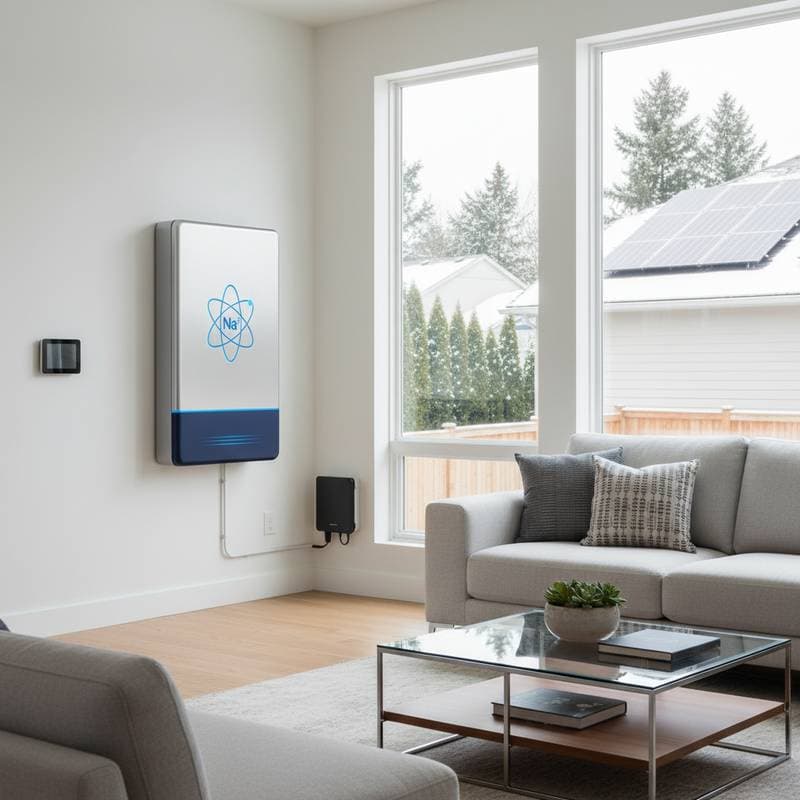
Sodium-Ion Batteries: A Cost-Effective Alternative to Powerwall Systems
Homeowners often seek dependable backup power and reduced electricity expenses, yet existing battery solutions frequently prove expensive or complex. Lithium-ion options, such as the Powerwall, establish high benchmarks for reliability, but their high costs exclude many households. Sodium-ion batteries now emerge as a viable, lower-cost choice for residential energy storage. These batteries utilize one of Earth's most plentiful elements, enabling broader access to stored solar energy for families.
The Importance of Sodium-Ion Batteries
Sodium-ion batteries employ sodium ions rather than lithium ions for energy storage and discharge. Sodium, derived from everyday table salt, ensures raw materials remain plentiful and affordable. This shift may alleviate battery pricing pressures and mitigate supply chain vulnerabilities common in lithium extraction. For residential users, sodium-ion options provide a route to sustainable backup power without the substantial upfront costs associated with lithium-ion counterparts.
Energy storage transforms solar panels from intermittent daytime generators into consistent all-day providers. Homeowners store surplus energy for nighttime consumption, thereby decreasing reliance on the grid and enhancing outage resilience. In numerous households, such systems also optimize time-of-use pricing, minimizing expenses during high-demand periods. Sodium-ion batteries deliver these advantages at a more accessible initial investment.
Mechanics of Sodium-Ion Batteries
Sodium-ion batteries function similarly to their lithium-ion equivalents. During charging, sodium ions shift from the positive electrode to the negative one via an electrolyte. Upon discharge, the ions reverse direction, generating electrical current from stored energy. Key distinctions lie in the components: sodium cells typically incorporate layered oxides or iron-based materials, which prove more economical and stable than lithium cobalt oxide or nickel manganese alternatives.
Larger sodium ions result in batteries that weigh more and offer lower energy density. Consequently, they hold marginally less energy per unit of weight. In fixed home applications, this drawback holds minimal relevance, as portability ranks below factors like longevity, security, and cost per kilowatt-hour. Stationary setups prioritize sustained performance over compactness.
Key Performance and Safety Features
Standard sodium-ion batteries achieve energy densities of 100 to 160 watt-hours per kilogram. Lithium-ion variants typically range from 200 to 250 watt-hours per kilogram. This disparity influences size rather than practical application in home environments. Notably, sodium-ion batteries maintain efficiency in low temperatures, unlike lithium systems that may falter in cold weather. They resist thermal runaway through non-flammable electrolytes and robust cathode compositions, enhancing safety in confined spaces such as basements or garages.
Advancements in cycle life show promise. Numerous sodium-ion cells endure 3,000 cycles while retaining 80 percent capacity. For daily cycling households, this translates to roughly eight years of service. Emerging formulations may push this to ten years or beyond, aligning closely with established lithium-ion benchmarks.
Cost Analysis and Return on Investment
Pricing stands as the primary benefit. Installed sodium-ion systems currently cost 100 to 150 dollars per kilowatt-hour, versus 300 to 500 dollars for lithium-ion equivalents. For a 10-kilowatt-hour residential unit, savings reach 1,000 to 3,000 dollars upon setup.
Consider a household consuming 30 kilowatt-hours daily from solar sources. A 10-kilowatt-hour sodium-ion battery offsets one-third of usage. At a rate of 24 cents per kilowatt-hour, it yields 2.40 dollars in daily savings by storing solar energy for peak evening discharge. Annually, this amounts to 875 dollars in grid cost reductions. With installation at approximately 1,500 dollars for 10 kilowatt-hours, return on investment occurs within two to three years, influenced by local rebates and tariffs.
Available Incentives and Utility Support
Though nascent, sodium-ion technology aligns with prevalent storage and solar incentives, satisfying equivalent performance and safety criteria. Certain utilities provide per-kilowatt-hour rebates for installations. Additional programs include time-of-use discounts or compensation for demand-response participation, where batteries support the grid during high-load times.
Homeowners should verify eligibility through certified installers and utility providers prior to commitment. In various areas, tax credits applicable to lithium-ion systems extend to sodium-ion variants when integrated with renewables like solar arrays.
Setup Process and System Compatibility
Sodium-ion battery installation mirrors lithium-ion procedures. It involves site evaluation, system design, permitting, and utility interconnection approval. Professionals position the battery adjacent to the electrical panel or inverter, link it to solar components, and configure monitoring software. Most sodium modules integrate seamlessly with conventional inverters.
Licensed solar or electrical specialists manage the full procedure for typical residences. Completion spans one to three days, based on existing panel layouts and conduit requirements. Post-activation, the system charges automatically during solar peaks and discharges to meet demand or capitalize on rate differentials.
Upkeep and Long-Term Durability
Routine maintenance proves minimal. These sealed batteries demand only dust-free environments and moderate temperatures. Maintaining ambient conditions between 50 and 90 degrees Fahrenheit optimizes longevity. Integrated software monitors cycles and diagnostics, notifying owners of capacity declines or securement issues. The inherent stability of sodium chemistry tolerates deeper discharges, prolonging operational lifespan.
Upon reaching end-of-life, recycling recovers valuable metals and electrodes. Absent cobalt or nickel, disposal poses reduced ecological hazards. Industry efforts focus on closed-loop processes to repurpose sodium compounds and cathodes into fresh batteries.
Enhancing Daily Energy Use
Integrating sodium storage with mindful practices amplifies efficiency. Schedule high-consumption tasks like dishwashing or laundering for solar-rich daylight hours, preserving battery reserves for evenings. Employ smart thermostats to precondition spaces using excess solar generation, conserving stored power. Simple upgrades, including LED lighting and improved insulation, further stretch overnight availability.
Scalable Options for Varied Budgets
Budget-Conscious Entry
- Opt for a 5-kilowatt-hour sodium-ion unit to support essentials like lights, fridge, and devices.
- Pair with a intelligent load controller to prioritize battery draw from critical circuits.
Balanced Expansion
- Install 10 to 15 kilowatt-hours to manage primary evening demands.
- Link to efficient appliances, such as heat pump water heaters or adjustable HVAC units, for peak solar utilization.
Comprehensive Independence
- Deploy a 20-kilowatt-hour system alongside full rooftop solar and heat pump heating for substantial off-grid capability.
- Incorporate electric vehicle charging controls to allocate surplus solar to transportation needs.
Practical Steps Forward
Compile a year's worth of utility statements to map consumption trends. Consult certified installers for shading assessments and demand audits. Solicit bids using consistent parameters for capacity, endurance, and inverter performance to enable accurate evaluations. Review rebate opportunities and grid connection rules before finalizing agreements.
Following installation, monitor output via the app each month. Ensure ventilation remains unobstructed, apply software updates promptly, and arrange biennial professional reviews. Compare tracked savings to bills for payback confirmation. Refine habits, such as daytime appliance operation, to accelerate financial gains.
Frequently Asked Questions
What drives the lower cost of sodium-ion over lithium-ion batteries?
Abundant sodium sourcing and simpler, cheaper metal requirements in production keep expenses down.
Do sodium-ion batteries suit cold climates?
Yes, they retain performance in low temperatures better than lithium-ion options, avoiding efficiency losses.
How long do sodium-ion batteries last in home use?
Many achieve 3,000 cycles, offering eight years at daily use, with potential for longer through advancements.
Are incentives available for sodium-ion installations?
They qualify for most solar and storage programs, including tax credits when paired with renewables.