
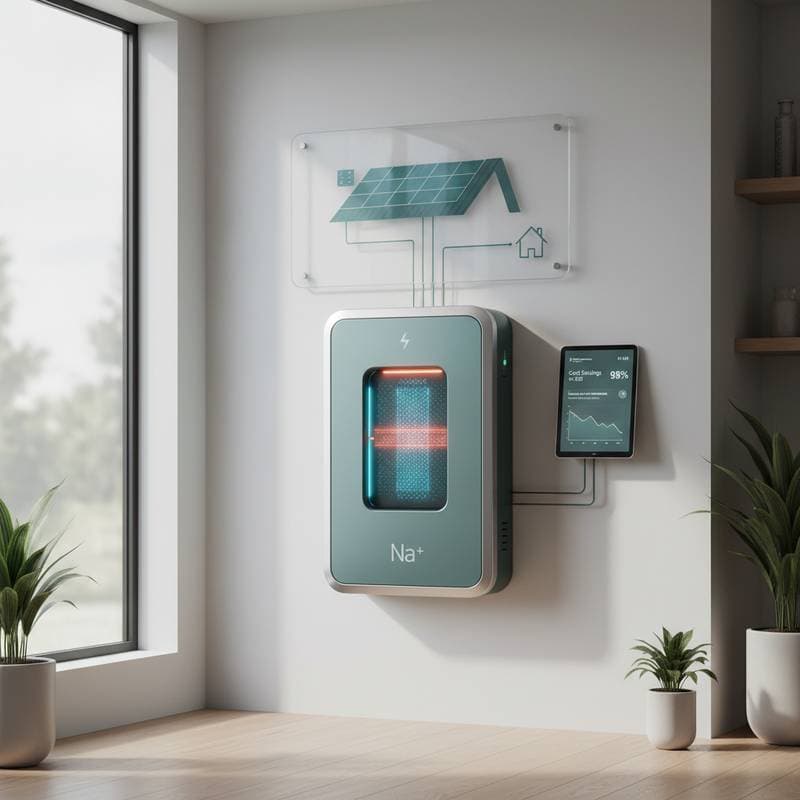
Sodium-Ion Batteries: The 2026 Shift Toward Affordable Solar Storage
Solar energy adoption continues to rise as homeowners pursue greater energy independence and reliability. However, the high cost of lithium-ion batteries frequently hinders the completion of solar projects. Sodium-ion batteries introduce a compelling alternative, offering lower costs, enhanced safety, and more stable supply chains. For those considering solar storage solutions, this development could reshape the financial aspects of backup power and grid interaction.
This article outlines the principles behind sodium-ion batteries, highlights their distinctions from lithium-ion systems, and provides guidance on key questions for decision-making. It also addresses safety protocols, installation procedures, and regulatory requirements that necessitate involvement from licensed electricians.
Principles of Sodium-Ion Battery Operation
Sodium-ion batteries operate on principles similar to those of lithium-ion batteries, featuring an anode, cathode, electrolyte, and separator. During charging, sodium ions migrate from the cathode to the anode. Upon discharge, these ions return to the cathode, producing electrical current.
The primary distinction lies in ion size: sodium ions exceed lithium ions in both size and weight, influencing several performance characteristics.
- Energy Density: Sodium-ion batteries hold less energy per unit of weight, resulting in larger units for equivalent capacity.
- Temperature Performance: These batteries perform reliably in colder conditions compared to many lithium-ion variants.
- Safety Profile: Sodium-ion designs exhibit reduced risk of thermal runaway, the process that leads to excessive heat, fire, or explosion.
- Material Sourcing: Sodium-based components derive from plentiful resources, minimizing price fluctuations and supply disruptions.
In solar setups where physical space presents fewer limitations, the trade-off in energy density proves acceptable in exchange for superior safety and reduced expenses.
Installation Standards and Regulatory Compliance
Sodium-ion battery installations adhere to the same regulatory framework as other stationary energy storage systems. Compliance requires adherence to National Electrical Code (NEC) Article 706, along with any applicable local modifications.
Essential compliance elements include the following:
- Certification and Markings: Batteries must carry listings from accredited testing laboratories for stationary applications.
- Isolation Devices: Accessible disconnect switches must feature clear labeling.
- Circuit Protection: Fuses or circuit breakers should align with the system's voltage and amperage specifications.
- Airflow Management: Enclosures need to mitigate heat accumulation while facilitating sufficient ventilation.
- Clearance Requirements: Adhere to distances outlined in manufacturer guidelines and local regulations.
Professional installers perform critical tasks such as verifying terminal torque with calibrated tools, ensuring appropriate conductor dimensions, and conducting load tests. These measures safeguard against overheating and confirm adherence to performance and safety benchmarks.
Sodium-Ion Versus Lithium-Ion: A Detailed Comparison
| Feature | Sodium-Ion | Lithium-Ion |
|---|---|---|
| Material Availability | Abundant and globally accessible | Scarce and regionally concentrated |
| Energy Density | Moderate | Superior |
| Safety Characteristics | Enhanced stability, lower flammability | Demands rigorous thermal controls |
| Cost Factors | Reduced due to inexpensive materials | Elevated from raw material expenses |
| Temperature Range | Strong performance in low temperatures | Vulnerable to temperature extremes |
| Supply Chain Stability | Minimal risks | Significant vulnerabilities |
For numerous homeowners, the advantages in cost and safety overshadow concerns related to size and weight. Sodium-ion technologies suit fixed installations, including residential batteries, community microgrids, and commercial solar arrays, where spatial constraints play a lesser role.
Commercial Viability and Safety Certifications
Industry leaders advance from experimental phases to full-scale manufacturing. The objective centers on achieving lithium-ion performance levels at diminished costs. Prior to acquisition, verify that sodium-ion products hold certifications like UL 9540 for energy storage assemblies and UL 1973 for stationary battery units.
Pose these inquiries to installers or manufacturers:
- Does the battery possess UL certification for stationary storage?
- What duration does the warranty cover, and how many cycles does it guarantee?
- Are battery management and thermal safeguards integrated into the system?
- Has the product undergone rigorous fire and electrical safety evaluations?
Such certifications affirm compliance with national safety norms, facilitating permitting processes and access to incentives.
Seamless Integration with Solar and Home Automation
Sodium-ion batteries connect to solar inverters in manners akin to lithium-ion counterparts. An integrated battery management system (BMS) tracks cell voltage, current flow, and thermal conditions. It interfaces with the inverter to regulate charging and discharging cycles. Numerous configurations accommodate hybrid inverters capable of handling both grid-connected and standalone modes.
Homeowners with smart systems benefit from compatibility with monitoring applications and demand management tools. These features enable storage of excess solar generation for evening use or power interruptions. The synergy of instant oversight and economical batteries enhances prospects for energy autonomy.
During system upgrades, ensure inverter software accommodates sodium-ion parameters. Certain models may require firmware enhancements or adjustments to handle varying voltage profiles.
Ongoing Maintenance and Issue Resolution
Sodium-ion setups demand less upkeep than traditional lead-acid alternatives, yet regular assessments remain essential.
Standard Inspection Protocols
- Verify that the enclosure remains free of dust and moisture.
- Examine cable coverings for damage or degradation.
- Secure terminals according to manufacturer-specified torque values.
- Track temperature levels and charge status.
- Document operational metrics on a monthly basis to identify deviations early.
Indicators of Potential Issues
- Sudden declines in voltage under load.
- Abnormal warmth or scents emanating from the battery assembly.
- Frequent error signals from the inverter concerning battery interface.
- Visible expansion or color changes in battery components.
Upon detecting these symptoms, disconnect the system immediately and engage a certified specialist. Avoid disassembling sealed units, as they contain substantial energy reserves that pose risks of electrocution or chemical injury.
Advancing Toward Reliable Home Energy Solutions
While sodium-ion batteries do not serve as universal substitutes for lithium-ion systems, they provide a viable route to economical storage. Their inherent stability and cost predictability appeal to practical needs. Homeowners embarking on solar initiatives stand to benefit from lowered overall expenses and accelerated investment returns.
Professionals in installation and inspection will refine protocols to incorporate this chemistry. Individuals can ready themselves by mastering fundamental concepts, selecting certified equipment, and collaborating with qualified experts.
As solar integration expands, sodium-ion storage emerges as a dependable ally. It aligns with aspirations for sustainable, secure, and attainable residential power.
Practical Actions for Homeowners
- Investigate certified sodium-ion options suitable for home applications.
- Engage a certified solar professional to assess integration feasibility.
- Obtain records confirming UL approvals and NEC alignment.
- Account for airflow needs and available space, given potential larger footprints.
- Arrange regular evaluations to sustain optimal function and security.
These measures equip homeowners to embrace evolving solar storage innovations. Sodium-ion batteries hold promise to elevate solar from a supplementary resource to a comprehensive energy strategy.