
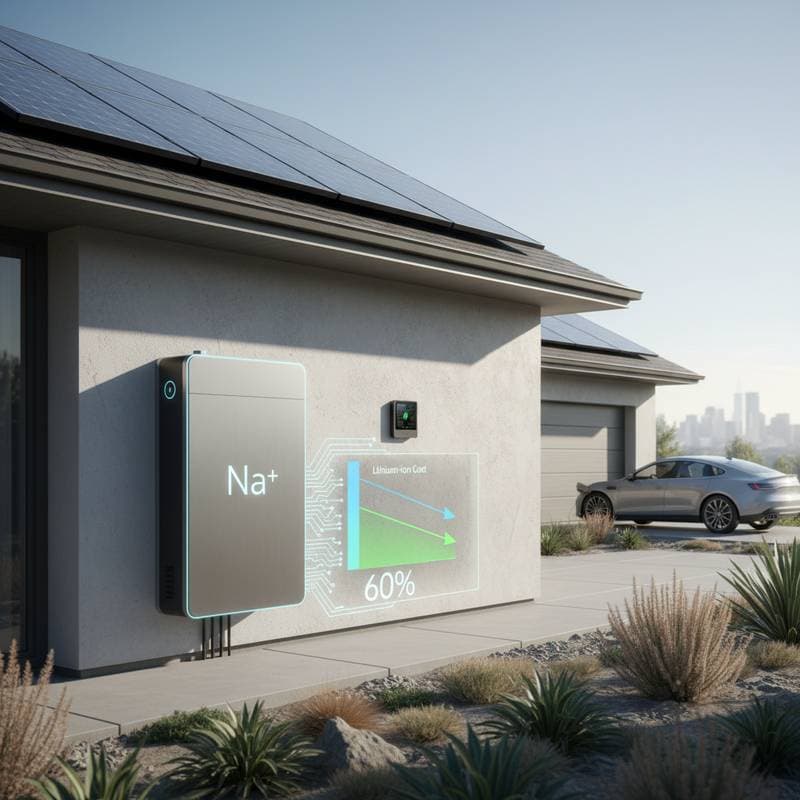
Sodium-Ion Batteries: Projected to Undercut Lithium Costs by 2026
Homeowners often monitor energy storage costs closely, seeking options that align with budgets for solar installations and backup power. Sodium-ion batteries emerge as a viable alternative to lithium-ion counterparts, delivering comparable performance at reduced prices. This development holds potential to transform residential energy strategies, making solar integration more accessible and accelerating the path to energy self-sufficiency.
The Significance of Sodium-Ion Technology
Lithium-ion batteries have driven advancements in renewable energy adoption, but high costs limit widespread household use. These batteries depend on extracted resources subject to price volatility and supply constraints. In contrast, sodium derives from abundant sources like seawater and salt deposits, ensuring stable and economical supply chains resistant to international interruptions.
Ongoing research and production efforts focus on enhancing sodium-ion capabilities to match lithium-ion standards. Although energy density remains marginally lower, recent innovations achieve sufficient levels for typical residential applications. Such progress positions sodium-ion batteries as a reliable option for building energy security without compromising essential functionality.
Fundamentals of Sodium-Ion Battery Operation
Sodium-ion batteries function through a process akin to that of lithium-ion batteries. During charging, sodium ions shift from the cathode to the anode, storing energy. Upon discharge, the ions return to the cathode, generating usable power. The design incorporates materials such as sodium iron phosphate cathodes and hard carbon anodes, which prove both cost-effective and safer in production.
Stability represents a primary advantage. These cells exhibit reduced propensity for thermal escalation or degradation under temperature extremes. Consequently, battery systems experience prolonged service life, minimizing long-term expenses and upkeep requirements for residential users.
Projections for Cost and Performance
Analyses from industry experts indicate that sodium-ion batteries may achieve pricing 40 to 60 percent below that of lithium-ion equivalents. For instance, a standard 10 kWh lithium-ion system installed in a home might total $8,000. At projected sodium-ion costs of $4,800 or lower, the return on investment for combined solar and storage setups could shorten from approximately ten years to six or seven years, varying by regional utility tariffs.
Energy density, expressed in watt-hours per kilogram, typically ranges from 120 to 160 for sodium-ion batteries, versus 180 to 250 for lithium-ion. This difference necessitates modestly larger units to attain equivalent capacity, yet the per-kilowatt-hour savings compensate effectively. In fixed home installations, additional space requirements rarely pose significant challenges.
Advantages in Sustainability and Application
Sodium-ion batteries eliminate reliance on cobalt, nickel, and lithium extraction, thereby lessening ecological footprints and geopolitical dependencies. They demonstrate superior operation in low-temperature environments, enhancing solar system efficiency during winter months. Moreover, recycling processes benefit from the non-toxic, plentiful nature of sodium compounds.
Enhanced safety further bolsters their appeal. The inherent chemistry mitigates risks of thermal runaway, reducing chances of ignition or excessive heat buildup. For households placing batteries in enclosed spaces like garages, this reliability fosters greater confidence in daily use.
Preparing for Sodium-Ion Integration
Individuals considering solar upgrades should initiate preparations immediately. Inquire with certified installers about forthcoming sodium-ion compatibility in their offerings. Evaluate personal energy consumption patterns to determine appropriate battery sizing; a 10 kWh unit generally sustains critical household loads for 24 hours.
With anticipated price reductions, expanding to a dual-module configuration becomes feasible for prolonged outages or vehicle charging needs. Prioritize systems backed by robust warranties and industry certifications. Select options featuring remote monitoring applications and dedicated technical assistance for optimal management.
Practical Actions for Homeowners
- Collect 12 months of electricity bills to analyze consumption trends.
- Arrange a professional evaluation of your property for solar viability.
- Obtain multiple storage proposals based on consistent specifications.
- Discuss sodium-ion adoption timelines directly with prospective installers.
- Establish a routine for annual or biannual system inspections.
Advancements in battery technology pave the way for more sustainable and robust residences. By investigating sodium-ion solutions proactively, homeowners position themselves to capitalize on cost efficiencies and fortify long-term energy autonomy.
Frequently Asked Questions
What distinguishes sodium-ion batteries from lithium-ion batteries?
Sodium-ion batteries employ sodium in place of lithium, resulting in decreased expenses and enhanced resource accessibility.
Do sodium-ion batteries suit residential applications in terms of safety?
Yes, their thermal stability surpasses that of lithium-ion, with lower overheating risks.
How do the lifespans of sodium-ion batteries compare to lithium-ion?
Lifespans may differ slightly, though evolving designs narrow this disparity.
Is it possible to integrate a sodium-ion battery into an established solar setup?
Compatibility exists in numerous scenarios, contingent upon inverter specifications and configuration adjustments.