
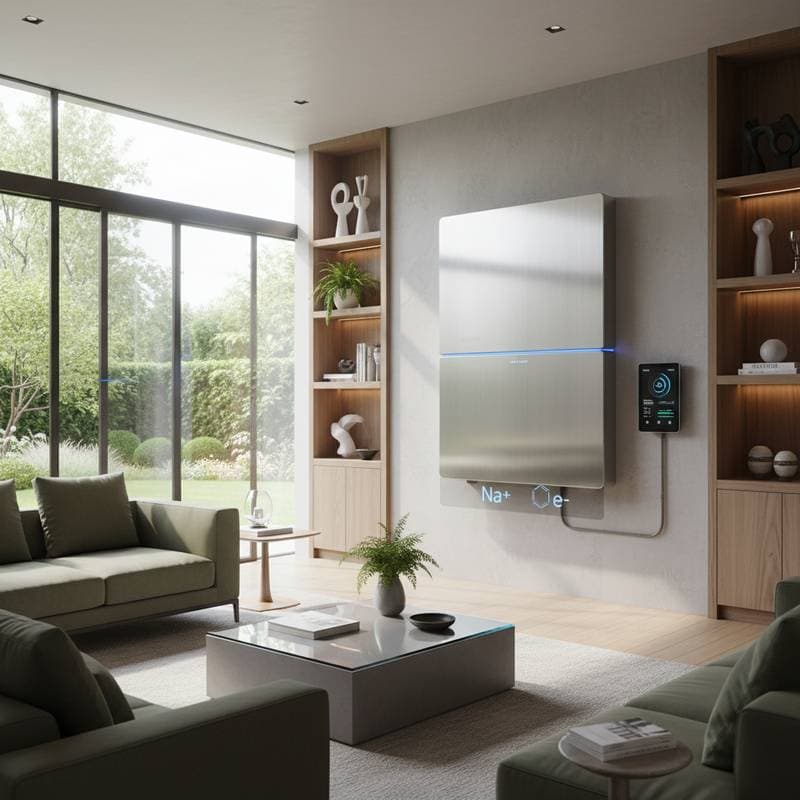
Sodium-Ion Batteries: A Cost-Effective Alternative to Powerwall Systems
Solar energy adoption continues to grow, yet battery storage remains a significant hurdle for many homeowners. New developments in sodium-ion technology address this challenge by offering a viable alternative to established lithium-ion systems. This article explores how sodium-ion batteries reduce costs, enhance safety, and integrate seamlessly with home solar setups.
Homeowners often face decisions about upgrading their solar investments. Established options like the Tesla Powerwall provide reliable storage but at a premium price. Sodium-ion batteries emerge as a promising solution, leveraging abundant materials to deliver comparable performance at lower costs.
The Appeal of Sodium-Ion for Home Energy Storage
Effective battery storage enables solar households to optimize energy use. Excess power generated during peak sunlight hours charges the battery for evening consumption. This approach minimizes reliance on the grid and lowers utility bills.
High costs have historically deterred widespread adoption. A typical lithium-ion system for 13 kilowatt-hours of capacity, including installation, ranges from $15,000 to $20,000. Sodium-ion technology targets a reduction to approximately half that amount, making storage accessible to more families.
Battery experts note that sodium-ion cells achieve sufficient energy density for stationary applications. Unlike mobile uses where weight impacts efficiency, home systems prioritize capacity over portability. As a result, performance gaps between sodium-ion and lithium-ion narrow considerably for rooftop solar users.
Fundamentals of Sodium-Ion Technology
Sodium-ion batteries function similarly to lithium-ion counterparts, shuttling ions between electrodes via an electrolyte. The key distinction lies in the materials: sodium replaces lithium, drawing from everyday sources like salt.
During charging, solar-generated electricity drives sodium ions from the cathode to the anode. Discharging reverses this process, converting chemical energy back to electrical power for home use. Common cathode materials include sodium iron phosphate or sodium manganese oxide, both derived from plentiful elements.
These materials drive down production expenses from the outset. Abundant supply chains for sodium, iron, and manganese contrast with the volatile markets for lithium, cobalt, and nickel. This foundation supports scalable manufacturing and stable pricing.
Performance Metrics: Energy Density and Cycle Life
Energy density indicates storage capacity per unit of weight, with lithium-ion batteries typically ranging from 200 to 260 watt-hours per kilogram. Sodium-ion variants achieve 120 to 160 watt-hours per kilogram. For wall-mounted or floor-based home systems, this disparity proves negligible.
Cycle life measures durability through repeated charge-discharge cycles. Initial sodium-ion prototypes managed 2,000 to 3,000 cycles, while advanced designs aim for 4,000 or beyond. Lithium-ion systems often reach 5,000 cycles, indicating sodium-ion's rapid progress.
In a daily cycling scenario for solar homes, 4,000 cycles equate to over a decade of reliable operation. This duration aligns with the lifespan of solar panels and associated warranties, ensuring long-term value.
Breaking Down Costs Per Kilowatt-Hour
Material costs form a substantial portion of battery expenses, accounting for 30 to 40 percent in lithium-ion production. Scarce resources like lithium drive up prices and expose supply chains to disruptions. Sodium-based alternatives utilize widely available elements, slashing raw material expenses by more than half.
Installed lithium-ion packs average $600 per kilowatt-hour. Scaled sodium-ion production could lower this to $300 per kilowatt-hour. For a 13-kilowatt-hour setup, sodium-ion savings reach about $3,900 compared to $7,800 for lithium-ion, before additional components.
Complete systems, incorporating inverters, enclosures, and labor, position sodium-ion options at $8,000 to $10,000. Such pricing democratizes access to advanced storage, appealing to budget-conscious solar adopters.
Enhanced Safety and Thermal Performance
Safety considerations influence battery selections, particularly in residential settings. Lithium-ion units risk thermal runaway under stress, potentially leading to fires. Sodium-ion designs operate at reduced voltages and exhibit lower reactivity to environmental factors like air and moisture.
Temperature tolerance further distinguishes sodium-ion batteries. They sustain approximately 90 percent capacity at 0 degrees Celsius, surpassing many lithium-ion types that fall below 70 percent. Homes in cooler climates benefit from this consistency, avoiding performance dips during winter months.
Sustainability Benefits and Supply Chain Resilience
Environmental impacts of mining weigh heavily on battery choices. Lithium and cobalt extraction often involves resource-intensive processes with ecological drawbacks. Sodium-ion relies on seawater-derived sodium and common minerals, simplifying procurement and reducing habitat disruption.
Localized manufacturing shortens supply chains, cutting transportation-related emissions. At end-of-life, sodium-ion batteries support straightforward recycling through mechanical disassembly. Non-toxic components minimize disposal challenges and promote sustainable energy cycles.
Seamless Integration with Existing Solar Infrastructure
Practicality hinges on compatibility with current systems. Sodium-ion batteries align with standard hybrid inverters operating at 48 to 52 volts per module. Adjustments typically involve firmware updates rather than hardware overhauls.
Communication protocols manage charging, monitoring, and safety features effectively. Leading manufacturers develop software adaptations for effortless integration. For existing solar installations, adding sodium-ion storage often requires only a battery enclosure and configuration tweaks, bypassing major renovations.
Calculating Payback and Financial Returns
Financial viability depends on usage patterns and incentives. Consider a Philadelphia household consuming 9,000 kilowatt-hours annually, supported by a 7-kilowatt solar array generating 9,100 kilowatt-hours. Without storage, excess production sells back to the grid at reduced rates.
Storage enables 4,000 kilowatt-hours of annual self-consumption at a utility rate of 17 cents per kilowatt-hour, yielding $680 in savings. A $9,000 sodium-ion installation recoups in about 13 years. Federal tax credits reduce the net cost to $6,300, shortening payback to nine years.
Rising electricity rates enhance these projections. Lithium-ion alternatives, at $14,000 post-credit, extend payback to 15 years, underscoring sodium-ion's economic edge.
Everyday Maintenance and System Oversight
Sodium-ion batteries demand minimal upkeep, featuring integrated electronics for real-time monitoring of voltage, temperature, and cycles. Owners access data via apps or dashboards for proactive insights.
Periodic inspections every few months verify connections and ventilation. Warranties span 8 to 12 years, guaranteeing at least 70 percent capacity retention. Firmware updates maintain alignment with evolving grid services, optimizing for time-of-use rates and demand management.
Future Prospects for Sodium-Ion Adoption
Production scales beyond research facilities, with manufacturers targeting residential and community applications. Pilot projects demonstrate viability in home backups, shared solar initiatives, and resilient microgrids.
This technology empowers homeowners to achieve energy autonomy affordably. Cleaner sourcing, robust safety, and tailored performance position sodium-ion as a cornerstone of sustainable storage.
Steps to Explore Sodium-Ion Options
- Contact installers offering diverse battery solutions and inquire about sodium-ion availability.
- Review warranties for cycle guarantees, capacity thresholds, and support details.
- Assess inverter matching to prevent added expenses.
- Factor in local climate and energy habits for optimal selection.
- Incorporate end-of-life recycling plans to sustain environmental benefits.
Expanding production signals further price declines. Early integration secures cost advantages as market interest builds, paving the way for widespread solar self-sufficiency.
Frequently Asked Questions
What drives the cost advantage of sodium-ion over lithium-ion batteries?
Abundant sodium and straightforward processing reduce expenses significantly. In contrast, lithium, cobalt, and nickel face high costs and supply limitations, elevating overall prices.
Do sodium-ion batteries match lithium-ion in energy storage capacity?
They provide slightly lower density per weight, yet suffice for home needs. Stationary setups accommodate the difference without compromising daily requirements.