
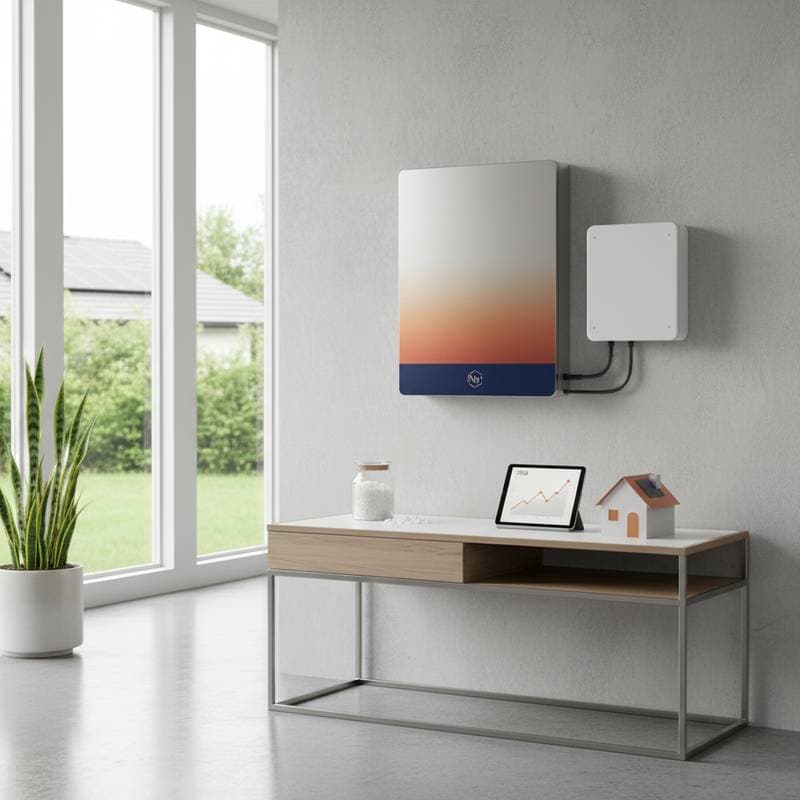
Sodium-Ion Batteries: A Path to Affordable Home Storage by 2026
Solar energy systems present homeowners with numerous decisions regarding panels, inverters, and storage solutions. These choices influence overall costs and performance significantly. While lithium-ion batteries serve as the current benchmark for solar storage, concerns about their expense and environmental impact persist. Sodium-ion batteries emerge as a promising alternative, offering potential for reduced costs and greater sustainability.
This article examines the mechanics of sodium-ion technology, its distinctions from lithium-ion systems, and the reasons experts anticipate its influence on residential energy storage in the coming years.
Understanding Sodium-Ion Technology
Sodium-ion batteries function by shuttling sodium ions between electrodes to store and release energy. During charging, sodium ions move from the cathode to the anode via an electrolyte solution. Upon discharge, these ions return to the cathode, generating an electric current to power household appliances.
This mechanism resembles that of lithium-ion batteries, yet sodium ions prove larger and heavier. Such characteristics historically limited energy density, or the amount of energy stored per unit volume. Advances in materials, including layered oxide cathodes and hard carbon anodes, now enable denser sodium packing and reduced degradation over time.
These developments position sodium-ion batteries for practical home applications. Researchers focus on optimizing electrolyte compositions to further enhance ion mobility and overall performance.
Comparing Efficiency and Durability
Lithium-ion batteries achieve round-trip efficiencies of 90 to 95 percent, meaning most stored energy becomes usable. Sodium-ion batteries reach 85 to 90 percent efficiency in current prototypes. For instance, storing 10 kilowatt-hours yields 8.5 to 9 kilowatt-hours for home use.
Durability hinges on cycle life, the number of charge-discharge cycles before capacity falls below 80 percent. Premium lithium-ion units endure 5,000 to 7,000 cycles. Sodium-ion variants demonstrate 3,000 to 5,000 cycles, with innovations targeting extensions beyond 6,000.
In daily household scenarios, involving one cycle per day, a 4,000-cycle battery provides over 10 years of reliable service. This longevity, paired with anticipated lower upfront costs, supports competitive return on investment compared to established lithium options.
Shaping the Economics of Residential Solar
Integrating solar panels with storage allows homeowners to shift energy use away from peak utility rates. Consider a 7-kilowatt solar array generating approximately 9,100 kilowatt-hours annually, complemented by a 10-kilowatt-hour sodium-ion battery.
If this battery covers 30 percent of evening energy needs at an average rate of 20 cents per kilowatt-hour, annual savings reach about 550 dollars. Across 10 years, savings accumulate to 5,500 dollars, often offsetting the system's cost after accounting for federal tax credits and local incentives.
Regional factors, such as varying electricity rates and rebate programs, affect these projections. Nonetheless, sodium-ion batteries could shorten payback periods to under seven years in high-cost areas, broadening access to solar independence.
Homeowners might calculate personal savings using online tools that input local rates and system sizes. Such planning reveals how affordable storage enhances financial and environmental benefits.
Maintenance Practices for Optimal Performance
Sodium-ion batteries require minimal upkeep, primarily involving firmware updates and routine inspections. Maintain operating temperatures between 32 and 104 degrees Fahrenheit to preserve capacity. Annual checks of connections, ventilation, and dust accumulation prevent common issues.
Professional servicing every two to three years ensures alignment with manufacturer guidelines. Homeowners can monitor performance through integrated apps that track efficiency and alert for anomalies.
At the end of primary use, sodium-ion systems support recycling programs or repurposing for less demanding roles, like emergency backups or grid support. This approach minimizes waste and extends resource value.
Realizing Benefits for Homeowners
Sodium-ion batteries promise to democratize home energy storage by leveraging abundant sodium resources, reducing reliance on scarce lithium. Lower production costs could drop system prices by 30 to 50 percent by 2026, making solar viable for middle-income households.
Beyond economics, these batteries enhance safety with inherent thermal stability, lowering fire risks. Their sustainability aligns with global shifts toward greener energy, supporting reduced carbon footprints without compromising reliability.
As commercialization advances, early adopters gain from pilot programs and incentives. This technology not only cuts costs but also empowers homeowners toward resilient, self-sufficient energy futures.
Frequently Asked Questions
Are sodium-ion batteries suitable for residential applications?
Yes, their thermal stability surpasses that of lithium-ion batteries, reducing overheating risks during normal use.
Do they integrate with standard solar installations?
In most cases, yes; however, verify inverter compatibility with the manufacturer to ensure seamless operation.
What is the expected lifespan of sodium-ion batteries?
They typically handle 3,000 to 5,000 cycles, varying by model and maintenance practices.