
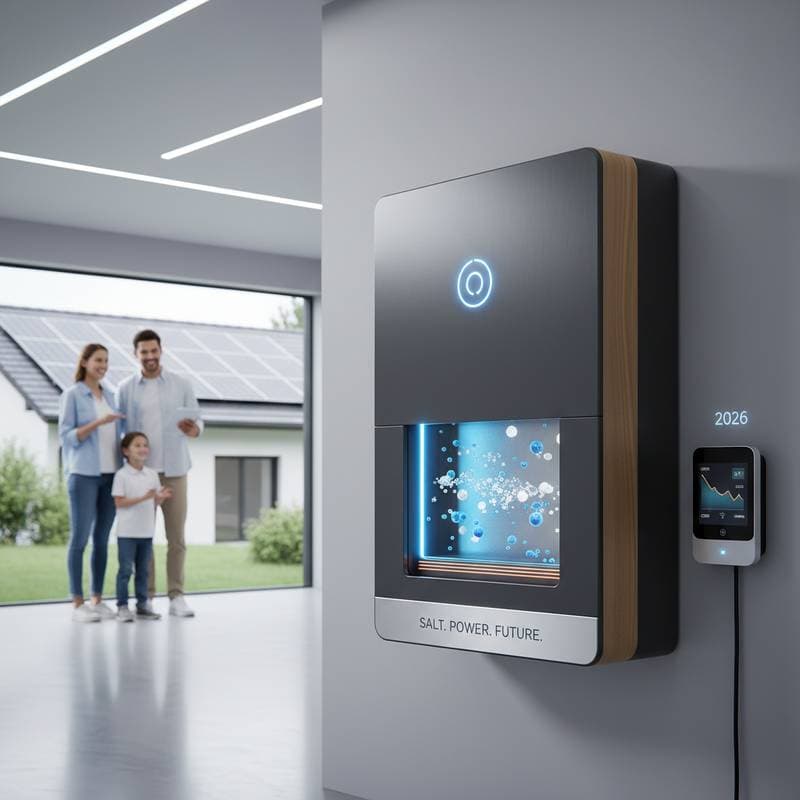
Salt Batteries Set to Undercut Lithium Costs by 2026
Homeowners increasingly seek reliable ways to store solar energy. Battery advancements promise to bridge the gap between intermittent generation and consistent use. Sodium-ion batteries, often referred to as salt batteries, emerge as a viable contender against established lithium-ion technology. These batteries rely on sodium from everyday salt, bypassing the scarcity and environmental toll of lithium extraction.
Lithium-ion batteries enabled widespread solar adoption, yet their elevated costs and vulnerable supply chains hinder broader access. Sodium-ion options address these issues directly. Early demonstrations indicate substantial cost reductions, positioning them as a preferred solution for residential and utility-scale storage.
The Value of Salt Batteries
Abundance defines the primary advantage of sodium-ion batteries. Sodium exists in vast quantities worldwide, extracted at minimal expense. In contrast, lithium sources cluster in limited geographic areas, demanding energy-intensive mining and refining. Substituting sodium for lithium slashes raw material expenses by up to 30 percent, with efficiencies extending across manufacturing stages, including cathode production and assembly.
These batteries perform reliably in low temperatures, outperforming lithium counterparts in cold climates. Homeowners in northern regions benefit from reduced need for thermal management systems, which streamlines design and cuts operational demands. Installation becomes less intricate, avoiding specialized enclosures or heaters.
Safety features further elevate their appeal. Sodium-ion batteries resist ignition and thermal instability, minimizing fire hazards. Such characteristics ease regulatory approvals, lower insurance premiums, and provide reassurance for households integrating storage with rooftop solar panels.
Core Principles of the Technology
Sodium-ion batteries operate on principles similar to lithium-ion designs. During charging, sodium ions shuttle from the cathode to the anode via an electrolyte solution. Discharging reverses the flow, converting chemical energy into usable electricity. Key distinctions appear in the materials: sodium pairs with iron or manganese, eliminating reliance on cobalt or other rare metals.
Larger sodium ions once limited energy density in initial models, resulting in lower capacity per unit weight. Innovations in electrode structures and electrolyte formulations have closed this disparity. Advanced prototypes now achieve 160 watt-hours per kilogram, trailing lithium iron phosphate batteries by merely 15 percent.
For fixed residential applications, energy density yields to priorities like affordability and durability. A modest trade-off in compactness proves negligible when balanced against superior stability and price points.
Economic Analysis and Return on Investment
Consider a 10-kilowatt-hour lithium-ion system, typically installed at approximately 9,000 dollars. A sodium-ion equivalent at 30 percent less would total around 6,300 dollars. Paired with annual solar output of 9,000 kilowatt-hours and utility rates averaging 24 cents per kilowatt-hour, users offset roughly 2,160 dollars in yearly bills.
This scenario yields a payback period of about three years, factoring in solar integration and peak pricing benefits. Conservative estimates extending to five years still present compelling financial cases, especially with rising energy demands.
Policy Support and Industry Trajectory
Government incentives for energy storage apply universally, regardless of battery chemistry. Sodium-ion systems thus access identical federal tax credits and local rebates as lithium options. As production volumes grow, these supports amplify affordability for initial adopters.
Prominent manufacturers construct demonstration facilities, while utilities deploy test arrays. Positive outcomes from these initiatives accelerate approvals for home-use certifications. Mass manufacturing will further depress prices through optimized logistics and inexpensive inputs.
Practical Setup and Upkeep
Integration of sodium-ion batteries mirrors lithium processes. Compatible inverters, protective casings, and digital oversight platforms ensure familiarity for certified installers. Wiring protocols and safety protocols remain consistent, with chemistry as the sole variable.
Ongoing care requires little effort. Degradation occurs at roughly 1 percent annually, surpassing many lithium variants. Extended service cycles prevail, supplemented by app-based notifications for performance shifts.
At lifecycle's end, recycling leverages current infrastructure. Absence of cobalt and nickel simplifies disassembly, enhancing worker safety and environmental impact.
Enhancing Daily Energy Management
Battery storage reshapes household electricity patterns. It captures midday solar surplus for evening or high-demand release. Affordable sodium-ion units enable expanded capacity, facilitating load shifting, grid relief, and blackout protection.
Smart automation refines this dynamic. Systems charge during off-peak periods and power devices during premium hours. Outcomes include trimmed expenses and diminished reliance on fossil fuels.
Steps to Adopt Energy Storage
Begin by analyzing 12 months of electricity statements to map usage trends. Arrange a professional assessment of roof suitability and shading impacts for solar potential. When soliciting bids, standardize evaluations on capacity, efficiency ratings, energy losses, and guarantee terms.
Inquire about sodium-ion availability from providers. Expressing interest fosters market responsiveness, even if options lag currently. Routine checks involve ensuring airflow, software updates, and quarterly data reviews via portals.
Adopting storage fortifies personal energy security. Salt batteries advance sustainable materials, robust performance, and economic viability. Each installation contributes to a more resilient, decentralized power network.
FAQ
What defines a sodium-ion battery?
A rechargeable device that employs sodium ions for energy storage and delivery, distinct from lithium-based systems.
Do sodium-ion batteries suit residential environments?
Yes, their nonflammable nature and resistance to thermal issues make them ideal for home applications.
What cost reductions apply to salt batteries?
Projections indicate up to 30 percent savings per kilowatt-hour of usable capacity upon scaled manufacturing.