
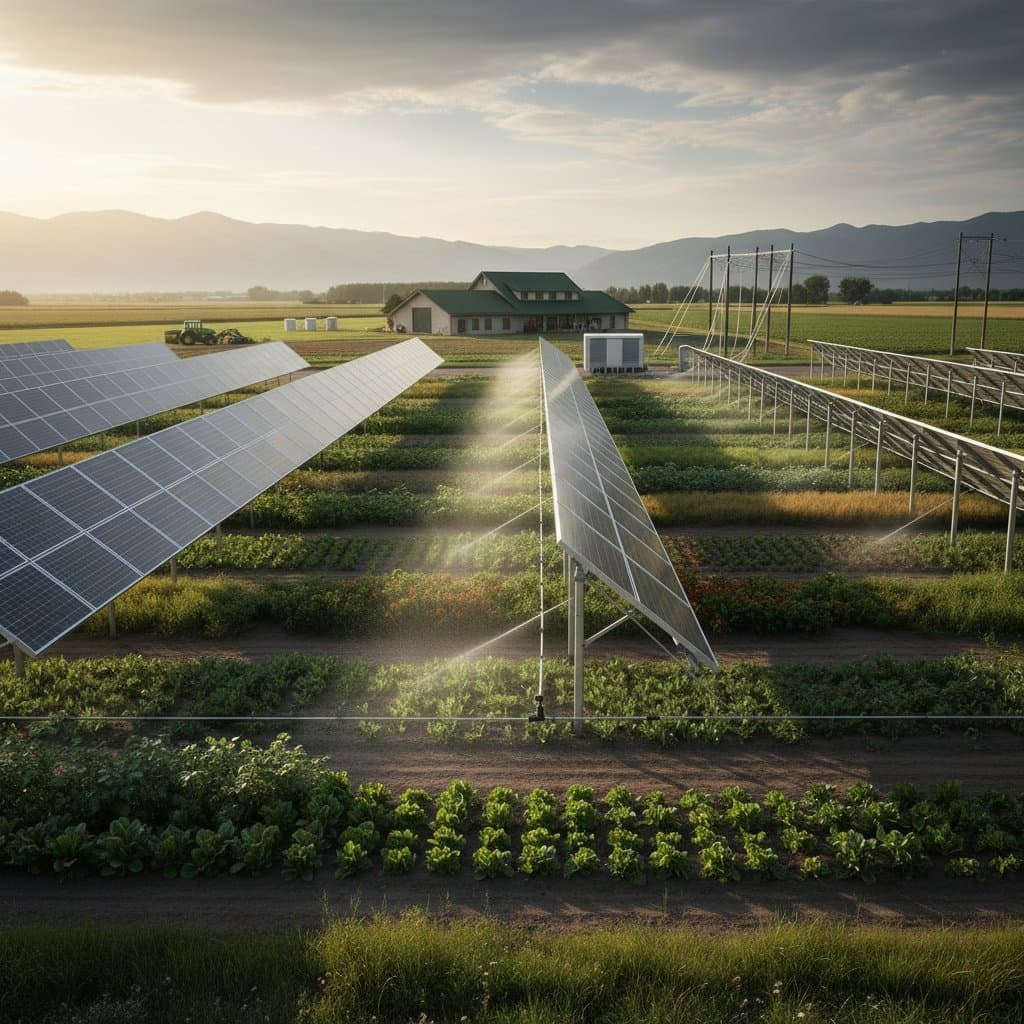
Agrivoltaics: Growing Food and Power on the Same Land
Agrivoltaics combines solar energy production with agriculture on shared land. Solar panels rise above crops or pasture, allowing farmers to harvest both electricity and food from one property. This approach addresses land scarcity while supporting renewable energy targets and local food supplies.
Why Agrivoltaics Matters
Farmers often face pressure to decide between energy projects and crop production. Agrivoltaics resolves the choice by enabling both uses simultaneously. Panels supply shade that lowers soil moisture loss and protects plants from extreme heat. Crops in turn reduce ground temperatures around the arrays and can raise panel efficiency.
How Agrivoltaics Works in Practice
Installers mount panels higher than standard arrays and widen row spacing to admit sunlight. Single-axis trackers adjust tilt throughout the day to balance light for plants and power generation. Suitable crops include lettuce, kale, strawberries, and many herbs. Sheep or goats can graze beneath the structures and control vegetation without machinery.
A one-megawatt agrivoltaic installation typically generates 1.3 million kilowatt-hours each year. At twelve cents per kilowatt-hour this output yields roughly 156000 dollars in revenue before expenses. The same acreage can also produce 800 boxes of vegetables or support twenty goats, creating two revenue streams.
Economic and Environmental Benefits
Energy income helps offset variable farm costs such as fuel and seed during poor market years. Over twenty years the combined returns from power sales and crops generally surpass single-use income. Panels limit erosion, moderate microclimate extremes, and reduce irrigation needs. Research indicates total land productivity can rise by sixty percent or more when shade-tolerant crops are paired with well-designed arrays.
Costs, Incentives, and Entry Points
Agrivoltaic systems cost between 1.40 and 1.60 dollars per watt installed. A 500-kilowatt project therefore requires approximately 700000 dollars before incentives. Federal tax credits, state grants, and renewable energy certificates can lower net expense by nearly half. Utilities sometimes provide power purchase agreements that lock in long-term revenue.
Landowners may begin with a 50-kilowatt test plot to measure crop response under local light conditions. Data from the pilot informs decisions about larger installations. Property owners who lease space to developers receive fixed payments without operating the equipment.
Challenges and Practical Solutions
Equipment must allow safe passage for tractors and harvesters. Crop trials determine which varieties tolerate partial shade. Maintenance teams require training to avoid interference with farm operations. Agricultural extension services now supply design templates, variety recommendations, and financial models that address these issues.
Community and Lifestyle Outcomes
Agrivoltaics sustains rural employment in construction, farming, and system upkeep. It preserves agricultural land while advancing clean energy goals. Consumers gain access to locally grown producewater and emissions impacts. Farmers obtain an additional buffer against weather and price volatility.
Planning Your Agrivoltaic Project
- Order a site assessment that evaluates sunlight exposure, slope, and soil type.
- Collect twelve months of utility statements to project energy offset.
- Consult the local extension office for shade-tolerant crop data.
- Solicit proposals from several developers using identical performance assumptions.
- Verify available incentives, grid connection rules, and lease conditions.
- Schedule ongoing maintenance, rotational grazing, or planting cycles.