
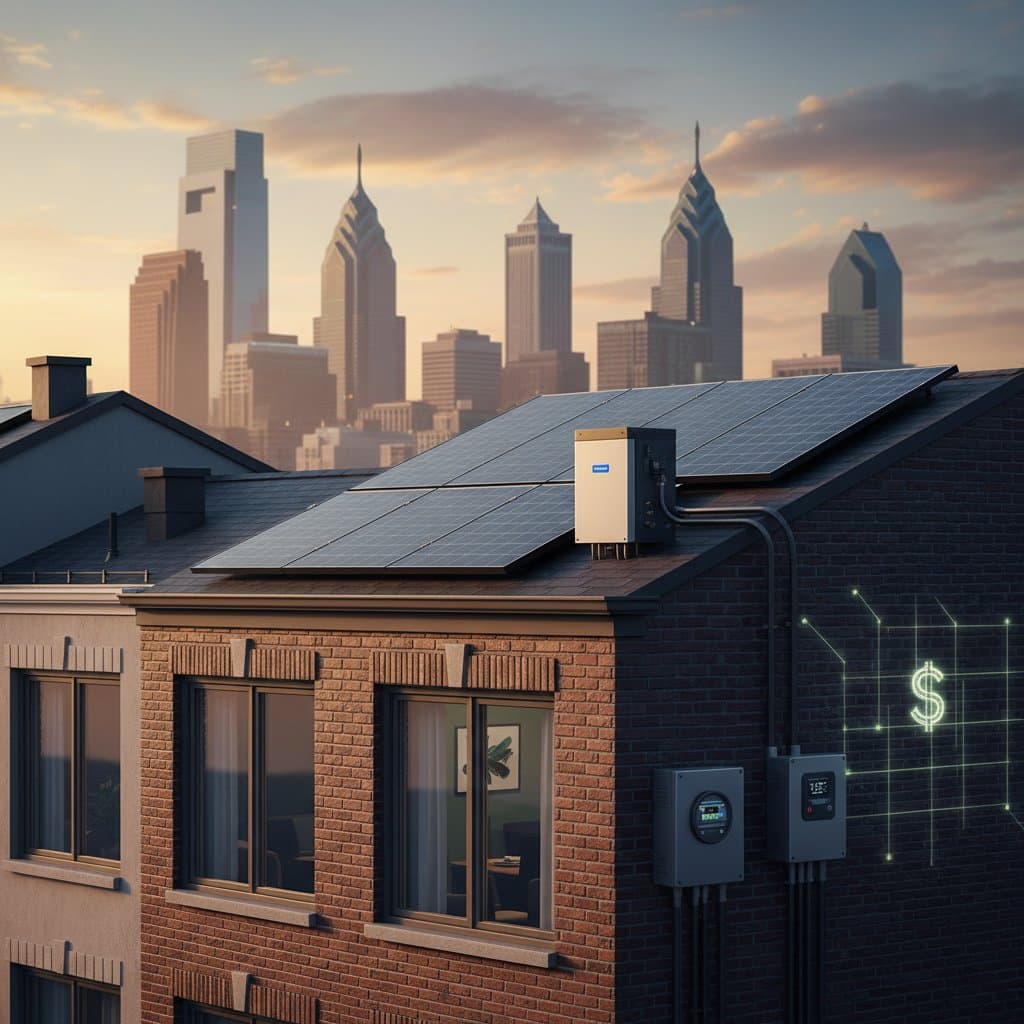
Grid-Interactive Solar Lets You Earn $800 Per Year by 2026
Homeowners across Philadelphia are discovering a new way to turn their solar systems into income generators. Grid-interactive solar technology lets you not only power your home but also sell stored electricity back to the utility grid when prices rise. By combining solar panels, smart inverters, and home batteries, this system can help you earn as much as $800 per year through energy arbitrage and grid participation programs.
This opportunity works best for homes with stable solar output, reliable battery storage, and a utility that supports time-based pricing or net metering. It also requires careful planning, safe installation, and code compliance.
Understand What Grid-Interactive Solar Means
A grid-interactive solar system connects your home to both solar panels and the utility grid. It can draw power when needed or export it when you have surplus energy. The system uses a smart inverter that communicates with the grid and manages power flow.
When electricity demand is low, your system charges the battery from your solar panels. When demand spikes, the inverter discharges stored energy to the grid. This process, called energy arbitrage, takes advantage of rate differences between peak and off-peak hours.
Unlike older systems that only offset your use, grid-interactive setups can actively trade power. They respond to grid signals, price changes, and even weather forecasts.
Safety Comes First
Before any work begins, confirm that all electrical components are listed and approved for residential grid interconnection. Use equipment certified to UL and IEEE standards.
Only a licensed electrician should connect a solar inverter or battery to a service panel. High voltage DC and AC circuits can cause severe injury or fire if handled incorrectly.
Be aware of these hazards:
- Arc faults from loose terminals or damaged insulation
- Overheating due to undersized conductors
- Shock risk from backfeed during a grid outage
- Improper grounding or bonding of metallic parts
Homeowners can inspect visible components, clean panels, and check system readouts. They should never open enclosures, reset breakers repeatedly, or rewire any device.
If a display shows error codes, if breakers trip often, or if a burning smell appears near the inverter, turn off the system using the manufacturer shutdown sequence and call a professional.
How Energy Arbitrage Works
Energy arbitrage means buying or storing electricity when it is cheap and selling it when it is expensive. A grid-interactive solar system automates this process.
- Daytime charging: Panels produce electricity. The home uses what it needs. Excess power charges the battery.
- Evening discharge: When grid prices rise, the inverter releases stored energy to the grid.
- Monitoring: The control software tracks prices, weather, and battery levels.
- Utility settlement: The utility credits or pays for exported energy based on its rate plan.
The earning potential depends on battery capacity and round-trip efficiency, local time-of-use rates, seasonal sunlight hours, and grid participation rules. In Philadelphia, homeowners using a battery between ten and fifteen kilowatt-hours may export enough energy to earn around $800 each year once rate programs mature.
Tools and Components
A safe and compliant grid-interactive system uses a smart inverter certified for grid support functions, a lithium-ion battery with integrated management system, and an energy gateway or controller for communication with the utility. Installers also rely on a non-contact voltage tester for safe verification during service, a torque screwdriver to meet connection torque specifications, and GFCI and AFCI protection as required by the National Electrical Code.
The installer must verify conductor sizes, overcurrent protection, and labeling. Each disconnect switch must be visible and accessible.
Installation and Code Context
The National Electrical Code sets requirements for photovoltaic systems, storage, and interconnection. The local authority having jurisdiction, often the city electrical inspection office, enforces these standards.
Before installation, homeowners must obtain a building and electrical permit, submit a single-line diagram of the system, provide equipment specifications and listing documents, and schedule final inspection before activation. Code references include NEC Articles 690, 705, and 706. These cover wiring methods, grounding, inverter isolation, and battery management.
During inspection, officials confirm that labeling is correct, that disconnects are accessible, and that grounding matches code. Some inspections do not include wire condition verification behind finished surfaces, so hidden faults can remain undetected. Only a licensed electrician can fully test insulation resistance and connection torque.
Financial and Program Benefits
Grid-interactive solar creates multiple revenue streams beyond energy savings. Homeowners may qualify for net metering credits for exported energy, demand response payments for helping stabilize the grid, performance incentives from state or utility programs, and reduced peak charges due to battery discharge scheduling.
When these benefits combine, many systems reach payback within several years. The income can offset maintenance costs or future battery replacements. A statement from the Department of Energy notes that distributed energy resources like grid-interactive systems can reduce household energy costs while improving grid resilience.
Maintenance and Monitoring
Keep the system clean, updated, and properly ventilated. Inspect panels for debris or shading once a month. Review inverter data weekly and look for abnormal voltage or frequency readings. Check for warning lights or fault messages. Ensure that battery enclosures remain cool and dry. Schedule annual professional service to verify torque and insulation resistance.
If output drops unexpectedly, check for blown fuses, tripped breakers, or dirty panels. Do not attempt to open battery modules or inverter housings. Manufacturers provide software dashboards that display real-time generation, consumption, and export data. Consistent monitoring helps identify performance decline before it becomes a safety issue.
When to Call a Licensed Electrician
Call a licensed electrician if the system fails to reconnect after a grid outage, the inverter displays persistent fault codes, you notice heat damage around terminals or conduit, the battery reports abnormal temperature, or any ground fault or arc fault warning appears.
Exploring Grid-Interactive Options
Homeowners ready to move forward should consult licensed professionals who understand local permitting and utility requirements. Proper design and installation position households to capture both immediate savings and ongoing grid payments. This approach supports personal energy independence while contributing to broader grid stability.