
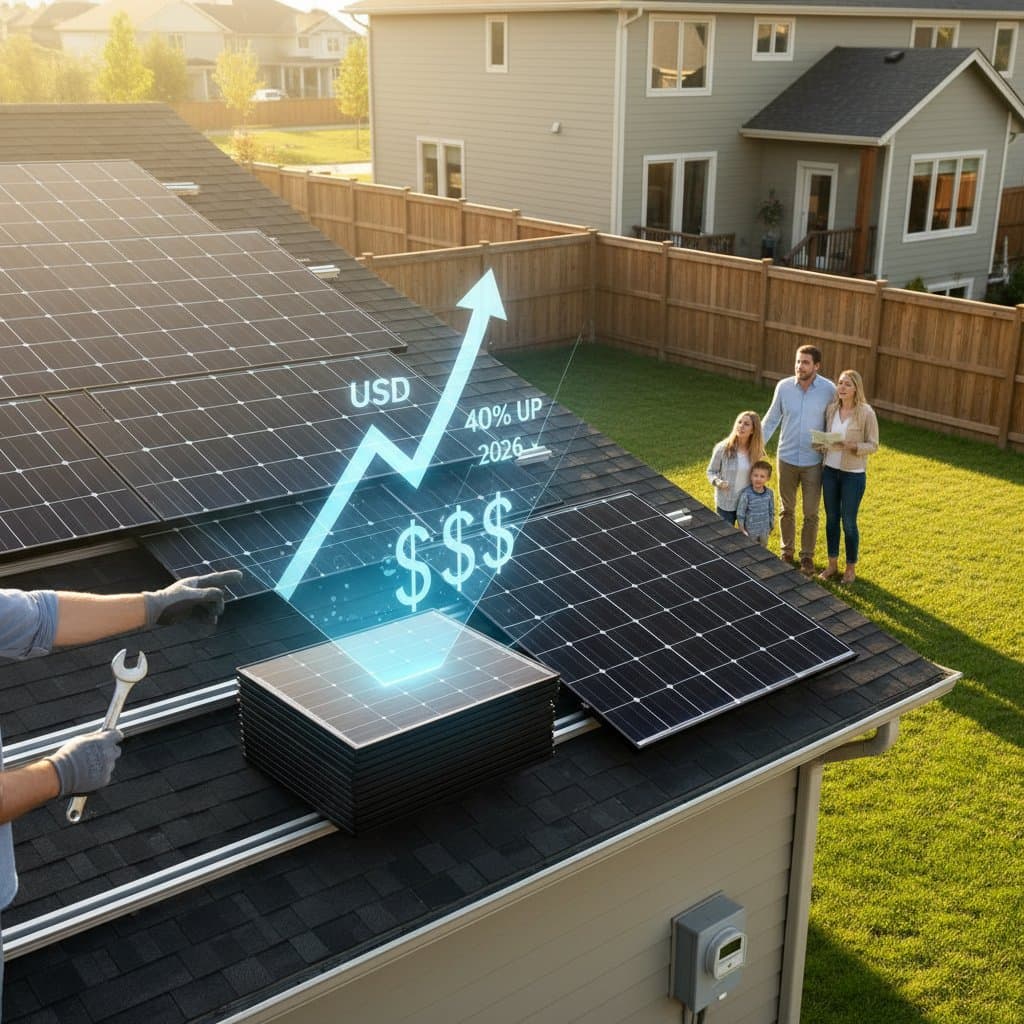
Solar Panel Prices Could Jump 40 Percent Due to 2026 Tariffs
Many homeowners wonder if they missed the best moment to go solar. The short answer is not yet. Waiting much longer could cost thousands.
New import tariffs scheduled to take effect could raise the price of solar panels by as much as 40 percent. That potential increase has sparked concern among homeowners, installers, and clean energy advocates.
Why Tariffs Affect Solar Panel Prices
Most solar panels installed in the United States use imported components. Even when final assembly happens domestically, the solar cells, glass, or aluminum frames often come from overseas. Tariffs are fees charged on imported goods. When those fees climb, the added cost moves through the supply chain until it reaches the homeowner.
If tariffs raise prices by 40 percent, a typical system that would have cost about 15,000 dollars could jump to 21,000 dollars. That difference alone could extend the payback period by several years.
How the Math Works
Consider a simple example. A 7 kilowatt system produces about 9,100 kilowatt hours each year, assuming roughly 1,300 kilowatt hours per kilowatt. If the utility rate is 20 cents per kilowatt hour, the system offsets about 1,820 dollars in annual electricity costs.
With current pricing, that 7 kilowatt system at 15,000 dollars pays for itself in about eight years. If tariffs lift equipment costs by 40 percent, the same system jumps to 21,000 dollars. The payback then stretches to nearly 12 years.
That longer payback does not erase the benefits of solar. It changes how homeowners evaluate timing. Installing before the new tariff window can preserve the faster return on investment and protect against future price swings.
Factors That Will Influence Final Costs
Not every system will face the full 40 percent increase. Several factors can buffer or amplify the effect.
- Domestic manufacturing. Panels produced in the United States may sidestep some import fees, though domestic capacity remains limited.
- Incentives. The federal tax credit can offset 30 percent of total installation costs, and many states add rebates or performance based incentives.
- Utility rules. Net billing or time of use rates influence how much value solar energy provides on the bill.
- System design. High efficiency panels and optimized layouts may deliver more energy per square foot, improving overall value even with higher equipment prices.
- Labor and permitting. Local labor rates and city permit fees may change independently of tariffs, so total system cost varies by region.
Philadelphia homeowners benefit from competitive local installation markets and supportive state incentives. That combination can soften the blow of any price increases.
Expert Insight on Supply and Demand
Experts explain that solar supply chains are sensitive to sudden policy changes. When tariffs rise, importers often rush to bring in as much equipment as possible before the new rules start. That temporary surge can create shortages later.
Installers may also face longer lead times for panels or inverters. Some will pivot to different brands or models to keep projects moving. Others may pause sales until prices stabilize. For homeowners, that makes early planning even more valuable.
Why the Market May Still Expand
Even with higher equipment costs, demand for residential solar continues to grow. Energy prices from utilities remain unpredictable, and more homeowners want control over their power bills. Pairing solar panels with home batteries also increases resilience during outages and time of use rate spikes.
A 40 percent bump in panel cost sounds steep. The long term economics still favor solar in most regions. The key is to look beyond upfront cost and focus on lifetime savings. Panels typically last 25 to 30 years with minimal degradation. That means even a slower payback still leaves a decade or more of free or low cost energy.
How Homeowners Can Prepare
If installation is planned soon, a few steps can help secure the best pricing and avoid supply delays.
- Get multiple quotes early. Compare equipment types, warranties, and projected energy output.
- Ask about sourcing. Installers with diverse supply chains can adapt if tariffs raise specific costs.
- Review incentives. Confirm eligibility for the federal tax credit and any local or utility based rebates.
- Lock in contracts. Many companies honor quoted prices once a contract is signed, even if tariffs change before installation.
- Consider storage. Adding a battery may increase total cost, but it improves energy independence and value under new utility rate structures.
Keeping Systems Efficient Over Time
Once installed, solar panels require little maintenance. Cleaning the surface once or twice a year reduces dust buildup that can reduce efficiency by a few percent. Monitoring software, often included with modern inverters, tracks production and alerts users to performance drops.
Inverters typically last 10 to 15 years, so budgeting for a replacement mid life keeps output steady. Warranties often cover 25 years of panel performance, ensuring minimal degradation, usually less than half a percent per year.
When panels eventually reach the end of their service life, recycling programs can recover most of the silicon, glass, and aluminum. That circular approach supports sustainability even as equipment prices fluctuate.
Evaluating Your Solar Installation Timeline
Tariffs may change the short term economics of solar, but they do not alter the fundamentals. Sunlight remains free, and technology keeps improving. Acting before costs rise can secure long term savings and energy security for a home. The best time to start exploring options is before the supply chain tightens.