
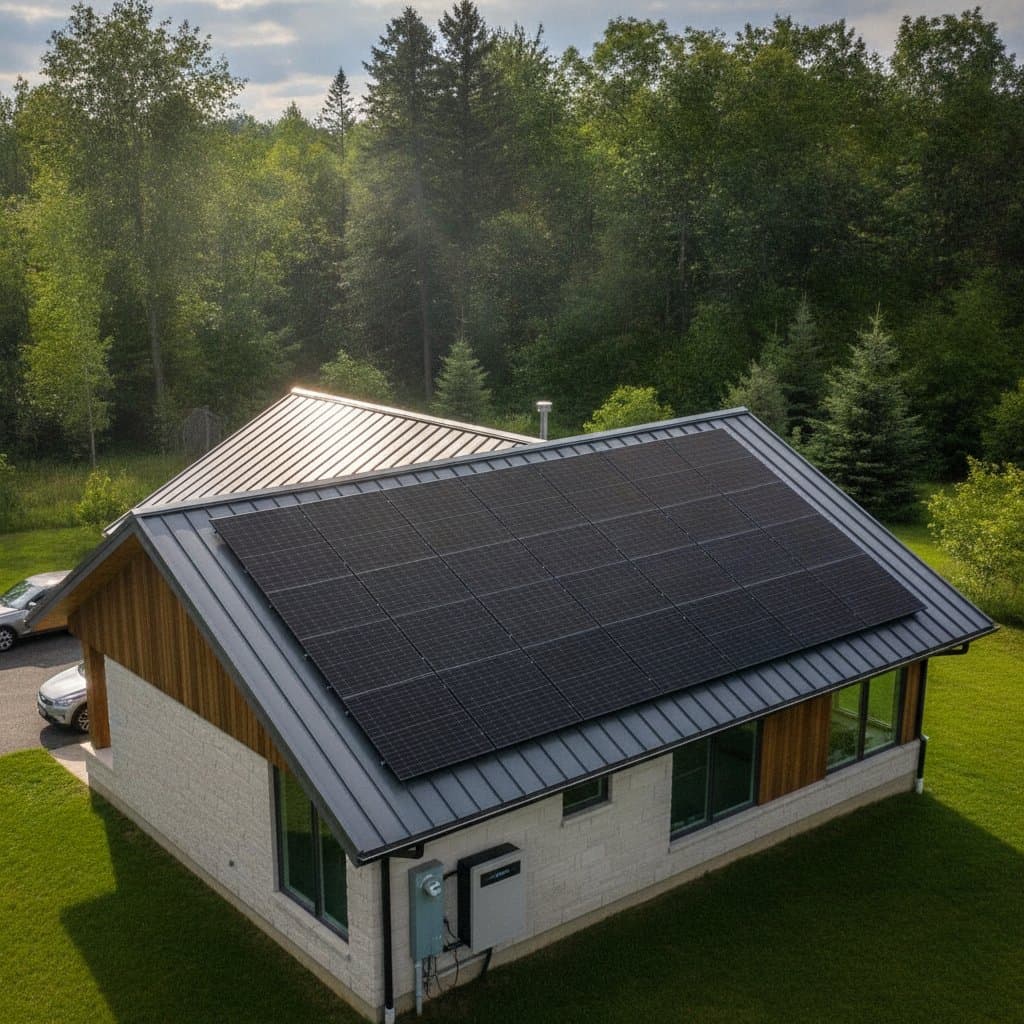
Metal Roofs and Solar Panels: A 50-Year Energy Partnership
Many homeowners hesitate to install solar because they worry about roof age and future replacement costs. A standing seam metal roof addresses these concerns directly. Its extended service life creates a stable platform for solar panels, while the panels reduce electric bills and improve household resilience.
You do not need to complete every upgrade at once. A roof assessment, energy review, and clear financial plan can help you choose a practical starting point.
Why Metal Roofing Works Well With Solar
Standing seam metal roofs feature raised seams that connect long panels. Solar installers can attach clamps directly to those seams. This approach avoids many roof penetrations, which reduces leak risks and simplifies removal if the roof needs service.
Metal roofing withstands sunlight, wind, rain, and temperature changes effectively. Quality systems last several decades with limited maintenance. Solar modules commonly carry performance warranties lasting several decades, so the roof and solar array can serve the home through a similar ownership period.
Metal roofs also reflect some sunlight, especially when finished with a light colored coating. A cooler roof reduces heat gain in warm weather. Solar panels add shade above the roof surface, which may support comfort in upper rooms.
The Solar Energy Math
A typical Philadelphia area home might use about 9,000 kilowatt hours of electricity annually. A 7 kilowatt solar system could produce about 8,400 kilowatt hours in a year, using an assumption of 1,200 kilowatt hours per kilowatt.
At an electric rate of 24 cents per kilowatt hour, that production represents about 2,016 dollars in avoided energy charges. Actual savings depend on roof direction, shade, panel temperature, inverter operation, utility export credits, fixed charges, and household consumption.
Panels facing south often produce strong annual output. East and west roofs can also work well, especially when they match morning or afternoon demand. Shade from trees, chimneys, and nearby buildings can reduce production, so a shade study matters before signing a contract.
Costs, Payback, and Longevity
A residential solar installation may cost roughly 18,000 to 30,000 dollars before incentives, depending on system size, electrical work, roof access, and equipment. A battery can add 10,000 dollars or more. Prices vary, so compare several proposals with the same assumptions.
If a system costs 22,000 dollars and saves about 2,016 dollars annually, simple payback is close to 11 years before incentives, financing costs, and maintenance. A state or federal incentive may shorten that period. Confirm current programs with qualified tax and energy professionals, since eligibility can depend on income, ownership, and equipment.
A metal roof can reduce the chance of paying for a roof replacement beneath an existing solar array. Removing and reinstalling panels during roof work can cost several thousand dollars. A roof that remains serviceable for decades may protect the solar investment and improve long term planning.
Installation Details That Matter
Ask each installer how the mounting system fits your specific roof profile. Standing seam clamps should match the seam dimensions and manufacturer requirements. The installer should also verify structural capacity, wind exposure, electrical panel space, grounding, and local permit rules.
The project usually includes these steps:
- Review 12 months of electric bills and inspect the roof.
- Complete shade analysis and solar design.
- Compare equipment, production estimates, warranties, and financing.
- Secure permits and utility approval.
- Install racking, modules, inverter equipment, and monitoring.
- Complete inspection, interconnection, and system testing.
A good proposal should explain expected annual production, panel degradation, inverter replacement terms, workmanship coverage, and what happens if a roof repair becomes necessary.
Batteries, Efficiency, and Daily Habits
Solar produces the most electricity during daylight, while many households use power in the evening. A battery can store some midday energy for later use. Battery round trip efficiency may range from about 80 to 95 percent, so stored energy loses a portion during charging and discharge.
Battery storage can make sense where outages are common, export credits are limited, or demand charges are high. It costs more than solar alone, so request a backup plan that identifies which circuits will remain powered.
Efficiency upgrades can lower the required solar system size. Air sealing, attic insulation, a heat pump, and a heat pump water heater can reduce energy use while improving comfort. LED bulbs, cold water laundry, weatherstripping, and smart thermostat settings offer low cost starting points.
Care and Maintenance
Solar panels usually need little attention. Monitor production each month and investigate unusual drops. Keep vents and equipment clear. Ask a professional to inspect roof attachments after severe weather.
Metal roofs benefit from clean gutters, trimmed branches, and prompt attention to damaged coatings or loose trim. Never walk on the roof or attempt electrical repairs without proper training.
Practical Next Steps
Start by collecting utility bills, roof documents, and recent repair records. Schedule a roof and shade assessment. Ask for at least three quotes that use identical production, financing, and incentive assumptions. Confirm whether the installer has experience with standing seam solar mounting.
A durable metal roof paired with well designed solar can lower bills, support backup power, and reduce replacement concerns across decades. Small efficiency steps still matter if a full project is not ready. Each improvement gives you useful information and moves your home toward lower energy costs.
FAQ
Can solar panels damage a standing seam metal roof?
Properly selected seam clamps should avoid unnecessary penetrations. Use a qualified installer and confirm that the mounting system matches the roof manufacturer requirements.
Does a metal roof reduce solar production?
Metal roofs can actually improve panel performance by keeping temperatures lower. Light colored coatings reflect heat, which helps panels operate more efficiently.
Is a battery required?
A battery is not required for basic solar operation. However, batteries provide backup power during outages and can store excess energy for evening use.
How long can the roof and panels last together?
Quality metal roofs and solar panels both carry warranties lasting 25 to 50 years. With proper installation and maintenance, both systems can serve the home for decades.
Should efficiency upgrades come first?
Efficiency improvements can reduce the solar system size needed. Starting with air sealing and insulation often provides immediate savings and may lower overall project costs.
What should homeowners ask installers?
Request detailed production estimates, warranty terms, and maintenance requirements. Ask about experience with standing seam mounting and what happens if roof repairs become necessary.