
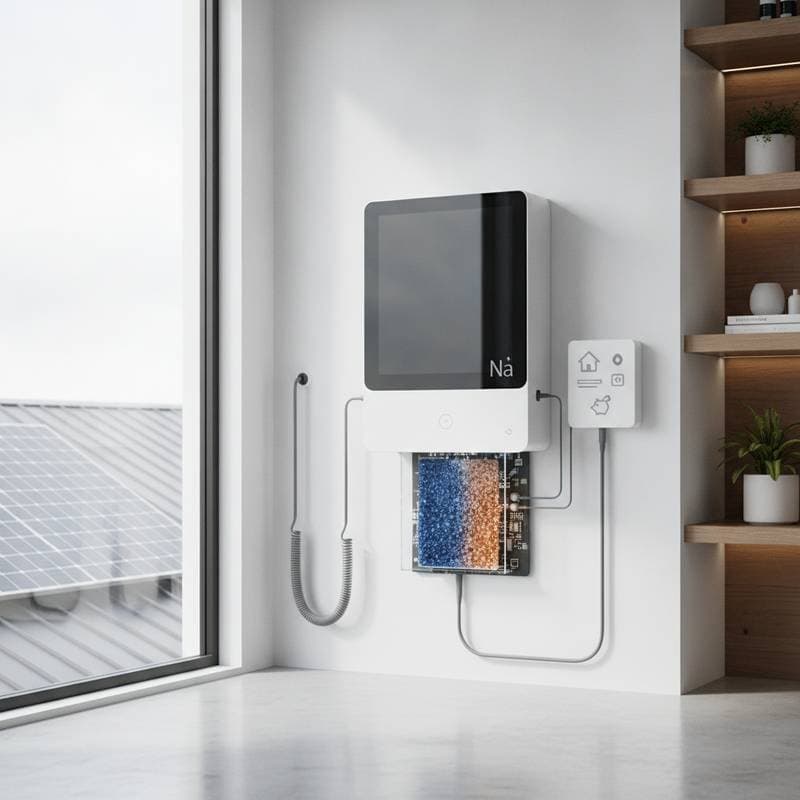
Sodium-Ion Batteries Offer Affordable Storage
Many homeowners exploring solar energy systems wonder how to store excess power without exceeding their budget. Battery storage unlocks the full potential of solar. Yet the cost of lithium-based systems often stops people from taking that step. Sodium-ion batteries are emerging as a promising alternative that could make clean energy storage more accessible for homes and small businesses.
Why Sodium Instead of Lithium
Lithium-ion batteries dominate the market because they pack high energy into small, lightweight cells. They power phones, electric cars, and most home storage systems. The challenge is cost and supply. Lithium is concentrated in a few regions, and mining it can strain water resources.
Sodium, on the other hand, is abundant and widely available. It is found in common salt and can be sourced from many regions, including the United States. The shift from lithium to sodium could reduce both cost and supply risk. Sodium-ion batteries work on the same basic principle as lithium-ion ones.
Ions move between a cathode and an anode through an electrolyte during charge and discharge. The main difference is the type of ion that moves. Sodium ions are larger and heavier, so energy density is slightly lower. Yet for stationary storage, where weight and size matter less, this trade-off is manageable.
How Sodium-Ion Batteries Work
When sunlight hits solar panels, it creates electricity that can be used immediately or stored for later. A sodium-ion battery stores that energy by moving sodium ions into the anode during charging. When the home needs power, the ions move back to the cathode, releasing electrons that flow through the home circuits.
The chemistry is simple, and manufacturing can use existing lithium-ion production lines with minor adjustments. Performance continues to improve. Current sodium-ion cells reach about 120 to 160 watt-hours per kilogram. While lower than lithium typical 180 to 250 range, it is enough for household storage.
Cycle life often exceeds 3,000 to 5,000 cycles, translating to eight to fifteen years of daily use. These numbers vary by manufacturer, but they are already competitive for grid-connected homes.
Cost and Practical Savings
Cost is the strongest argument for sodium-ion adoption. Early production estimates suggest sodium-ion batteries could be 20 to 40 percent cheaper than lithium equivalents. This gap comes from lower raw material prices and simpler supply chains. If a homeowner currently pays about 10,000 dollars for a 10 kilowatt-hour lithium system, a sodium version might cost between 6,000 and 8,000 dollars once scaled manufacturing takes hold.
A typical solar array in the Philadelphia area might generate about 9,000 kilowatt-hours each year. If battery storage allows you to use 80 percent of that power directly, you could avoid buying about 7,200 kilowatt-hours from the grid. At 24 cents per kilowatt-hour, that equals roughly 1,730 dollars in annual savings.
Environmental and Safety Benefits
Sodium-ion batteries use materials that are easier to source and recycle. They do not rely on cobalt or nickel, which are costly and have complex supply chains. The chemistry is also less likely to overheat, reducing fire risk. For homeowners, that means a safer installation and simpler maintenance.
Because sodium is non-toxic and abundant, the overall environmental footprint is smaller. Water-based electrolytes are being developed for some sodium designs, which further improves safety. These batteries can operate in a wider temperature range, a benefit in regions with hot summers or cold winters.
Where Sodium-Ion Fits Best
Sodium-ion batteries may not replace lithium in electric vehicles where weight is critical. They fit perfectly for stationary solar storage, backup systems, and community energy projects. They can serve as a second-life option for aging lithium systems or as the main storage for new solar installations.
For households with limited budgets, sodium-ion storage can provide the same resilience and energy independence at lower cost. If you already have solar panels, ask your installer whether a hybrid inverter can support sodium-ion batteries. Many new inverters are compatible with multiple chemistries.
Preparing for Installation
For those planning a full upgrade, pairing solar with sodium storage can cut grid reliance by half or more. Combine that with smart thermostats and efficient appliances for the best results. Even without a full battery system, homeowners can prepare by improving efficiency.
Tighten insulation, switch to LED lighting, and monitor energy use with a smart meter. These actions reduce the total storage capacity you need, making a future battery purchase smaller and cheaper. Sodium-ion systems require little maintenance.
Keep the battery area dry, ventilated, and within normal temperature limits. Use the monitoring app to track performance and schedule an annual check with your installer. Because sodium-ion cells degrade slowly, capacity loss stays modest over time.
Many systems retain 80 percent or more of their capacity after thousands of cycles. If your system includes a modular design, you can replace individual battery packs instead of the entire unit. This lowers long-term costs and waste.
Evaluating Storage Options
Review your utility bills to understand your energy use pattern. Request solar-plus-storage quotes that include sodium-ion options. Confirm compatibility with your inverter and electrical panel. Compare warranties, cycle life, and round-trip efficiency.
Ask your installer about local incentives or pilot programs that include sodium storage. Lower-cost storage means more people can capture solar energy during the day and use it at night. Sodium-ion batteries make that goal realistic and affordable.