
2026 Solar Tariffs: Which Panels Will Cost More?
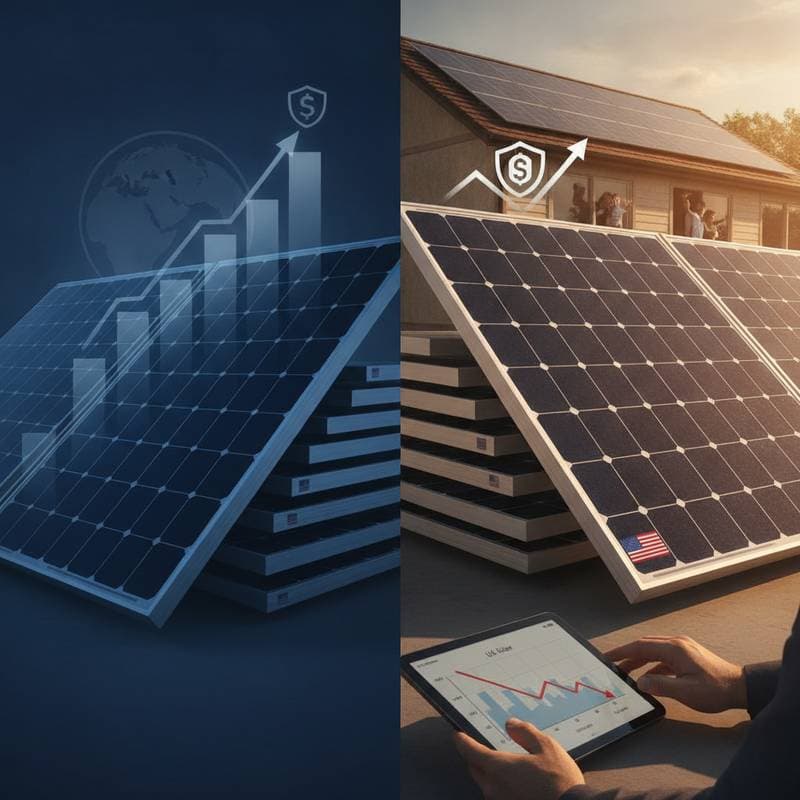
Solar prices have remained low for several years, yet upcoming tariff changes are reshaping the market. Homeowners now seek clarity on which panels will experience price increases. Imported models from specific regions face the greatest exposure, while domestic options gain relative strength.
Why Solar Tariffs Exist
Tariffs function as import taxes that protect domestic manufacturing. Policymakers apply them to expand local production of solar cells and modules. This strategy reduces reliance on overseas suppliers and supports stable pricing for United States producers.
The policy encourages factory investment and job creation within the country. At the same time, it raises short-term equipment costs for projects that depend on lower-priced imports. Officials must balance these competing priorities when adjusting tariff rates.
Which Panels Are Most Affected
Panels that incorporate crystalline silicon cells imported from Asia encounter the largest cost increases. These modules dominate residential installations due to their efficiency and broad availability. Manufacturers in affected regions absorb higher per-watt fees that transfer directly into wholesale pricing.
Consider a 400-watt imported panel priced at 40 cents per watt. A 15 percent tariff increase lifts that figure to approximately 46 cents per watt. An 18-panel array for a typical 7-kilowatt system adds roughly 420 dollars in hardware expense before incentives apply.
Modules assembled domestically with imported cells may absorb partial increases based on domestic-content definitions. Fully United States-produced panels that use local cells and materials avoid these fees and become more price-competitive.
What This Means for Homeowners
Equipment charges represent 30 to 40 percent of total project cost. A 10 percent rise in panel prices therefore elevates overall system cost by 3 to 4 percent. A 20,000-dollar installation would increase by 600 to 800 dollars.
Federal tax credits and state rebates remain available and can offset much of the added expense. Electricity rates continue to rise faster than inflation, preserving long-term savings even after modest upfront adjustments.
How Installers Are Responding
Installers are forming direct partnerships with domestic manufacturers and sourcing from tariff-exempt countries. They now present both imported and domestic product lines so customers can evaluate price against performance. Domestic panels frequently provide shorter delivery times and stronger warranty support.
Understanding the Broader Market Impact
Large-scale project developers may pause purchases until prices stabilize. This pause can temporarily limit availability for residential buyers. Expanded domestic production capacity eventually restores supply balance and supports more predictable pricing.
Companies building United States factories often introduce advanced cell technologies such as heterojunction or n-type designs. These improvements raise energy yield per square foot and can offset modest price differences.
Planning Ahead for the Transition
Homeowners should request multiple quotes within the next several months. Early comparisons allow buyers to secure current pricing before tariff effects reach the market. Questions about panel origin and domestic-content percentages clarify exposure to future cost changes.
State rebate programs update funding levels each year. Early applicants secure higher benefit amounts. Combining these programs with federal credits reduces the net impact of any tariff-related increase.
Maintaining Long-Term Performance
Regular panel cleaning once or twice annually, shade monitoring, and output reviews sustain energy production. Manufacturers provide 25-year performance warranties that protect against gradual efficiency decline. Ongoing communication with the installer ensures timely warranty support when needed.
FAQ
How do solar tariffs affect total installation cost?
Tariffs primarily change panel pricing, which accounts for roughly one-third of system cost. A 10 percent panel price increase typically raises total project cost by 3 to 4 percent.
Will U.S.-made panels become cheaper?
Domestic panels will not necessarily drop in absolute price. They will, however, gain a competitive position relative to imported panels that carry higher tariffs.
Maximizing Your Solar Investment
Compare installer proposals that detail panel origin and incentive eligibility. Secure quotes and apply for available rebates before tariff adjustments take full effect. These steps position homeowners to capture reliable long-term savings regardless of short-term market shifts.