
Thermal Batteries Offer a Lower-Cost Path to Home Energy Storage
Solar panels reduce electricity bills, yet many Philadelphia homeowners still face high costs after sunset. Lithium-ion batteries store solar power effectively, but their price, replacement needs, and safety requirements often outweigh the benefits. Thermal batteries provide an alternative by storing energy as heat in sand, ceramic, or other durable materials. These systems can cost roughly half as much per unit of stored energy as chemical batteries while pairing naturally with solar panels, heat pumps, and electric water heaters.
How Thermal Storage Works
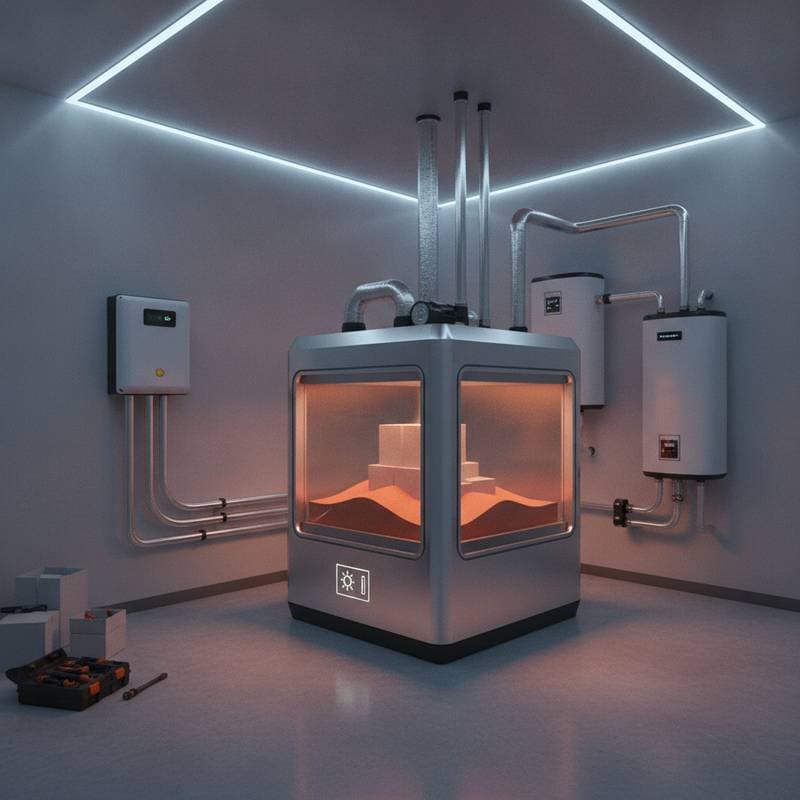
A thermal battery converts electricity into heat through a simple process. An electric heating element raises the temperature of a storage medium such as sand or ceramic blocks. Insulation keeps the heat contained until the home needs it. A fan, heat exchanger, or water loop then moves the stored warmth into living spaces or domestic hot water systems.
The energy flow follows six clear steps. Solar panels generate electricity during daylight hours. A controller directs surplus power to the heating element. The element warms the storage material inside a sealed container. Insulation limits heat loss over time. A transfer system delivers warmth when heating demand rises. The household draws less electricity from the utility grid.
Sand-based systems use fine mineral particles as the storage medium. Sand remains inexpensive, widely available, and stable at high temperatures. The material stays sealed within an insulated enclosure rather than circulating through the home. Air or another fluid carries heat from the container to the building's heating system.
Cost Comparison With Lithium-Ion Batteries
Lithium-ion systems require cells, cooling equipment, safety monitoring, and protective enclosures. Thermal batteries use simpler materials and fewer components. Their main expenses come from insulation, heating elements, controls, and heat delivery equipment.
Consider a practical example. A 13-kilowatt-hour lithium-ion battery might cost $12,000 installed, or about $923 per stored kilowatt-hour. A thermal system storing the heat equivalent of 26 kilowatt-hours could cost $7,000, or roughly $269 per stored kilowatt-hour. These figures show why thermal storage often costs less per unit of energy capacity.
Thermal batteries deliver heat directly rather than electricity. They cannot power lights or appliances during outages unless the system includes a heat engine or generator. Their advantage lies in direct heating applications. Sending stored heat to a water heater or hydronic system avoids the conversion losses that occur when electricity becomes heat later.
Integration With Solar and Heat Pumps
Solar panels produce direct current that an inverter converts to household alternating current. When production exceeds immediate demand, a controller routes surplus power to the thermal battery. This approach works well in Philadelphia, where winter heating loads often align with periods of lower solar output.
A typical 7-kilowatt solar array in the Philadelphia region produces about 8,400 kilowatt-hours annually. If a home uses 9,000 kilowatt-hours per year with 4,000 kilowatt-hours dedicated to heating and hot water, a thermal battery could absorb 2,000 kilowatt-hours of surplus solar energy. At 20 cents per kilowatt-hour, this stored energy represents $400 in annual utility savings.
Thermal storage pairs effectively with heat pumps and electric resistance heating. The system can reduce heat pump operating hours during peak demand periods. It can also supply warmth through radiant floor systems or forced-air distribution. A well-insulated home retains warmth longer, allowing a smaller storage unit to meet morning and evening heating needs.
Practical Limitations to Consider
Thermal batteries cannot provide backup electricity during power outages. Homes still require a generator or lithium-ion battery for critical electrical loads. The systems also require adequate space. A sand-based unit may fit in a basement, garage, or outdoor enclosure, but its weight and dimensions need structural evaluation.
Temperature requirements vary by application. Systems designed for domestic hot water operate at lower temperatures than those serving space heating. Higher temperatures increase storage capacity but require stronger insulation and careful safety planning. Professional installation ensures proper clearances and control systems.
Installation Costs and Payback Analysis
Residential thermal storage systems typically cost between $5,000 and $15,000 installed. A basic system with $8,000 in total costs might store 2,500 kilowatt-hours of solar energy annually. After accounting for system losses, usable heat could reach 2,000 kilowatt-hours. At 20 cents per kilowatt-hour, annual savings would equal $400, suggesting a 20-year simple payback.
Payback improves when the system replaces expensive resistance heating or propane delivery. State rebates, utility incentives, and federal tax credits can also reduce effective costs. Homeowners should review the Database of State Incentives for Renewables and Efficiency along with Pennsylvania and local utility programs before making decisions.
Design Considerations for Philadelphia Homes
Effective thermal storage requires coordination between the solar array, heating equipment, utility rates, and building envelope. Roof orientation and shading affect surplus solar availability. Insulation quality determines how long stored heat remains useful. Time-of-use electricity rates influence whether storing energy provides more value than exporting it.
Contractors should provide written specifications covering storage capacity, expected heat delivery after losses, maximum operating temperature, space requirements, and warranty coverage. Philadelphia projects may need electrical, mechanical, building, or fire permits depending on equipment type and installation location.
Maintenance and Long-Term Performance
Thermal batteries require less maintenance than combustion systems or chemical batteries. Homeowners should clean air filters regularly, inspect pumps and valves, and review monitoring data. Annual professional service confirms that insulation, controls, and heat exchangers continue to perform correctly.
The storage medium itself can last for decades because sand, brick, and ceramic do not experience the chemical degradation found in battery cells. Heating elements, fans, and controls may need replacement sooner. At the end of service life, mineral storage materials can often be reused or disposed of through standard construction channels.
Steps for Philadelphia Homeowners
Begin by collecting twelve months of electric and heating bills. Record fuel type, annual usage, winter peak demand, and current utility export rates. Improve insulation and air sealing before sizing any storage system. Efficiency improvements reduce the amount of heat the battery must provide.
Request proposals from at least two qualified contractors. Compare usable heat output rather than advertised storage capacity. Confirm whether each system supplies space heating, hot water, or both. Ask how the equipment operates during grid outages and what loads remain powered.
Common Questions About Thermal Storage
Can thermal batteries provide backup power during outages?
Most thermal systems deliver stored heat rather than electricity. Adding a backup generator or electrical battery covers essential circuits during extended outages.
Are sand-based systems safe for residential use?
Sand and mineral materials do not burn like fuel and lack the flammable electrolytes found in chemical batteries. High-temperature equipment still requires approved controls, proper insulation, and professional installation.
How much space does a thermal battery require?
System capacity and insulation thickness determine the footprint. Smaller units may fit in utility rooms, while larger installations need garage or basement space with adequate structural support.
Does solar installation need to happen first?
Thermal batteries can charge from grid electricity, though solar improves savings when surplus production would otherwise receive limited export compensation.
How long does stored heat remain available?
Insulation quality, storage temperature, and system size determine duration. Well-designed units can maintain useful heat for several hours, with installers providing specific loss estimates for each application.
Thermal storage works best as part of a complete energy plan that includes efficient heating equipment, smart controls, appropriate solar sizing, and realistic maintenance expectations. Philadelphia homeowners who match system design to their specific heating loads and utility rates can achieve meaningful long-term savings.