
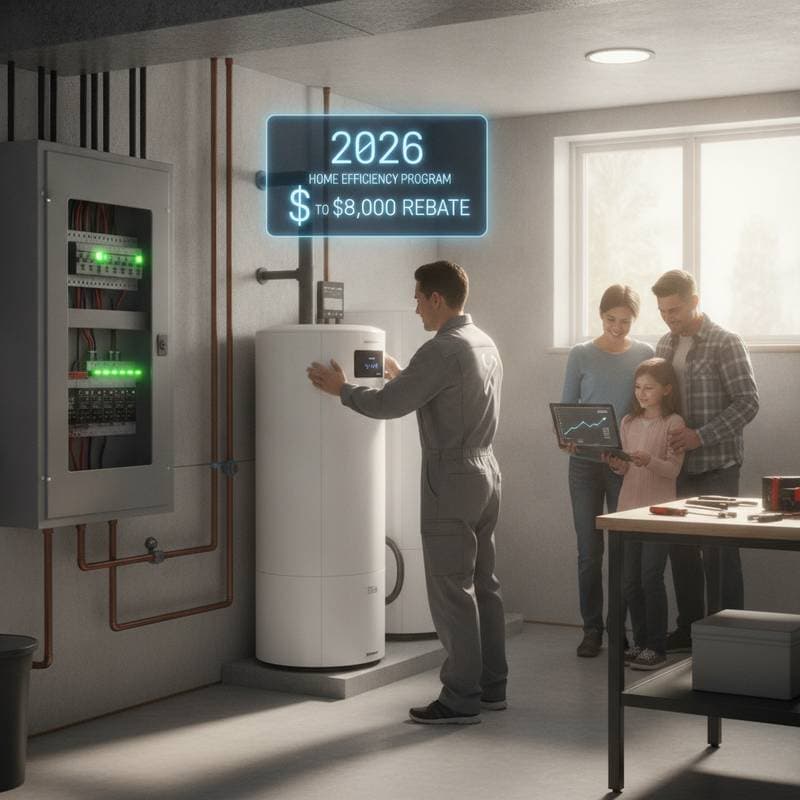
HEEHRA Rebates Reduce Home Energy Expenses by Up to 8000 Dollars in 2026
Many homeowners seek lower energy bills along with greater comfort. Upfront costs often stand in the way. The federal HEEHRA program addresses this challenge by providing as much as 8000 dollars in rebates for qualifying efficiency projects. These funds support equipment replacement and system upgrades that deliver ongoing monthly reductions.
Program Purpose and Household Impact
Rising energy prices place particular pressure on heating and cooling expenses. HEEHRA expands access to efficient electric technologies that replace older fossil fuel equipment. The initiative prioritizes low and moderate income households while remaining open to broader participation.
A heat pump water heater lowers hot water energy use by roughly 60 percent. A high efficiency heat pump HVAC unit cuts heating energy consumption by half relative to legacy gas furnaces. Pairing either measure with onsite solar generation amplifies the financial return.
Covered Improvements and Rebate Amounts
Rebates offset initial expenses for a defined set of upgrades. Maximum household support reaches 8000 dollars and varies with income and measure type. Qualifying items include the following:
- Heat pump HVAC systems
- Heat pump water heaters
- Heat pump clothes dryers
- Induction cooktops
- Electrical panel and wiring upgrades
- Insulation and air sealing work
A heat pump HVAC installation may receive up to 4000 dollars. A heat pump water heater adds as much as 1750 dollars. Panel upgrades can contribute another 1600 dollars. Final amounts depend on the selected combination and household income tier.
Savings Calculation Example
Consider an 1800 square foot residence that currently operates a gas furnace and conventional electric water heater. Replacement with heat pump models reduces annual consumption by approximately 6000 kilowatt hours and 400 therms of gas. At prevailing local rates this change produces roughly 1400 dollars in yearly utility savings.
A complete project priced at 14000 dollars and supported by 6000 dollars in rebates leaves a net homeowner cost of 8000 dollars. At the stated savings rate the simple payback occurs in less than six years. Subsequent savings continue for the remaining service life of the equipment.
Preparation Steps
Collect the preceding twelve months of utility statements to establish a baseline. Engage a certified energy auditor to perform a whole house assessment. The resulting report identifies the highest value measures and supplies documentation required for rebate claims.
Request proposals from multiple contractors who employ identical sizing criteria and efficiency specifications. Verify that each installer maintains experience with program documentation procedures.
Additional Performance Benefits
Efficient equipment improves acoustic comfort and indoor air quality. Sealed envelopes limit infiltration of outdoor pollutants. Heat pump operation avoids combustion byproducts. These attributes frequently increase resale value for buyers who seek all electric, solar ready properties.
Layering Available Incentives
Local utility programs sometimes add 500 to 1000 dollars for air sealing or insulation. Federal solar tax credits can offset 30 percent of photovoltaic costs. Strategic combination of these resources compresses payback periods further.
Immediate Low Cost Actions
Small behavioral and maintenance steps create early momentum:
- Install LED lamps throughout the residence
- Select cold water wash cycles
- Apply weatherstripping to windows and doors
- Change HVAC filters on a quarterly schedule
- Adjust thermostat setpoints by several degrees seasonally
Such practices typically reduce overall consumption by at least 10 percent.
Prepare Your Home for Efficiency Upgrades
Confirm income based eligibility before project selection. Arrange the energy audit to establish priorities. Obtain competitive bids from program experienced contractors. Integrate federal, state, and utility incentives where permitted. Schedule annual filter cleaning and system inspections to protect performance.
FAQ
1. Who can apply for HEEHRA rebates?
Homeowners and renters in qualifying income brackets may participate subject to project requirements.
2. Can HEEHRA rebates combine with tax credits?
Many households successfully layer federal rebates with tax credits and utility incentives.
3. Is solar required for participation?
No. Efficiency measures qualify independently, although solar integration increases total savings.