
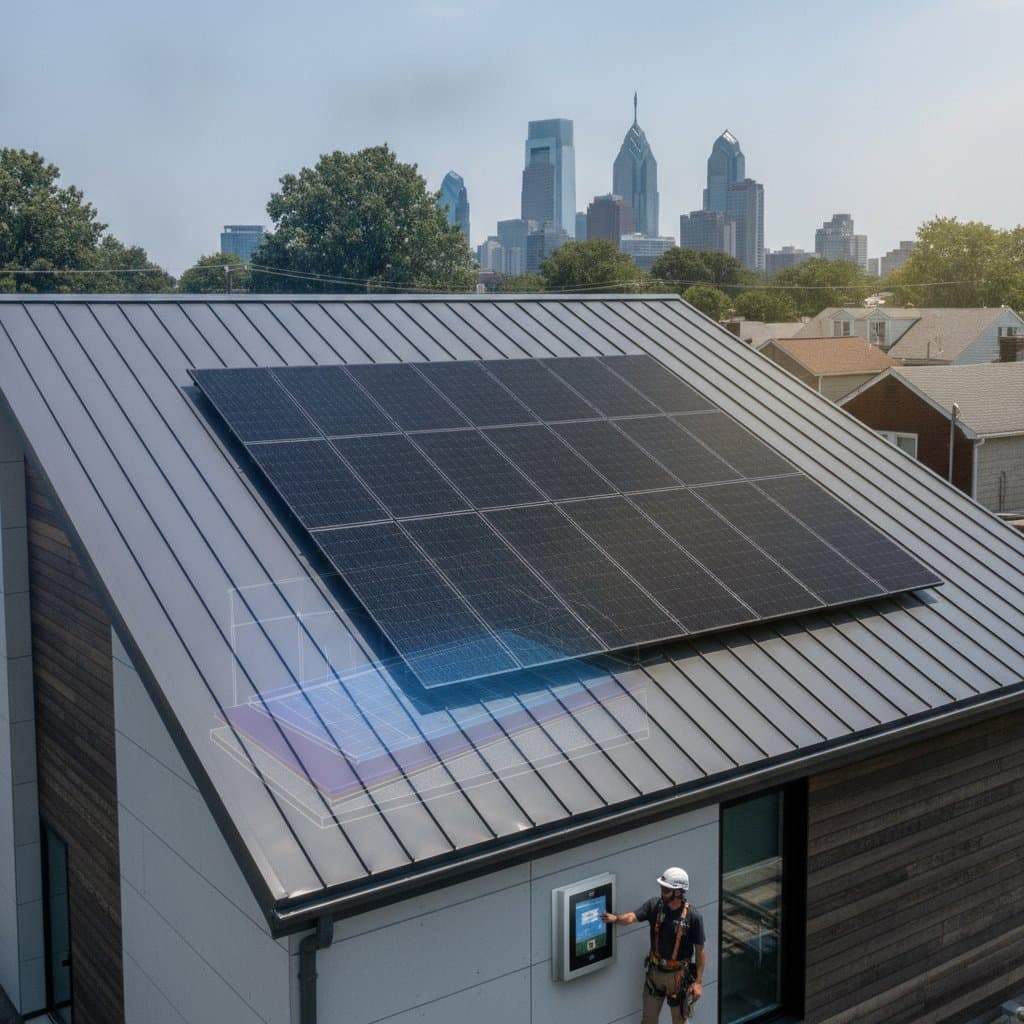
Metal Roofs Cut Cooling Bills 40 Percent with Solar Power
Many homeowners in Philadelphia seek ways to improve home efficiency without losing comfort. Summer heat often raises cooling expenses, and solar panel installation can seem complex or expensive. A metal roof combined with solar power addresses both issues at once. The roof reflects sunlight to lower attic temperatures while offering an optimal base for durable solar production. Together these features reduce cooling costs by up to 40 percent and decrease grid electricity use for decades.
Why Metal Roofs Pair Well with Solar Panels
A metal roof reflects much of the solar radiation that asphalt shingles absorb. Cooler roof surfaces reduce heat transfer into the attic and living areas, so air conditioners operate less frequently. Modern solar panels mount several inches above the roof, allowing airflow that adds insulation and further lowers roof temperature. In warm periods this combination can drop attic temperatures 30 to 50 degrees Fahrenheit compared with a dark shingle roof.
Calculating the Cooling Savings
Consider a typical Philadelphia home that uses 1,200 kilowatt hours per month in peak summer. When 30 percent of that energy powers cooling, the total reaches 360 kilowatt hours. A 40 percent reduction saves roughly 145 kilowatt hours. At 24 cents per kilowatt hour this equals about 35 dollars in monthly summer savings from roof reflection alone. Adding solar generation can push total monthly savings above 150 dollars depending on system size and household consumption.
Advantages of Mounting Solar on Metal Roofs
Standing seam metal roofs accept solar panels through clamp attachments that avoid penetrations and the associated leak risk. Panels typically last 25 years or longer, while quality metal roofs endure 50 years or more, so replacement schedules align naturally. This arrangement prevents the need to remove and reinstall panels during future roof work.
A 7 kilowatt solar system in Philadelphia produces about 9,100 kilowatt hours annually. At 24 cents per kilowatt hour the output offsets roughly 2,180 dollars in yearly electricity costs before fixed charges. Federal and local incentives reduce the initial outlay, and payback periods commonly range from 7 to 10 years.
Upfront Costs and Available Incentives
Metal roofing installed costs between 9 and 13 dollars per square foot depending on color and finish. A cool roof coating adds about 10 percent to the price yet yields measurable energy reductions. Solar system prices vary with size and components, yet tax credits and rebates lower the net investment. Many owners finance the project so monthly payments stay at or below utility savings.
Long Term Performance and Durability
Metal roofs reflect heat and shed snow readily. They resist cracking and curling while meeting high wind and hail standards. When paired with solar the assembly forms a low maintenance shell that stabilizes indoor temperatures year round. The panels themselves shield portions of the roof from weather, extending overall service life.
Solar output declines about 0.5 percent each year. Metal finishes may fade gradually yet remain structurally sound for decades. An annual inspection maintains performance for both systems.
Routine Care and Monitoring
Rinse panels with water several times a year to clear pollen and dust. Keep tree branches from shading the array. Review online production data to confirm expected output. Inspect roof fasteners, flashing, and sealants every few years. Metal surfaces seldom require repair, and occasional cleaning preserves reflectivity.
Daily Habits That Maximize Efficiency
Ceiling fans help circulate air while closed blinds limit afternoon heat gain. Raising the thermostat a few degrees during absences reduces load. Running laundry and dishwashers in daylight hours uses solar power directly. These steps extend system value and ease demand on the local grid.
Steps to Move Forward
- Schedule a professional roof and shade assessment to verify pitch, orientation, and tree cover.
- Gather the past 12 months of utility bills to size the system accurately.
- Request quotes that use identical production estimates and equipment lists.
- Review Philadelphia and state incentive programs that shorten payback.
- Select installers who supply clear warranties and ongoing service plans.
A metal roof with solar panels improves comfort, lowers expenses, and supports sustainability. The combination reduces cooling costs, safeguards the structure, and cuts emissions with minimal upkeep. Homes that adopt this approach help build a more resilient energy system.