
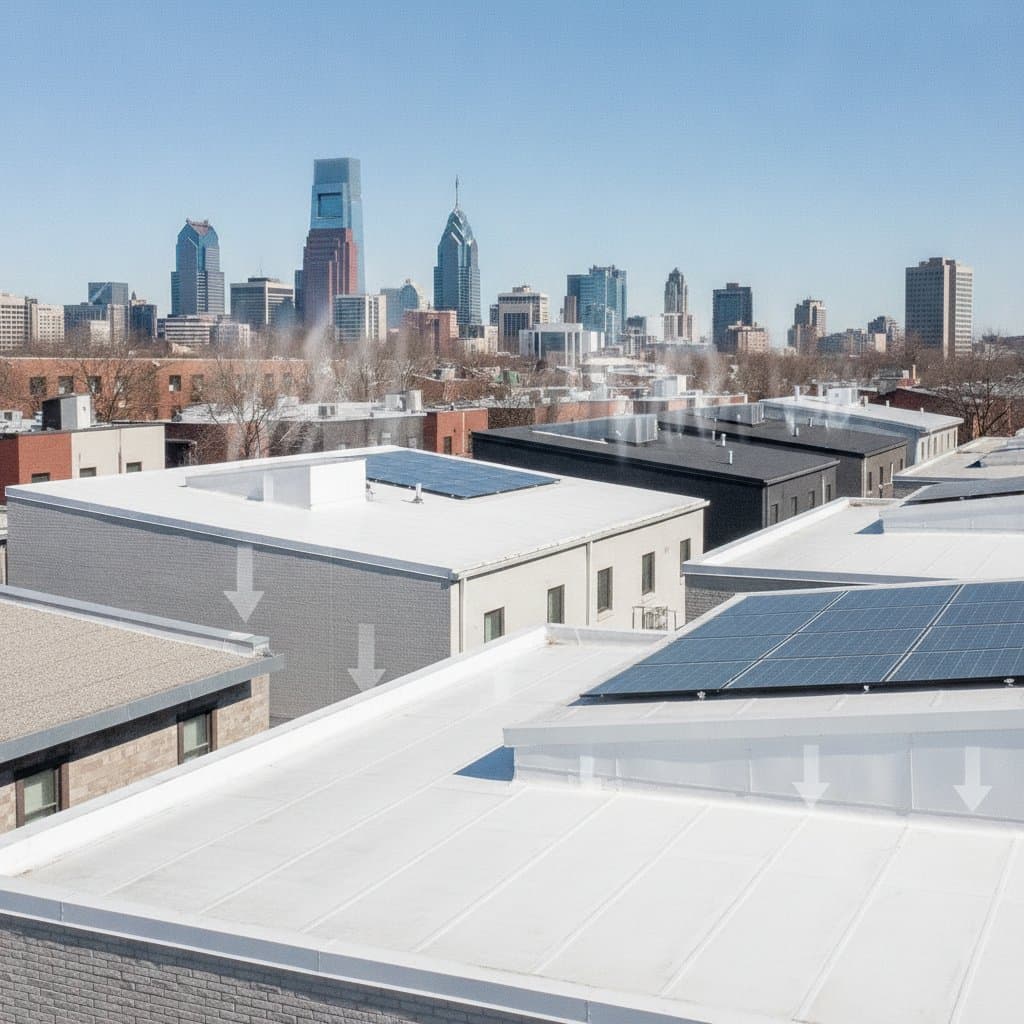
Cool Roofs Cut AC Bills 30 Percent Under New DOE Rules
Homeowners in Philadelphia endure extended heat waves that strain air conditioning systems. Energy expenses climb while older roofs absorb excess solar radiation. New Department of Energy efficiency requirements now favor reflective roofing systems known as cool roofs. These materials can lower cooling costs by up to 30 percent, extend roof life, and improve indoor comfort.
Defining Cool Roof Performance
A cool roof reflects sunlight and releases absorbed heat more efficiently than conventional dark surfaces. Performance depends on two metrics. Solar reflectance indicates the portion of sunlight bounced away. Thermal emittance shows how readily a material sheds stored heat. Products must meet minimum thresholds set by the DOE and carry ratings from the Cool Roof Rating Council.
Professional Installation Requirements
Roof replacement involves structural, electrical, and safety risks that require licensed contractors. Homeowners may inspect surfaces from the ground, verify attic ventilation, and clear gutters. Work on shingles, membranes, or insulation layers belongs to qualified roofers. When solar panels are present, a licensed electrician must disconnect circuits before any roofing activity begins.
Mechanism of Heat Reduction
Standard asphalt shingles can exceed outdoor air temperature by a wide margin under direct sun. Reflective surfaces stay substantially cooler and limit heat flow into the attic. Reduced attic temperatures decrease the runtime of air conditioning equipment. Lower operating hours extend the service life of cooling systems while cutting monthly utility charges.
Quantified Energy and Durability Gains
Modeling conducted for the DOE indicates cooling energy reductions near 30 percent in hot and mixed climates. Savings vary with insulation levels, ventilation quality, and shading. Homes with limited attic insulation realize the largest returns. Cooler roof surfaces also reduce thermal expansion cycles that accelerate material fatigue and leak formation.
Qualifying Material Options
Several product categories satisfy the updated DOE criteria. Reflective asphalt shingles incorporate light granules. Metal panels receive high-reflectance coatings. Elastomeric coatings suit existing low-slope roofs. Single-ply membranes such as TPO or PVC provide inherent emissivity. Clay and concrete tiles can include reflective pigments. Each option demands specific fastening methods, surface preparation, and thickness verification during application.
Philadelphia Permit and Code Steps
Most roofing projects in the city require permits issued by the Department of Licenses and Inspections. Inspectors may request reflectance and emittance documentation. Product data sheets and warranty information should be supplied before work starts. Reinforcement for added insulation or solar arrays may trigger separate permits. Coordination between roofing and electrical trades prevents future leaks or wiring faults.
Neighborhood and Indoor Advantages
Widespread adoption of cool roofs lowers ambient temperatures across city blocks. Reduced heat island effects improve outdoor air quality and comfort. Inside the home, stable attic conditions decrease the load on ceiling fans and supplemental cooling. Stored items in the attic experience less warping from temperature swings.
Ongoing Performance Checks
Homeowners can monitor results with a non-contact infrared thermometer. Visual inspections of flashings and penetrations from the ground or attic reveal potential issues early. Gutters must remain clear to avoid standing water near reflective surfaces. Professional evaluations every few years confirm coating integrity. Mild water and soft-brush cleaning restores reflectivity when needed. Standard paints must never cover reflective surfaces, as they reduce performance and void ratings.
Cost Comparison and Contractor Selection
Reflective roofs often carry a modest premium over dark alternatives. Energy savings and possible equipment downsizing typically recover the difference over time. Local utility rebates further improve payback. Select contractors who present current licenses, insurance certificates, and manufacturer certifications. Written estimates must list reflectance values and warranty terms. When solar panels are involved, include a licensed electrician from project outset to maintain code compliance.