
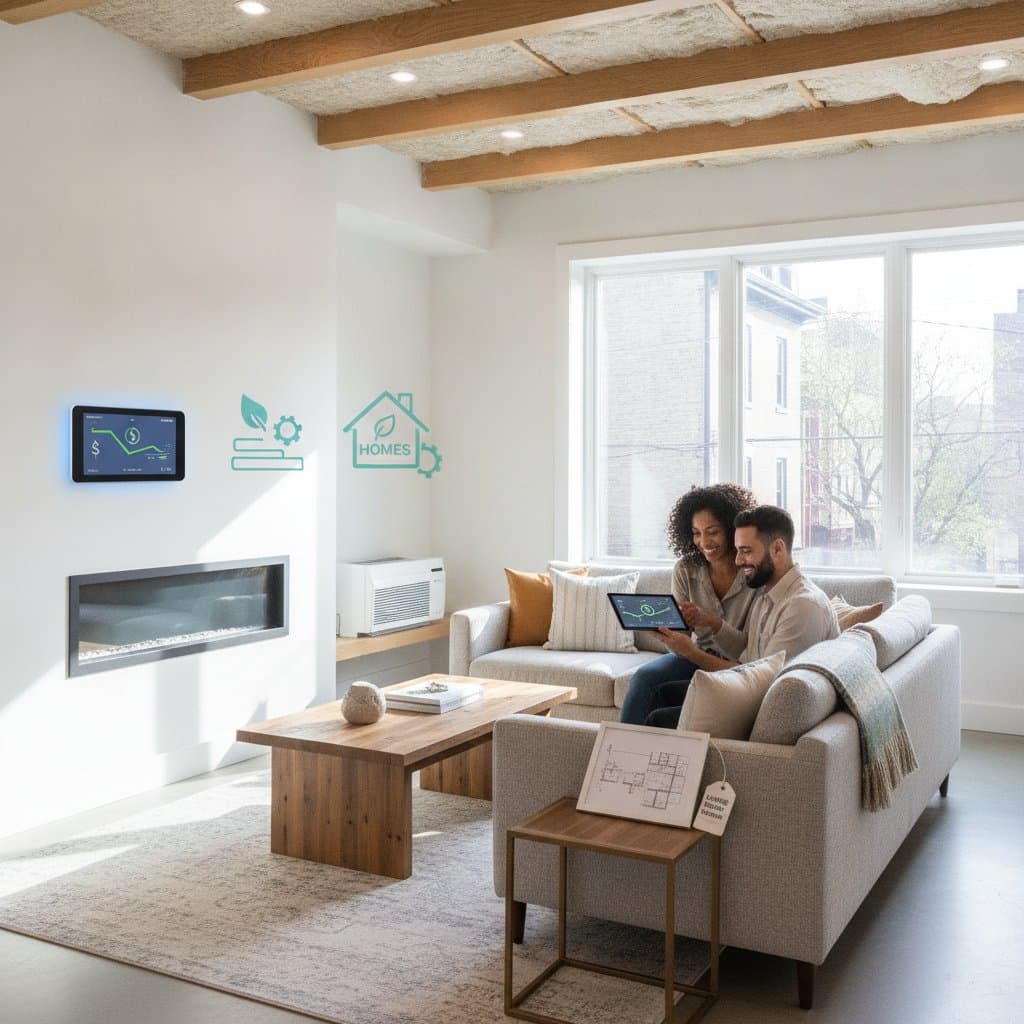
How the HOMES Program Delivers Up to $4000 in Rebates
Many homeowners seek lower energy bills yet remain uncertain about initial steps. The HOMES Energy Rebate Program addresses this challenge by rewarding verified reductions in heating, cooling, and electricity consumption. Participants can receive up to $4000 for qualified upgrades that enhance comfort and lower ongoing costs.
Importance of Measured Energy Efficiency
Energy efficiency reduces monthly expenses while decreasing demand on the electrical grid. Heating and cooling typically account for nearly half of household energy consumption. Targeted improvements in these areas produce measurable financial and environmental returns.
The program addresses hesitation caused by high upfront costs. Rebates scale directly with documented energy reductions, which makes investments more accessible. Greater savings yield proportionally larger payments.
Mechanism of Rebate Calculation
HOMES bases payments on actual performance rather than fixed incentives for individual measures. Contractors establish a baseline through an initial audit, complete upgrades, and verify results with follow up testing. This performance based approach ensures payments reflect real outcomes.
The process follows these steps:
- A certified contractor conducts a comprehensive energy audit to identify loss points.
- The homeowner selects upgrades such as insulation, air sealing, or high efficiency equipment.
- Post installation testing confirms the percentage of whole home energy reduction achieved.
- The program issues payment according to the verified savings level.
Savings of 20 percent qualify for rebates up to $2000. Reductions of 35 percent or higher unlock the maximum $4000. Income eligible households may access additional support.
Projected Financial Outcomes
Consider a home with annual energy costs of $2800. A 30 percent reduction generates roughly $840 in yearly savings. An $8000 project that receives a $3000 rebate leaves a net investment of $5000. Recovery occurs in under six years, after which savings accumulate without further expense.
Supported Improvement Categories
The program covers multiple measures that improve overall performance:
- Insulation and air sealing to minimize drafts and thermal loss.
- Heat pumps that deliver heating and cooling at reduced energy levels.
- Heat pump water heaters that achieve up to 70 percent savings versus resistance models.
- Smart thermostats that optimize temperature control automatically.
- Windows and doors that limit heat transfer.
A professional audit identifies the optimal combination for each property.
Combining Available Incentives
HOMES payments may be stacked with utility or regional rebates for the same measures. Some Philadelphia area programs offer separate support for heat pumps and insulation. Coordinated use of multiple incentives can reduce net project costs by 40 to 50 percent when requirements align.
Steps to Participate
Begin by collecting recent utility statements to establish a usage baseline. Engage a program approved contractor for the assessment and modeling. Request multiple proposals that use consistent assumptions before selecting a contractor.
Confirm enrollment status with the program administrator to ensure proper documentation handling. Schedule work only after verifying all eligibility criteria. Track results for one full year following completion to validate performance.
Sustaining Performance and Value
Regular maintenance preserves savings over time. Filter changes, coil cleaning, and duct inspections prevent efficiency loss. These upgrades also increase property value, reduce sound transmission, and stabilize indoor temperatures.
Homes prepared through this process adapt more readily to future electrification needs such as vehicle charging or battery integration. Incremental improvements build a foundation for larger projects when resources allow.