
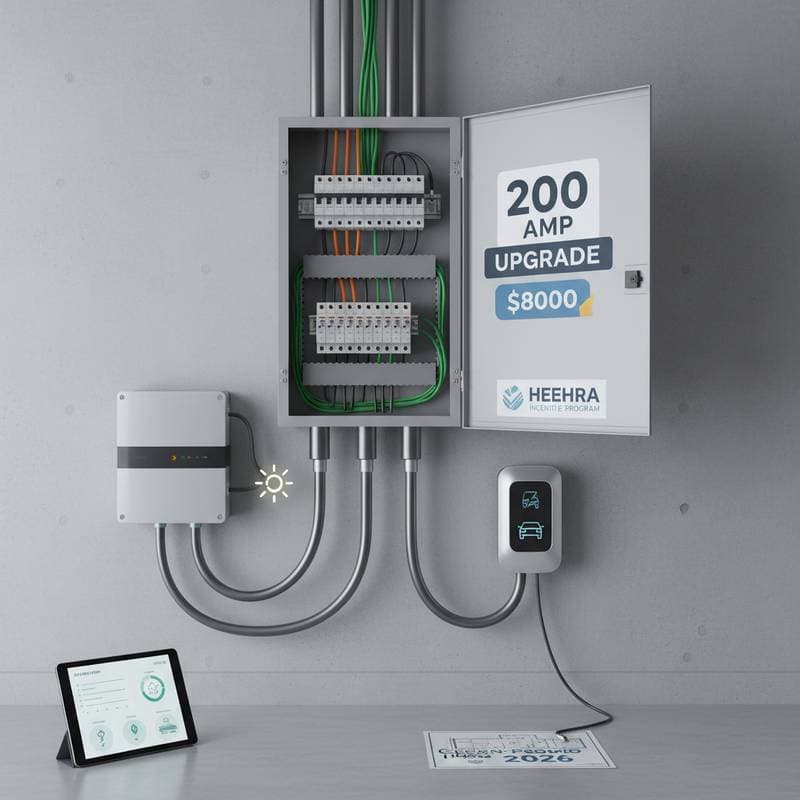
$8,000 HEEHRA Rebates Unlock 2026 Panel Upgrades
Homeowners often desire cleaner energy solutions yet hesitate due to concerns over upgrading aging electrical systems. The High-Efficiency Electric Home Rebate Act, known as HEEHRA, addresses this challenge by providing up to $8,000 for electrical panel upgrades. This financial support enables more residences to manage increased electric demands from technologies such as solar installations, heat pumps, induction cooking, and electric vehicle charging. For numerous households, the electrical panel serves as an unseen obstacle preventing advancement in renewable energy adoption.
View the electrical panel as the central hub of a home's power distribution. An undersized or obsolete panel risks circuit overloads or inspection failures when integrating efficient appliances or rooftop solar arrays. The HEEHRA initiative seeks to eliminate this hurdle, allowing properties to prepare for comprehensive energy enhancements.
Why Electrical Panels Matter for Clean Energy
Many older residences feature 100-amp panels engineered for lower lighting and outlet demands of past eras. Systems like solar arrays, batteries, or heat pumps elevate overall power requirements. Current building codes frequently require 200-amp service to accommodate these advancements securely and effectively.
Upgrading to a modern panel delivers multiple advantages:
- Safety: Minimizes risks of electrical fires and overloads.
- Capacity: Accommodates additional electric devices and solar integrations.
- Efficiency: Decreases energy dissipation via updated wiring and improved grounding.
- Resale Value: Signals to potential buyers that the property receives proper upkeep.
Such an upgrade generally ranges from $3,500 to $7,500, influenced by factors including home configuration, existing wiring quality, and desired panel capacity. The HEEHRA rebate offsets a significant share of these expenses, facilitating progression toward sustainable power sources.
How the HEEHRA Rebate Works
HEEHRA incentives target low- and moderate-income households aiming to electrify their living spaces. The program offers up to $8,000 specifically for electrical panel enhancements when linked to complementary electrification efforts, such as heat pump setups or wiring enhancements.
Qualification hinges on household income compared to the regional median. Eligible participants apply via designated state or local initiatives after program activation. Rebates apply directly at purchase, reducing the invoice amount immediately rather than deferring benefits to a later tax filing.
This approach enhances accessibility for families facing initial cost barriers. It further promotes collaboration between electricians and contractors to incorporate panel work into holistic energy strategies.
Connecting Panel Upgrades to Solar Readiness
One primary benefit of a timely panel upgrade lies in readying the home for solar energy adoption. In Philadelphia, a standard 7-kilowatt solar array generates approximately 9,100 kilowatt-hours annually, based on typical sunlight exposure. With electricity rates around 24 cents per kilowatt-hour, this yields about $2,180 in yearly savings, excluding fixed charges.
Should the existing panel fail to support the necessary solar breaker or interconnection standards, installers might require a subpanel addition or full service enhancement. Allocating HEEHRA funds toward a new panel avoids these extra expenditures. Moreover, it equips the residence for emerging options like battery storage or electric vehicle charging stations.
Cost and Payback Example
Imagine a homeowner with a 100-amp panel planning solar and heat pump installations. These additions necessitate a 200-amp panel at $6,500. An $8,000 HEEHRA rebate could reduce net costs to zero or minimal levels when paired with eligible projects.
If the upgraded setup enables solar production saving $2,180 annually, the overall project payback might shorten to less than four years. This calculation incorporates solar incentives, utility bill reductions, and rebate contributions. Actual figures depend on roof dimensions, local rates, and site-specific shading, yet they demonstrate the expansive fiscal and ecological gains from panel modernization.
Steps to Plan Your Upgrade
- Examine electric bill records. Collect 12 months of usage data to identify average consumption and peak demands.
- Arrange an electrical evaluation. Engage a licensed electrician to assess current panel capacity, wiring integrity, and service specifications.
- Inquire about solar compatibility. Design the upgrade to include a solar-ready main breaker and provisions for additional circuits, even if installation follows later.
- Obtain multiple estimates. Solicit detailed proposals outlining labor, materials, and permitting costs, ensuring consistent project parameters across bids.
- Verify rebate qualifications. Review income thresholds and lists of certified installers; select programs often mandate work by enrolled professionals.
- Anticipate future demands. Account for planned additions like new appliances, electric vehicles, or heating systems that could require extra circuits.
Maintenance and Long-Term Value
Modern electrical panels demand minimal upkeep, limited to annual visual checks for corrosion, secure connections, or heat indicators. Maintain clear space around the panel to promote safety and airflow.
These units endure 25 to 40 years prior to needing replacement, establishing them as enduring investments. Paired with solar and efficiency measures, they generate savings potentially exceeding tens of thousands in utility expenses over time.
The upgrade enhances living quality as well. Stable voltage supports optimal performance of heat pumps and intelligent thermostats. Integrated with smart inverters and monitoring tools, residents gain real-time insights into consumption patterns, enabling targeted adjustments for greater efficiency.
Lifestyle Adjustments That Support Electrification
A panel upgrade forms the base, yet everyday practices amplify benefits. Implement these strategies:
- Transition to LED lighting and extinguish lights in unoccupied areas.
- Wash clothes in cold water and maintain clean filters on appliances.
- Seal drafts and apply weatherstripping to lessen heating requirements.
- Program smart thermostats for preheating or precooling during off-peak times.
- Schedule electric vehicle charging for periods with reduced rates, if time-of-use pricing applies.
These incremental changes accumulate, easing system loads and prolonging equipment durability.
Next Steps for Homeowners
For any impending electrical or heating project, initiate with a panel inspection. Reach out to a licensed electrician experienced in rebate applications. Secure a comprehensive quote covering labor, permits, and rebate applications.
Following approval, retain all receipts and inspection documentation. Monitor utility consumption pre- and post-upgrade to quantify outcomes. Gradually, observe how this foundational modification renders the home more efficient, durable, and primed for renewables.
FAQ
What is the goal of the HEEHRA rebate?
It assists homeowners in financing modifications that equip residences for electric appliances and renewable energy setups.
Who qualifies for the $8,000 panel rebate?
Households aligning with income criteria based on area medians qualify via established state or local programs.
Can I use the rebate for a solar-only project?
Yes, provided the upgrade facilitates solar integration or connections, though verify local guidelines for any bundled installation stipulations.
What panel size should I install?
A minimum of 200 amps suits most contemporary homes, particularly those anticipating heat pumps, EV chargers, or solar additions.
Do I need a permit for a panel upgrade?
Yes. Replacements demand permits and inspections to comply with safety regulations.