
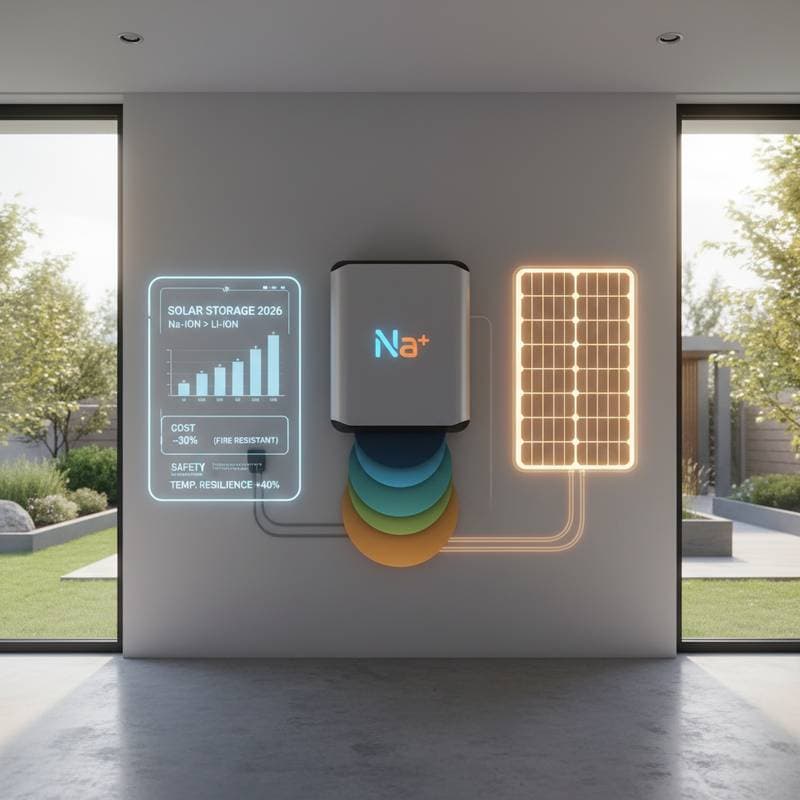
Why Sodium-Ion Batteries Will Outpace Lithium for Solar Storage by 2026
Solar energy storage represents a critical challenge in the transition to clean power. Homeowners who adopt solar panels discover that selecting appropriate battery storage proves as essential as choosing reliable panels. While lithium-ion batteries have led the market for years, sodium-ion batteries emerge as a superior choice for affordability, sustainability, and safety in future solar installations.
Understanding Battery Options
Lithium-ion batteries power everyday devices such as smartphones, laptops, and electric vehicles. These batteries deliver high energy in compact forms and support thousands of recharge cycles. However, the core materials, including lithium and cobalt, carry high costs and sourcing difficulties. Extraction processes frequently involve environmental damage and supply chain vulnerabilities.
Sodium-ion batteries rely on sodium, an element plentiful in salt and seawater, which simplifies extraction. This transition from lithium to sodium lowers material expenses and minimizes global supply risks. For residential users, the result includes more economical solar storage with reduced ecological impacts.
Mechanics of Sodium-Ion Batteries
Sodium-ion batteries function similarly to lithium-ion counterparts. During charging, sodium ions travel from the positive electrode to the negative electrode via a liquid or solid electrolyte. Upon discharge, the ions return, generating electrical current.
The primary distinction appears in the chemical composition. Sodium ions exceed lithium ions in size, which modestly affects energy density. Recent innovations in cathode and anode materials narrow this difference. Current sodium-ion cells achieve 140 to 160 watt-hours per kilogram, approaching the 180 to 200 watt-hours per kilogram of lithium iron phosphate variants.
Analyzing Costs
Consider a residential battery system with 10 kilowatt-hours of usable capacity. A lithium-ion version typically costs around 9,000 dollars installed. Projections indicate a sodium-ion equivalent will approach 6,000 dollars as production expands, representing a 30 percent decrease in initial investment.
For a household consuming 10,000 kilowatt-hours annually, with solar offsetting 80 percent, a sodium-ion setup enables effective energy shifting from daytime production to evening use. This affordability accelerates return on investment by two to three years relative to lithium-ion systems. Incentives and net metering further amplify lifetime savings.
Safety and Thermal Performance
Sodium-ion batteries exhibit greater stability across temperature extremes. They employ non-flammable electrolytes, which diminish fire hazards. In addition, these batteries maintain efficiency in cold conditions, unlike lithium-ion types that suffer capacity losses.
In areas with variable climates, such as Philadelphia, this durability proves vital for rooftop solar setups. A sodium-ion battery preserves up to 90 percent capacity near freezing temperatures. Such reliability ensures consistent backup power without interruptions.
Sustainability and Resource Advantages
Sodium-ion batteries sidestep dependence on scarce metals. Components like sodium, aluminum, and iron abound globally and facilitate straightforward recycling. This approach yields a greener battery lifecycle at lower costs.
Lithium extraction demands substantial energy and water resources. In contrast, sodium-ion production involves fewer hazardous substances and encourages regional manufacturing. Expanded output will shorten supply chains, cutting transport-related emissions and expenses.
Key Performance Metrics
Beyond energy density, factors like cycle life, charging speed, and efficiency define practical utility in solar storage. Sodium-ion batteries endure 3,000 to 5,000 full cycles with under 20 percent capacity loss, aligning with select lithium iron phosphate options. Round-trip efficiency, which gauges recovered versus stored energy, attains 90 to 92 percent.
These specifications suffice for most home solar needs. Residential systems seldom undergo daily full cycles, allowing sodium-ion units to operate effectively for over a decade under standard conditions.
Seamless Solar Integration
Deployment of a sodium-ion battery mirrors lithium-ion procedures. Installers verify inverter compatibility and scale the system according to energy use, solar output, and outage preparedness.
A 7-kilowatt solar array, yielding 1,300 kilowatt-hours per kilowatt annually, produces approximately 9,100 kilowatt-hours yearly. Coupled with a 10-kilowatt-hour sodium-ion battery, this configuration addresses daytime and evening demands for typical households. The battery captures excess sunlight for later release during peak usage or blackouts.
Dedicated apps monitor system status, displaying charge levels, generation data, and grid exchanges. These tools notify users of required upkeep to optimize longevity.
Future Developments in Sodium-Ion Technology
Although sodium-ion technology continues to evolve, manufacturing capacity accelerates rapidly. Declining prices will establish these batteries as norms in home and shared solar initiatives. Anticipate refinements in enclosures, elevated densities, and versatile formats for wall or cabinet installations.
Warranties will parallel lithium-ion offerings at 10 years, guaranteeing over 70 percent capacity retention. Robust recycling initiatives will reclaim aluminum and sodium efficiently, supporting circular economies.
Practical Steps for Adoption and Maintenance
Prospective users should consult installers on sodium-ion options and system compatibility. Modular designs permit future expansions without full inverter replacements.
To sustain optimal function, position the unit in ventilated areas, prevent complete discharges, and apply software updates promptly. Annual inspections of connections and vent cleaning, alongside manufacturer guidelines, ensure decades of dependable service.
FAQ
1. Are sodium-ion batteries suitable for residential applications?
Yes. They resist thermal runaway and incorporate non-flammable components, reducing fire risks significantly.
2. What is the expected lifespan of sodium-ion batteries?
Models typically withstand 3,000 to 5,000 full cycles, translating to more than a decade of service in standard home scenarios.
3. Is it possible to swap a lithium battery for a sodium-ion one?
Yes, provided the inverter accommodates the voltage and communication standards.