
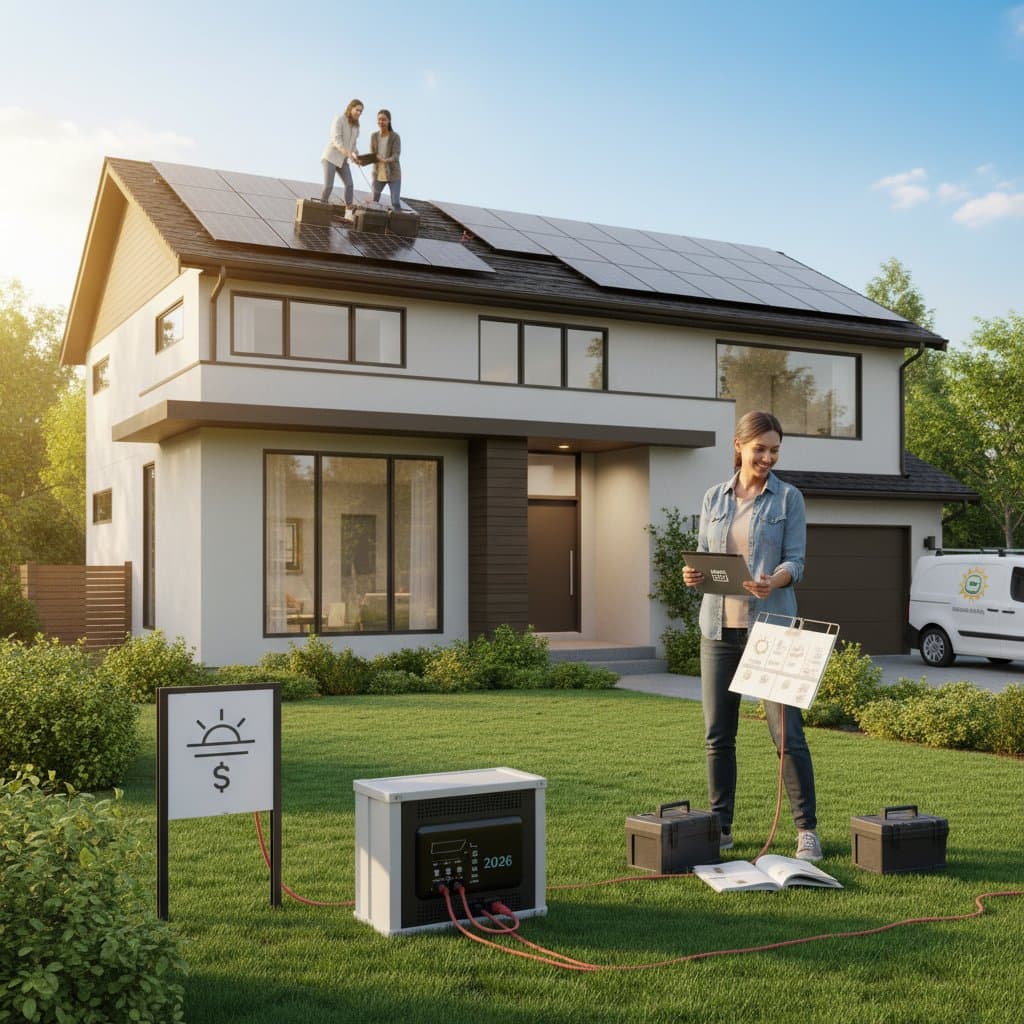
DIY Solar Kits at $5,000: Achieve Home Power Independence by 2026
Homeowners often desire solar energy solutions but face barriers related to expense and installation challenges. Plug-and-play solar kits address these concerns by providing accessible options. For about $5,000, individuals can offset a portion of household electricity needs without undertaking large-scale construction or roof modifications.
These systems position users to benefit from renewable energy trends accelerating toward widespread adoption by 2026. In regions like Philadelphia, where sunlight supports consistent output, such kits prove particularly viable. They integrate seamlessly into existing setups, promoting both financial and environmental gains.
Benefits of Choosing DIY Solar
DIY solar installations empower users to manage energy consumption and expenses directly. A standard $5,000 kit typically encompasses solar panels, an inverter, and a monitoring application. Positioned on a sun-exposed wall or ground-mounted rack, a 5-kilowatt system generates roughly 6,500 kilowatt-hours annually in the Philadelphia vicinity, provided optimal conditions prevail with limited obstructions.
With utility rates averaging 24 cents per kilowatt-hour, this production translates to approximately $1,500 in yearly savings, excluding fixed fees. Payback periods generally range from three to five years, influenced by location specifics and available rebates. Beyond immediate cost reductions, these setups enhance energy security and contribute to broader sustainability efforts.
Users gain insights into consumption patterns through app-based tracking, allowing adjustments for maximum efficiency. This hands-on approach fosters long-term habits that align with goals for reduced reliance on fossil fuels. In peak summer months, when demand surges, personal generation helps avoid higher tiered rates.
Understanding Kit Functionality
These DIY solar kits arrive pre-assembled to prioritize user safety and simplicity. Solar panels capture sunlight and produce direct current, which an inverter then transforms into alternating current compatible with home appliances. Plug-and-play variants connect via an exterior outlet or dedicated circuit, ensuring straightforward integration.
Generated power prioritizes on-site usage, with surplus feeding back to offset grid consumption via net metering where applicable. Certain models incorporate compact batteries to store excess for evening or emergency needs. This design minimizes technical hurdles, enabling completion in a weekend for those with basic skills.
Monitoring tools provide real-time data on performance, alerting to issues like dust accumulation or shading. Advanced kits feature weather-resistant components built to withstand local climates, including Philadelphia's variable seasons. Overall, the technology democratizes access to solar benefits previously reserved for professional installations.
Essential Pre-Installation Assessments
Prior to purchase, evaluate your property's solar viability thoroughly. Tools such as mobile applications or complimentary online shade analyses help calculate average daily sunlight exposure. Ideal placements include south-facing orientations or unobstructed level areas, free from overhanging branches or structures.
Examine your electrical panel's specifications to confirm capacity for additional input. Homes equipped with 200-amp service generally accommodate small-scale solar additions without upgrades. Professional consultation may prove beneficial if uncertainties arise regarding wiring compatibility.
Local regulations differ by municipality, necessitating early outreach to permitting authorities. Systems below designated wattage thresholds often receive expedited reviews for plug-and-play configurations. Adherence to manufacturer protocols and building codes remains paramount to ensure compliance and safety.
Consider seasonal variations in sunlight; Philadelphia's latitude supports solid yields from spring through fall. Document these findings to inform kit selection, avoiding over- or under-sizing that could diminish returns.
Breaking Down Expenses, Rebates, and Long-Term Returns
A $5,000 kit commonly features six to ten panels, each rated at 400 watts, alongside mounting hardware and inverter components. These elements account for the bulk of the investment, with shipping and minor accessories rounding out the total. Eligibility for federal tax credits can reclaim 30 percent or greater of costs, substantially shortening recovery time.
State-level programs in Pennsylvania may offer further rebates or low-interest financing, amplifying value. Over a decade, a baseline system yields savings exceeding $10,000 on electricity bills, assuming steady usage and rates. Calculations should factor in maintenance, which remains minimal at under $100 annually.
Intangible advantages include heightened home resilience against grid disruptions, such as those from storms. By producing clean electricity, a typical setup averts about three metric tons of carbon dioxide emissions each year. This environmental impact aligns with community initiatives for greener urban living in Philadelphia.
Practical Steps for Implementation and Upkeep
Begin by analyzing your previous year's utility statements to gauge peak daytime consumption. Select a kit size that targets 30 to 50 percent offset initially, scalable as needs evolve. Solicit proposals from multiple vendors, standardizing variables like location and output expectations for fair comparisons.
During installation, assemble components per included diagrams, securing panels firmly against wind. Post-setup, monitor initial performance to verify alignment with projections. Routine care involves wiping panels quarterly to remove pollen or leaves, alongside monthly app reviews for anomalies.
Annual inspections of connections and mounts follow significant weather events, preserving system integrity. Expansion options, such as adding panels or integrating larger storage, support future growth without full replacement. This iterative process ensures sustained performance and adaptability.
Building Toward Sustainable Energy Security
Every step toward solar adoption advances personal and collective clean energy objectives. From compact urban setups to comprehensive arrays, contributions accumulate to foster reliable, cost-effective power sources. Homeowners in Philadelphia stand ready to lead this transition, securing benefits that endure well beyond 2026.
FAQ
1. Is self-connection of a DIY solar kit permissible?
Yes, provided the kit qualifies as plug-and-play and instructions for safety are followed meticulously.
2. Are permits required for installation?
In most jurisdictions, a basic notification suffices; verify with your local authority prior to proceeding.
3. Does the system support future expansions?
Yes, numerous kits accommodate supplementary panels or battery integrations.
4. How does performance fare on overcast days?
Production decreases, yet the residence seamlessly draws from the utility grid as needed.