
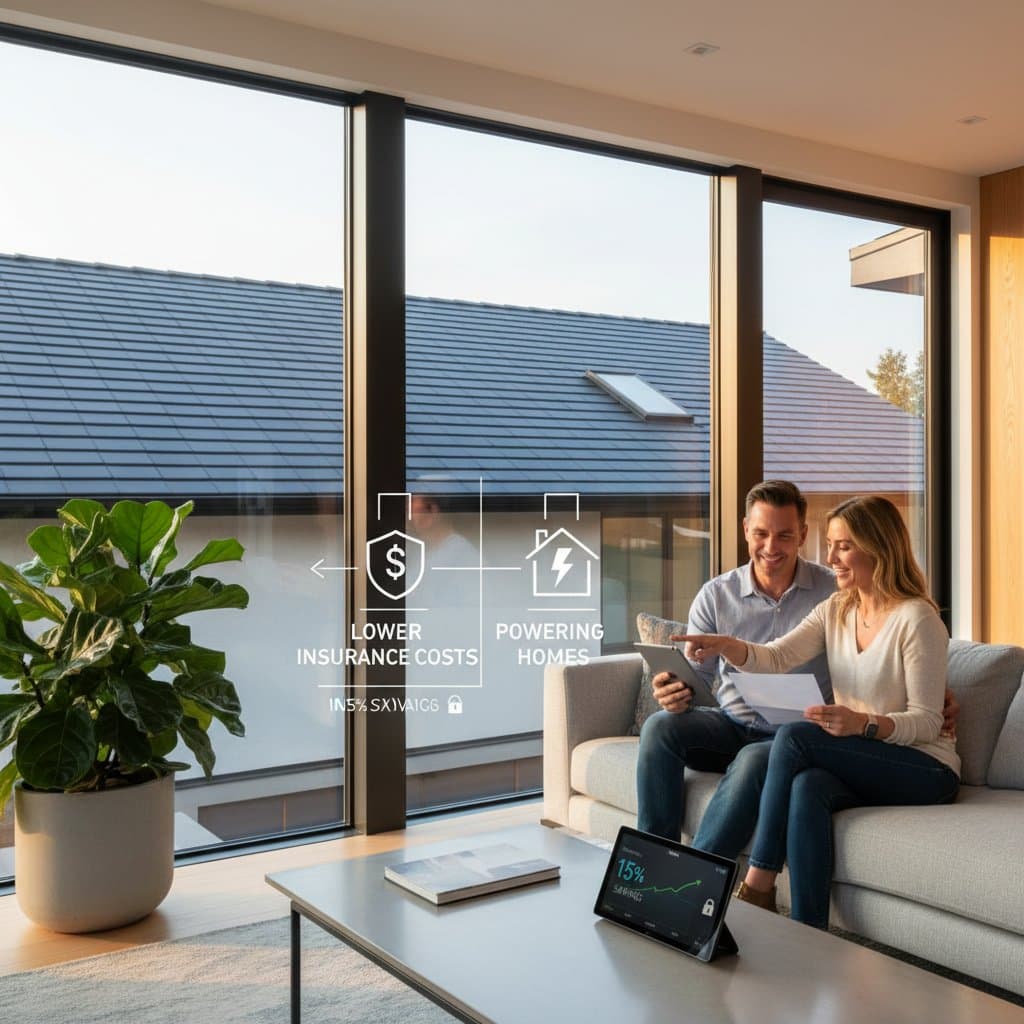
Solar Roofs Versus Traditional Roofs: Insurance Savings in 2026
Solar energy research often overwhelms homeowners at the outset. Individuals frequently question whether a solar roof influences insurance expenses or if conventional shingles represent the more prudent financial option. The reality lies in a nuanced middle ground. Insurance providers adapt to innovative materials, associated risks, and emerging savings potentials. As integrated solar roofing gains prevalence, the equilibrium among initial expenses, energy efficiencies, and insurance rates evolves favorably.
Homeowners who evaluate these roofing alternatives discern distinct advantages and drawbacks for each. However, solar roofs increasingly demonstrate a financial advantage in insurance benefits and sustained performance.
Cost and Coverage Comparisons
Traditional asphalt roofs typically range from $7,000 to $14,000, contingent upon roof size and material quality. Integrated solar roofs generally cost between $30,000 and $45,000 prior to incentives. This elevated price encompasses both the roofing structure and the integrated solar system. Homeowners must account for applicable state or federal incentives and rebates, which often provide credits equivalent to 30 percent of the total system cost. Such reductions can lower the net expense to approximately $21,000 to $31,500.
Insurance providers assess these systems through distinct lenses. A standard roof receives coverage for weather-related damage, fire incidents, and various hazards. A solar roof necessitates protection for both the structural elements and the electricity-generating components. Certain insurers regard solar tiles as integral to the roof, whereas others categorize them as electrical apparatus. This classification directly impacts premium calculations.
To illustrate, consider a homeowner in a moderate-risk area. A traditional roof might incur an annual premium of $1,200 for comprehensive coverage. For a solar roof, if classified favorably, the premium could decrease to $1,080 following a 10 percent adjustment for enhanced durability. Homeowners benefit from consulting multiple insurers to secure the most advantageous classification and rate.
Projected Insurance Savings by 2026
As insurers accumulate data on solar roof performance, premium structures begin to mirror empirical outcomes. Preliminary market analyses indicate that integrated solar roofs may decrease insurance costs by 5 to 10 percent relative to traditional roofs. These reductions stem from diminished maintenance needs and elevated durability profiles.
Consider this practical example:
- Annual insurance for a traditional roof: $1,200.
- Annual insurance for a solar roof: $1,080, reflecting a 10 percent discount.
- Yearly savings: $120.
- Cumulative savings over 25 years: $3,000.
These figures appear modest in isolation. Yet, when integrated with energy cost reductions, the overall financial appeal intensifies. A 7-kilowatt solar roof installation could offset $1,450 in annual electricity expenses, plus the $120 insurance savings. Across 25 years, this yields $39,250 in total avoided costs, excluding escalations in utility rates. Projections for 2026 suggest even greater savings as solar adoption broadens and data refines insurer models.
Homeowners in regions with frequent severe weather, such as hail-prone areas, stand to gain disproportionately. Solar roofs often incorporate impact-resistant materials that minimize claim frequencies, further bolstering discount eligibility.
Maintenance and Replacement Expense Analysis
Conventional roofs demand regular interventions, including patching, sealing, or complete replacement. Solar roofs feature fewer vulnerable seams and utilize robust tempered glass construction. Standard upkeep entails clearing debris and inspecting wiring connections, typically on a biannual basis.
In the event of damage, repair expenses differ markedly. Replacing a single compromised solar tile costs $250 to $400, with the modular architecture permitting targeted fixes without widespread disruption. Conversely, addressing a damaged section of asphalt shingles may exceed several thousand dollars due to labor-intensive removal and reinstallation. Throughout the roof's lifespan, solar options provide superior expense management, despite higher per-component pricing.
Longevity plays a pivotal role here. Asphalt shingles endure 15 to 20 years under optimal conditions, often less in harsh climates. Solar roofs extend to 25 to 30 years, deferring major outlays and aligning with extended insurance policy terms.
Enhanced Long-Term Value and Resale Advantages
Properties equipped with solar roofs command quicker sales and premium prices. Prospective buyers perceive integrated power generation as an inherent asset, distinct from supplementary panel installations. Appraisers now routinely factor solar production into valuations. For instance, a residence generating 9,000 kilowatt-hours annually may appreciate by $15,000 to $20,000, predicated on anticipated energy savings.
Insurers recognize these dynamics. Residences featuring contemporary, energy-efficient roofs exhibit lower risk characteristics, as owners demonstrate commitment to ongoing upgrades and maintenance. This perception translates to favorable premium adjustments over time.
Market data supports this trend. In solar-friendly markets like Philadelphia, homes with integrated systems sell at 4 to 6 percent above comparable non-solar properties. As 2026 approaches, expect appraisers to refine methodologies, potentially amplifying value gains.
Practical Steps for Homeowners
Prospective solar roof adopters should initiate discussions with their insurance provider prior to commitment. Inquire about system classification and eligibility for premium reductions. Secure a written endorsement delineating coverage for solar components, including protection against hail, wind, and power disruptions.
Post-installation, furnish insurers with detailed system specifications, permitting documents, and warranty information. Arrange yearly inspections to verify structural integrity and document all maintenance activities meticulously. Should utility rates increase, revisit insurance and energy projections to quantify evolving benefits.
Consult certified installers familiar with local codes to ensure seamless integration. Explore financing options that incorporate insurance savings into payback calculations for a comprehensive financial picture.
Frequently Asked Questions
What distinguishes a solar roof from conventional solar panels?
A solar roof embeds photovoltaic cells directly into the roofing material, creating a unified structure. Traditional panels mount atop an existing roof, requiring separate support systems.
Does a solar roof installation raise insurance premiums?
Certain scenarios may result in slight increases, yet numerous insurers lower premiums upon recognizing the materials' proven durability and reduced risk.
Is it possible to cover a solar roof under a standard homeowner's policy?
Yes, although an endorsement specifying coverage for solar equipment, wiring, and inverters proves essential.
How does the lifespan of a solar roof compare to asphalt shingles?
Solar roofs endure 25 to 30 years, surpassing the 15 to 20 years typical for asphalt shingles.
What maintenance does a solar roof demand for insurance purposes?
Beyond routine cleaning and periodic inspections, no specialized maintenance applies.
Do integrated solar tiles offer superior resistance to hail and wind?
Many designs adhere to rigorous impact and wind standards, thereby curtailing potential damage claims.
Can homeowners obtain warranties for solar tile roofs?
Yes, manufacturers commonly extend structural and performance warranties comparable to or exceeding those for traditional roofs.