
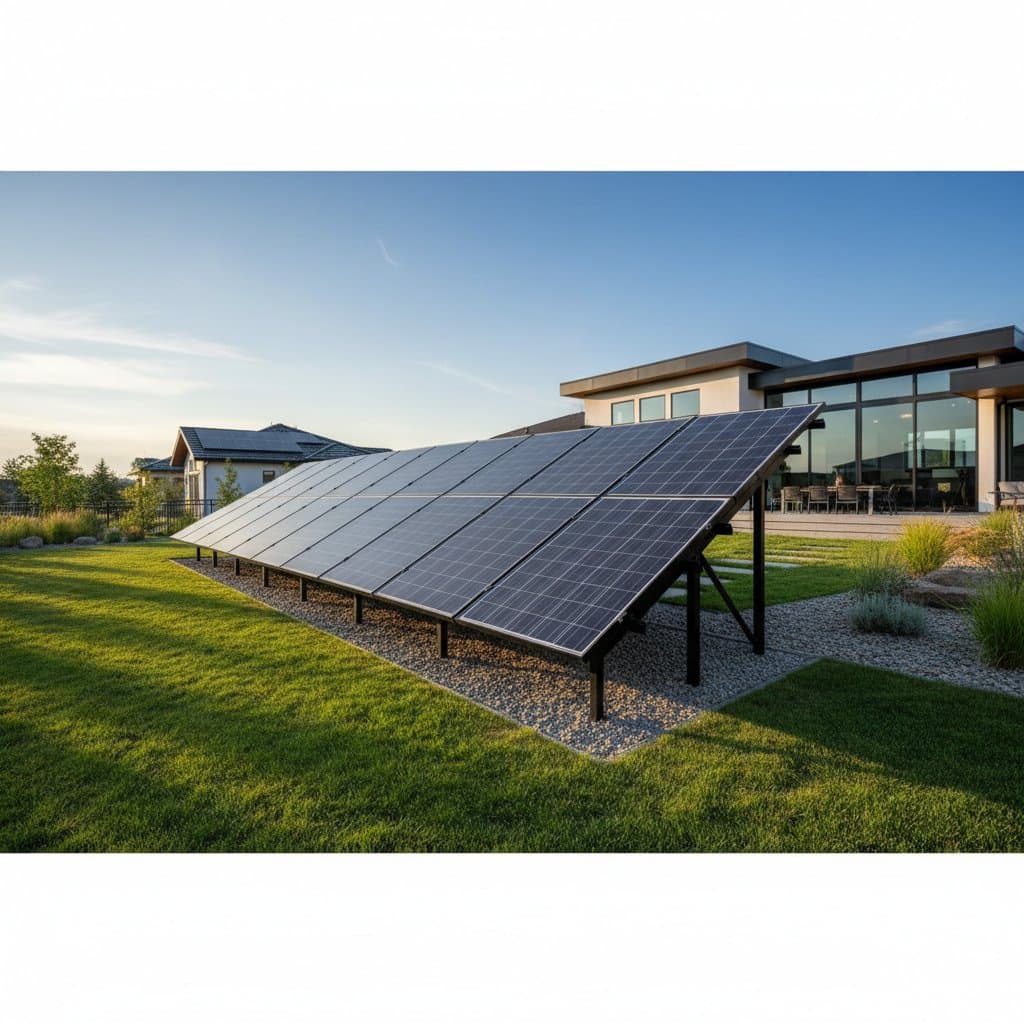
Ground-Mounted Solar Delivers 20% Higher Returns Than Rooftops
Ground-mounted solar installations represent a superior choice for maximizing energy production and financial returns compared to traditional rooftop systems. Projections for 2026 indicate that these systems can achieve up to 20 percent higher return on investment through enhanced efficiency and durability. Homeowners with available land stand to benefit from greater energy independence and substantial long-term savings.
Understanding the Basics of Solar Installation Options
Rooftop solar panels attach directly to a building's roof, constrained by the available surface area and orientation. In contrast, ground-mounted systems position panels on dedicated structures in open spaces, allowing for precise adjustments to capture maximum sunlight. This flexibility addresses common limitations of rooftop setups, such as shading from nearby trees or suboptimal roof angles.
The choice between these options depends on property features and energy goals. For urban dwellers with limited yard space, rooftops remain practical. However, properties with ample ground area enable ground-mounted arrays to outperform, delivering more consistent power output year-round.
Advantages in Efficiency and Performance
Ground-mounted solar excels in sunlight capture due to adjustable tilt and azimuth angles. Panels can align perfectly with the sun's path, unlike fixed rooftop installations that follow the roof's pitch. This optimization results in 10 to 15 percent more annual energy generation, contributing directly to the overall 20 percent ROI advantage.
Improved airflow around elevated panels prevents overheating, a frequent issue on roofs where heat builds up. Cooler operating temperatures extend panel lifespan and maintain peak efficiency levels. Studies show that ground systems operate 5 to 10 degrees cooler on average, translating to less energy loss and higher yields during peak summer months.
Scalability adds another layer of benefit. Ground arrays expand easily by adding rows of panels without structural roof modifications. This adaptability suits growing energy needs, such as adding electric vehicle charging or home expansions.
Maintenance and Longevity Benefits
Access to ground-mounted panels simplifies routine maintenance tasks. Technicians reach components without ladders or roof safety equipment, reducing labor costs and risks. Cleaning dust or debris occurs efficiently with ground-level tools, ensuring panels stay at optimal performance.
Rooftop systems often face challenges from roof wear, requiring careful integration to avoid leaks or structural damage. Ground installations bypass these concerns, mounting on sturdy, independent frames that withstand weather extremes. Over 25 years, this leads to fewer repairs and sustained high output, bolstering the faster payback period.
Weighing Costs Against Long-Term Gains
Initial installation for ground-mounted solar costs 10 to 20 percent more than rooftop equivalents, primarily due to foundation work and racking systems. Average expenses range from $3 to $4 per watt, depending on site preparation. Federal incentives, such as the Investment Tax Credit, offset much of this upfront investment, bringing net costs in line with other options.
Higher energy production accelerates payback, often within 6 to 8 years versus 8 to 10 for rooftops. At current utility rates, a 10-kilowatt ground system might save $25,000 over its lifetime, compared to $20,000 for a similar rooftop setup. By 2026, declining panel prices and rising energy costs will widen this gap further.
Property value increases also factor in. Solar-equipped homes sell for 4 percent more on average, with ground systems appealing to buyers seeking modern, efficient features.
Assessing Suitability for Your Property
Evaluate your land for ground-mounted viability by checking sunlight exposure and available space. A minimum of 400 square feet per kilowatt supports standard arrays, ideally south-facing with minimal shading. Soil tests ensure stable foundations, avoiding rocky or flood-prone areas.
Local zoning regulations may influence placement, requiring setbacks from property lines. Consult professionals to map shading patterns throughout the year, using tools like solar pathfinders for accurate assessments.
For those without suitable land, hybrid approaches combine rooftop and ground elements. This balances space constraints with performance gains.
Steps to Implement a Ground-Mounted System
Begin with a professional site assessment to measure energy needs and potential output. Energy audits reveal consumption patterns, guiding system sizing for optimal coverage.
- Secure permits and incentives through local authorities and federal programs.
- Select certified installers experienced in ground systems for reliable execution.
- Monitor performance post-installation with integrated software tracking production and savings.
Integration with home batteries enhances reliability, storing excess power for evenings or outages.
Unlocking Superior Energy Independence
Ground-mounted solar positions homeowners for resilient, cost-effective energy solutions. The combination of higher yields, simpler upkeep, and quicker returns creates a compelling case for forward-thinking investments. As solar technology advances toward 2026, these systems promise even greater efficiencies and financial rewards.
Embracing this option not only reduces utility dependence but also contributes to broader sustainability efforts. Families achieve peace of mind knowing their energy source is reliable, efficient, and tailored to their unique property.