
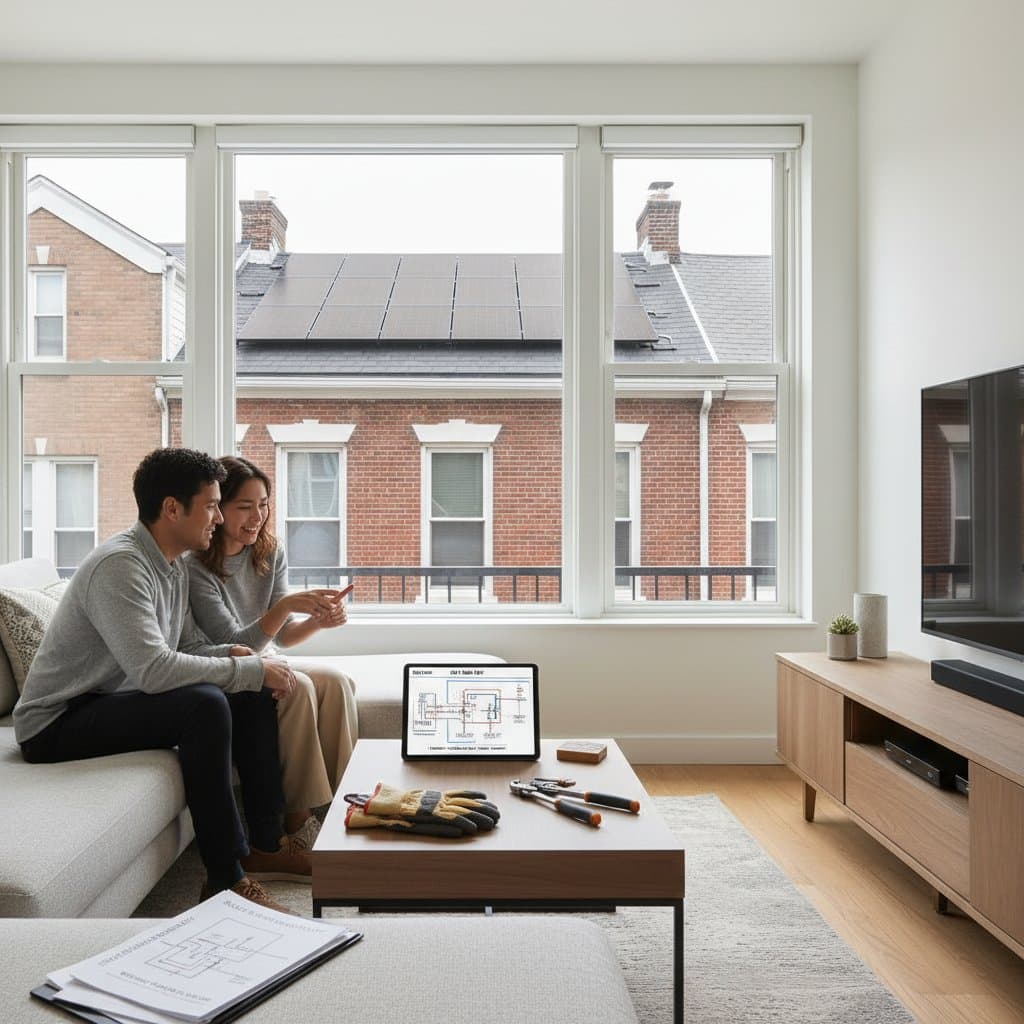
Save on Solar with DIY Kits Under $8,000
Homeowners in Philadelphia now have an accessible path to clean energy. Plug-and-play solar kits enable installation of a modest system for approximately eight thousand dollars, eliminating the need for extensive contractor involvement. These kits support safe, code-compliant setups for individuals prepared to manage fundamental electrical tasks within local regulations.
Savings present clear advantages, yet adherence to safety protocols and building codes remains essential. Homeowners must identify the boundaries of personal installation efforts and recognize when professional expertise from a licensed electrician becomes necessary.
Key Components of Plug-and-Play Solar Kits
Plug-and-play solar kits feature pre-assembled elements that require limited adjustments for integration. A typical kit contains the following items:
- Photovoltaic panels paired with mounting brackets and rails
- Microinverters or centralized string inverters for power conversion
- Pre-wired cables equipped with weatherproof connectors
- A combiner box to consolidate outputs
- Grounding equipment, including lugs and bonding clamps
- A digital monitoring interface, such as a mobile application or web portal
These assemblies prioritize ease of use. Panels link directly to microinverters, which transform direct current into alternating current directly at the source. The resulting alternating current output connects to a designated outdoor electrical outlet on a protected circuit, pending approval from local inspectors.
Reputable manufacturers, including EcoFlow, Renogy, and Jackery, offer kits certified to Underwriters Laboratories standards. Documentation accompanies each unit, detailing step-by-step assembly instructions and precise torque values for secure connections. Homeowners should reject any kit missing visible certification markings, as such products pose unacceptable risks.
Essential Safety Evaluations Prior to Setup
Prior to mounting any components, assess the home's electrical infrastructure for compatibility with additional solar input. Employ a non-contact voltage tester to inspect circuits, and examine breakers, grounding systems, and the main service panel for reliability.
Inspect for potential issues, including:
- Evidence of corrosion or thermal damage on the primary electrical panel
- Presence of aluminum wiring in branches lacking approved terminations
- Breakers rated below required amperage or circuits with improper multiple connections
- Structural weaknesses in the roof, such as deteriorated sheathing or compromised supports
- Insufficient electrical bonding among conductive surfaces
Detection of any such problems demands immediate consultation with a licensed electrician. Assumptions regarding circuit ratings or grounding effectiveness can lead to hazardous outcomes.
To prepare the site, evaluate roof orientation and pitch for optimal sunlight exposure. South-facing slopes between 15 and 40 degrees maximize efficiency in Philadelphia's climate. Confirm that the selected area provides at least four hours of unobstructed daily sunlight, accounting for seasonal variations and nearby obstructions like trees or buildings.
Step-by-Step Installation Guidance
Begin the process by obtaining necessary permits from the Philadelphia Department of Licenses and Inspections. Submit system specifications, including kit details and proposed layout, for review. Approval typically requires one to two weeks, ensuring compliance with Pennsylvania's adoption of the National Electrical Code.
Assemble the mounting system first. Secure rails to roof rafters using lag screws torqued to manufacturer specifications, usually 10 to 15 foot-pounds. Attach panels to rails with mid and end clamps, verifying alignment to prevent shading between modules.
Connect electrical components methodically. Wire panels to microinverters following color-coded instructions, then route cables to the combiner box. Install the box near the service panel, incorporating a dedicated breaker sized to the system's output, often 20 to 30 amperes for a small array.
Ground all metal parts to the home's grounding electrode system using approved conductors. Test connections with a multimeter to confirm continuity and absence of faults. Finally, plug the system into the outlet and activate the monitoring tool to verify initial power generation.
Throughout installation, wear appropriate personal protective equipment, including insulated gloves and safety harnesses for roof work. Document each step with photographs for permit inspections and future reference.
Ongoing Monitoring and Upkeep Practices
After commissioning the system, utilize the provided monitoring platform to observe performance metrics. Review daily energy production, cumulative output, and efficiency trends. Deviations from expected yields warrant prompt investigation.
Common indicators of issues include:
- A circuit breaker that has disengaged, halting power flow
- Malfunctioning microinverters, detectable via error codes on the display
- Dislodged or corroded connections at panel interfaces
- Accumulation of debris, bird droppings, or partial shading on panel surfaces
Maintain panels by rinsing with distilled water and a microfiber cloth quarterly, particularly after heavy pollen seasons in spring. Refrain from applying pressure or traversing the array. Conduct comprehensive inspections once yearly, focusing on cable insulation integrity, mounting fastener tightness, and evidence of animal interference.
Budget for minor replacements, such as fuses or connectors, which may arise after five to ten years. Most kits carry 25-year warranties on panels and 10-year coverage on inverters, underscoring the value of diligent care.
Practical Considerations for Philadelphia Residents
Local incentives enhance the appeal of DIY solar. The Philadelphia Solar Energy Program offers rebates up to $2,000 for qualifying installations, while federal tax credits cover 30 percent of costs through 2032. Calculate return on investment using tools like the PVWatts calculator from the National Renewable Energy Laboratory, projecting payback in 6 to 8 years based on average utility rates of 18 cents per kilowatt-hour.
Select kits scaled to energy needs; a 2-kilowatt system suits partial offsetting of household use, generating about 2,500 kilowatt-hours annually in Philadelphia's 4.2 peak sun hours per day.
Achieving Long-Term Energy Independence
DIY solar installation empowers Philadelphia homeowners to embrace renewable energy affordably and securely. By prioritizing certified equipment, rigorous safety measures, and professional guidance where required, individuals transform their properties into efficient, resilient power generators. This approach not only reduces utility bills but also contributes to a sustainable urban landscape, yielding dividends for decades.