
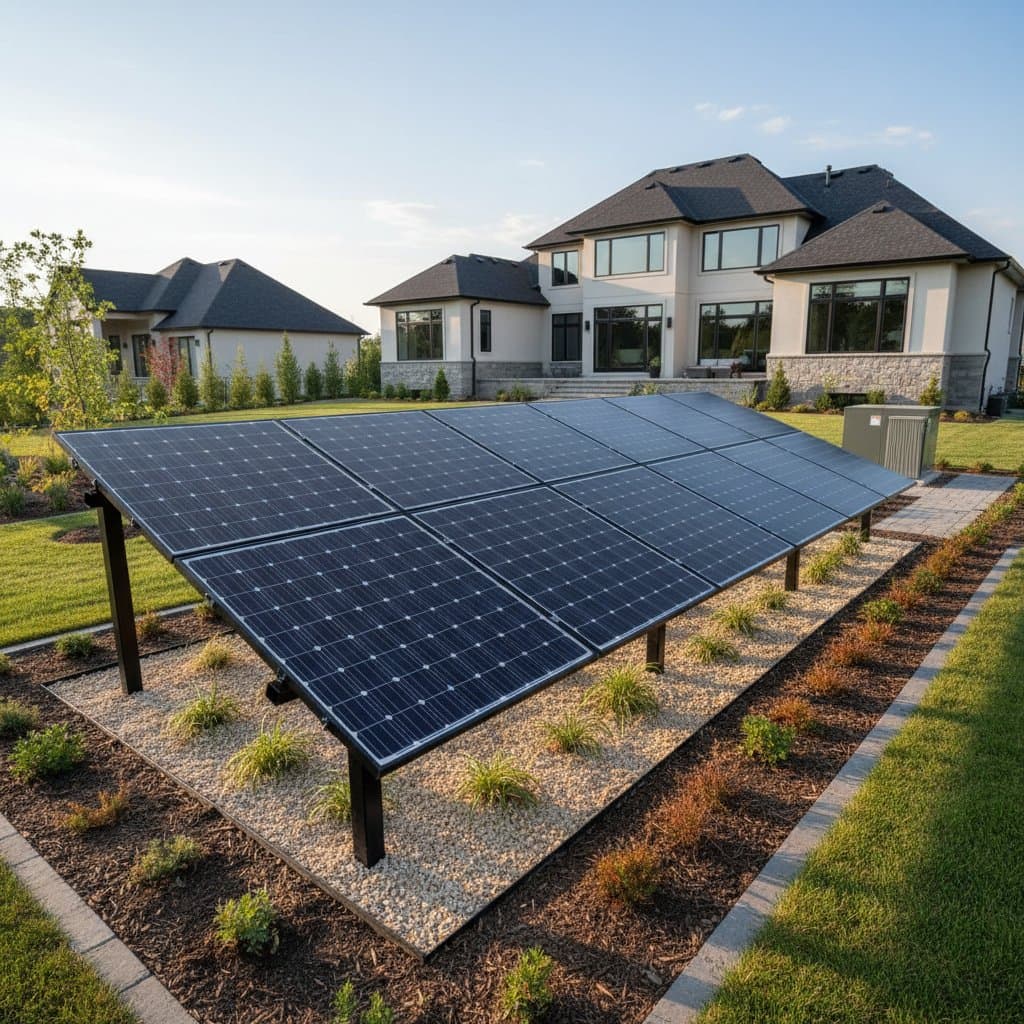
Why Ground-Mount Solar Yields Better ROI Than Rooftop Systems
Homeowners often start their solar journey considering rooftop panels, viewing the roof as prime, underutilized space oriented toward the sun. However, a closer examination of installation factors, shading issues, and long-term performance reveals that ground-mounted solar systems frequently provide a superior return on investment. This edge stems from greater design flexibility, enhanced efficiency, and extended durability.
This analysis examines the sustained performance of ground-mounted systems, their costs, and the reasons their adaptability results in faster payback periods for properties with sufficient yard space.
Site Factors That Shape ROI
Return on investment hinges on energy production levels and the expenses associated with installation and upkeep. Ground-mounted solar installations allow optimization of key elements that rooftops constrain.
Optimal Sun Exposure and Shading Avoidance
Obstructions such as trees, chimneys, or neighboring structures frequently shadow rooftops. Ground placements position panels in areas with uninterrupted sunlight. For instance, if a yard spot receives seven peak sun hours daily compared to five on the roof, energy output rises accordingly. This gain compounds over years, boosting overall savings.
Precise Tilt and Orientation Adjustments
Roofs dictate a single direction and fixed angle. Ground systems permit customization to the ideal tilt based on latitude and precise south-facing alignment in the northern hemisphere. Such adjustments, even by a few degrees, can increase yearly production by several hundred kilowatt-hours.
Scalable System Capacity
Roof area limits panel count due to vents, skylights, and safety margins. Ground setups expand readily to cover full household energy needs, potentially reaching 100 percent offset rather than the typical 70 to 80 percent on roofs.
Superior Heat Dissipation
Elevated temperatures reduce panel efficiency. Rooftop arrays absorb heat from underlying shingles. Ground configurations benefit from natural airflow, maintaining cooler temperatures and enhancing output by two to three percent in warmer regions.
Maintenance and Durability Benefits
Accessing ground-mounted arrays for cleaning, checks, and fixes proves straightforward. Rooftop work demands safety gear and elevated platforms, inflating service fees. Ground panels clean easily with a hose or soft brush, or automated tools, sustaining peak efficiency by removing debris like dust or pollen.
Support structures endure longer without exposure to roof thermal fluctuations or dampness. Rooftop systems tie to the roof's lifecycle; replacement before panels wear out necessitates costly disassembly and reinstallation, risking component damage. Ground installations stay intact through any roofing projects.
Handling Snow, Soil, and Site Integration
Winter snow cover hampers output. Ground mounts adjust to steeper angles or clear quickly, resuming production swiftly. Rooftop snow lingers until natural thaw, cutting yields in colder climates by several percentage points annually.
Soil type influences setup. Loose or sandy ground calls for reinforced foundations like deeper posts or concrete. These upfront investments seldom impact long-term returns. Many integrate arrays into landscapes, shading under-panel areas for storage or shade-tolerant plants. Native vegetation or barriers minimize visual disruption.
Tracking System Performance
Contemporary inverters offer app-based monitoring for instant data. Ground systems deliver steady metrics thanks to uniform exposure and reduced shading fluctuations, enabling prompt issue detection. Rooftop variability complicates troubleshooting.
Pairing with battery storage benefits from ground setups through shorter wiring runs. Positioning batteries and inverters adjacent to panels cuts conduit needs and energy losses, maximizing deliverable power over time.
Impact on Resale Value and Home Appeal
Prospective buyers favor low-maintenance solar not reliant on roof integrity. Ground systems upgrade seamlessly without structural hurdles, appealing to those eyeing additions like electric vehicle chargers or efficient heating.
Professional appraisals link solar to modest property value uplifts versus non-solar peers. These gains connect to proven output and robust warranties, areas where ground installations excel.
Broader Environmental and Utility Gains
Thoughtful ground-mount designs foster ecology. Spacing permits under-panel growth of grasses or pollinator plants, curbing erosion and supporting wildlife, benefits absent in rooftop setups.
On expansive or rural lots, arrays provide shade for machinery or animals, enhancing land utility and worth.
Deciding on Roof Versus Ground Installation
Rooftop options fit compact urban settings with scarce yards. Evaluate roof suitability through orientation, shade levels, and remaining structural lifespan. Shortcomings in these areas tilt favor toward ground systems for reliability and output.
Secure bids for equivalent system sizes across both types. Scrutinize forecasted yearly generation, setup expenses, and warranty terms. Insist on simulations via specialized software to quantify kilowatt-hour disparities.
Practical Steps to Pursue Ground-Mount Solar
-
Evaluate Site Availability. Gauge sunny, open zones free from tree roots or buried lines.
-
Conduct Shading Assessment. Engage professionals for sun path mapping to confirm viability.
-
Obtain Comparative Bids. Request parallel quotes for roof and ground using matching components.
-
Examine Regulations. Verify zoning rules on distances and elevations.
-
Anticipate Growth. Reserve room for additional panels or energy storage.
-
Account for Cabling. Factor in buried conduits to the home, dug below freeze line.
-
Arrange Upkeep Schedule. Annual or biannual cleans maintain optimal function.
Common Questions on Ground-Mount Solar
Do ground systems demand extra upkeep?
Access simplifies tasks, reducing effort and hazards compared to elevated work.
What area does a typical setup occupy?
A 10-kilowatt array requires roughly 600 to 700 square feet of unshaded ground.
How does it alter yard aesthetics?
Integrate with low mounts, plants, or enclosures for seamless blending.
Are panels vulnerable to damage from pets or children?
Tempered glass withstands impacts; perimeter fencing bolsters safety.
Is permitting necessary?
Authorities mandate reviews of electrical and support plans for compliance.