
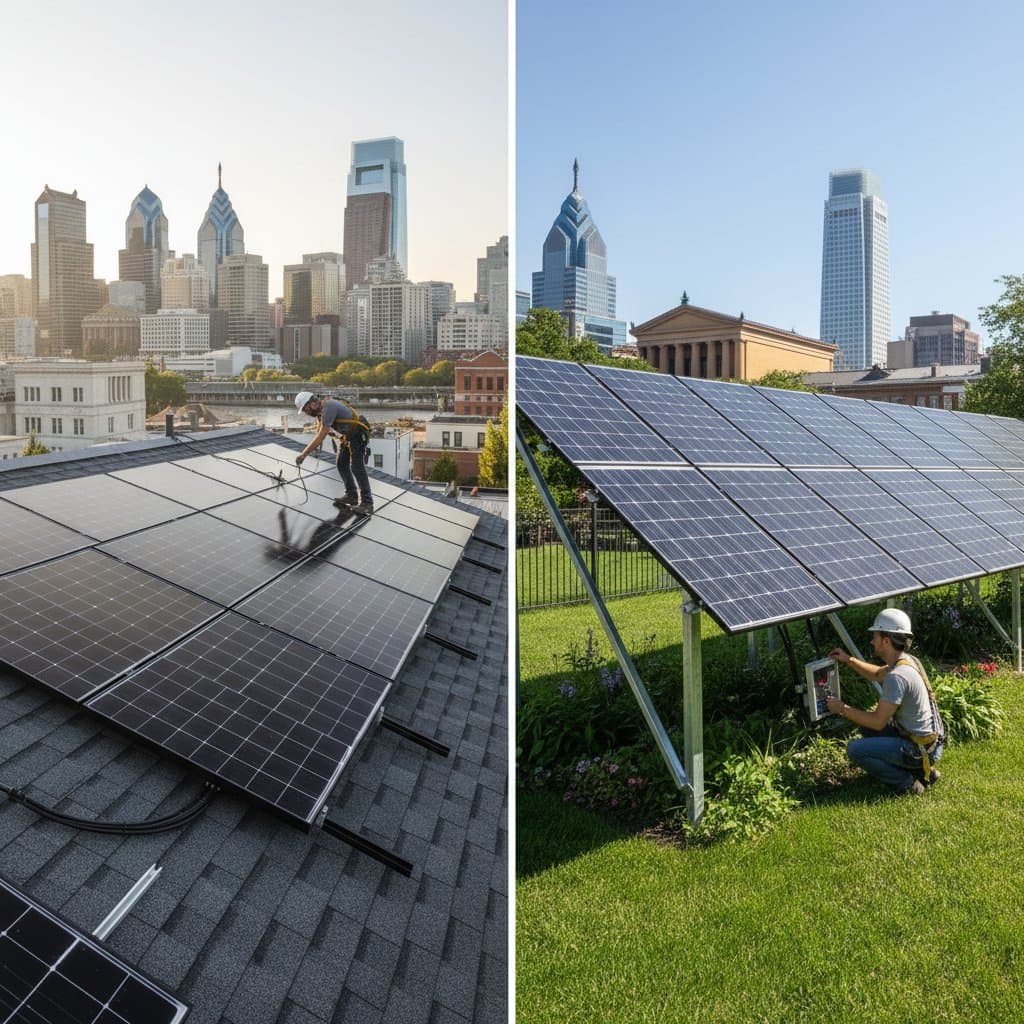
Evaluating Solar ROI: Ground-Mounted vs. Roof-Mounted Systems
Philadelphia homeowners frequently weigh the long-term benefits of ground-mounted versus roof-mounted solar installations. The optimal choice hinges on your site's layout, power usage patterns, and ease of upkeep. Each approach yields strong returns, yet they diverge in expenses, output, and practical considerations. A clear grasp of these elements safeguards your funds while ensuring adherence to safety codes and permitting standards.
Prioritizing Safety in Solar Installations
Solar projects handle energized electrical components and demand precise structural assessments. Before altering wiring, securing mounting hardware, or integrating inverters, consult a licensed electrician or NABCEP-certified solar professional. These experts perform essential tasks such as:
- Validating grounding and bonding per National Electrical Code standards
- Determining appropriate conductor sizes and overcurrent safeguards
- Evaluating roof durability or ground firmness prior to setup
- Conducting insulation resistance tests and verifying array voltages without risk
Always employ a non-contact voltage tester prior to handling any wiring. Refrain from accessing junction boxes or disconnecting circuits until you confirm zero voltage.
Exploring Ground-Mounted Solar Systems
Ground-mounted arrays rest on sturdy metal frameworks or poles fixed into the earth or concrete foundations. This setup permits optimal panel angling and direction, boosting energy capture even in suboptimal rooftop conditions.
Key Benefits:
- Straightforward access for routine cleaning, clearing debris, and inspecting connections
- Customizable tilt for peak performance across seasons
- Eliminates roof loading and avoids penetration-related hazards
Potential Challenges:
- Demands unshaded, open land without obstructions
- Involves digging trenches for wiring pathways to the main panel
- Often necessitates perimeter fencing or land leveling to satisfy zoning rules
Although ground mounts incur higher material and labor costs due to extensive site preparation, their superior positioning frequently results in greater energy generation per panel.
Examining Roof-Mounted Solar Systems
Roof-mounted configurations dominate residential solar adoption. Panels secure to racking systems fastened into roof trusses or, for flat surfaces, weighted with ballast to minimize drilling.
Key Benefits:
- Leverages underutilized roof area, preserving yard usability
- Reduces wiring lengths, cutting down on material expenses
- Streamlines permitting in urban settings like Philadelphia
Potential Challenges:
- Restricts angle adjustments, potentially lowering output on non-south-facing roofs
- Requires meticulous sealing around penetrations to avert water intrusion
- Complicates future re-roofing, increasing associated expenses and downtime
Professionals assess roof condition, age, and weight-bearing capacity upfront. If your roof approaches the end of its lifespan, scheduling a replacement beforehand proves more economical than retrofitting later.
Analyzing ROI Factors
ROI emerges from balancing initial outlay, electricity production, and equipment durability. Roof systems typically feature lower startup costs, accelerating breakeven points. Ground systems, however, often generate more kilowatt-hours annually, enhancing cumulative savings over decades.
Core ROI Drivers:
- Local solar irradiance levels and shadow patterns from vegetation or structures
- Panel conversion rates and inverter efficiency models
- Regional labor rates and permitting timelines
- Upkeep routines, including cleaning schedules and component accessibility
In spacious, sunny lots, ground mounts may surpass roof setups in total output. Conversely, roof options suit compact properties or areas with ground installation curbs under local ordinances.
Navigating Codes, Permits, and Inspections
All solar projects comply with Philadelphia's electrical and building regulations, overseen by the Department of Licenses and Inspections. Licensed electricians handle permit applications, verify grounding integrity, and apply NEC Article 690 labeling. Retain your approved permit and inspection documents for warranty claims, insurance reviews, and home sales.
Securing Expert Advice and Implementation Steps
Start with a comprehensive site visit from a vetted solar specialist to evaluate your options. Insist on a shading report and projected energy yield based on your consumption data. Inquire about inverter guarantees, connector certifications, and recommended service cadences.
For existing installations, conduct yearly visual checks on cabling and fittings for signs of wear, such as fading insulation or unsecured elements. If issues arise, isolate power via the main breaker and engage a qualified technician promptly.
Advancements in solar tech refine efficiency, yet foundational safety and diligent care endure. Weighing ground and roof merits against your site's realities and financial targets empowers a tailored, rewarding energy upgrade.