
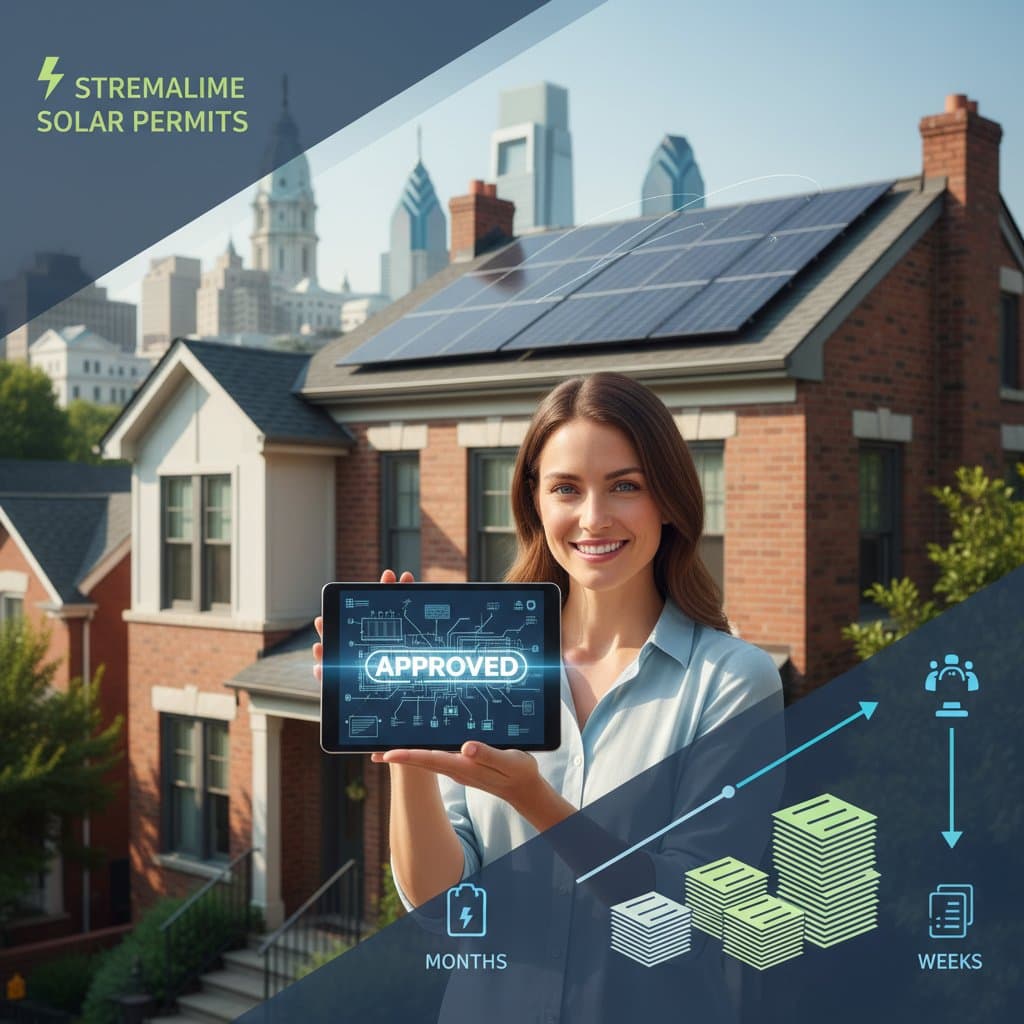
New Rules Accelerate DIY Solar Permitting in Philadelphia
Homeowners attempting do-it-yourself solar panel installations previously faced permit delays that exceeded the time required for the actual project. Unclear requirements and multiple inspections compounded the frustration. Recent updates to local permitting rules now provide a streamlined pathway, enabling quicker transitions from planning to powering homes with solar energy.
These revisions focus on simplifying applications, expediting reviews, and enhancing collaboration among homeowners, installers, and city inspectors. The overarching aim is to facilitate secure solar integration that is both rapid and approachable for a broader audience.
The Impact of Reduced Permit Timelines
Each week of delay translates to prolonged exposure to elevated utility expenses and deferred benefits from renewable energy. For instance, a standard 7-kilowatt rooftop array in Philadelphia generates approximately 9,100 kilowatt-hours annually. With local electricity rates averaging 24 cents per kilowatt-hour, this setup yields roughly 2,180 dollars in annual savings, excluding fixed charges. Accelerated approvals ensure these financial advantages materialize without unnecessary postponement.
Shorter processing periods also broaden participation in solar adoption. Individuals who previously dismissed solar options due to bureaucratic hurdles now view it as a feasible enhancement to their residences. These changes diminish the initial barriers, fostering greater community engagement with sustainable energy solutions.
Key Modifications to the Permitting Framework
A primary advancement involves standardized application templates that demand minimal documentation and employ straightforward terminology for outlining electrical and structural specifications. Most residential systems now support online submissions, eliminating the need for in-person visits to municipal offices.
Inspectors utilize a comprehensive checklist to address all safety and compliance elements during a single on-site evaluation. This approach removes the necessity for follow-up visits and clarifies procedural sequences. Systems below a specified capacity limit qualify for immediate over-the-counter approvals when submissions align fully with the checklist criteria.
Financial and Temporal Advantages
Prior to these updates, do-it-yourself installers typically endured two to three months for permit clearances. The revised system often resolves applications within one to two weeks. Such efficiency lowers ancillary expenses, including permit charges, iterative design adjustments, and rescheduling disruptions. Those managing their own installations may realize additional savings of 2,000 to 4,000 dollars relative to engaging comprehensive contractor services.
Municipal operations gain efficiency as well. Simplified protocols allow personnel to allocate resources toward intricate undertakings, thereby optimizing departmental productivity while upholding rigorous safety standards.
Essential Preparations for Homeowners
Thorough preparation underpins success in this expedited process. Begin by compiling twelve months of utility statements to assess household energy consumption patterns. Conduct a shade analysis to verify roof viability for optimal panel performance. Evaluate the capacity of the existing electrical service panel to accommodate the added solar load.
Consult the city's digital solar resources to validate that proposed system dimensions, wiring configurations, and mounting arrangements conform to established standards. Assemble and retain duplicates of equipment specifications, wiring schematics, and roof securing documentation. This organization minimizes potential setbacks, even in the context of accelerated reviews.
Advancing Your DIY Solar Project
Gather component quotations and evaluate available incentive initiatives to inform your budget. Initiate discussions with your utility provider regarding interconnection protocols at the outset. Upon permit approval, arrange inspections without delay and verify the functionality of monitoring applications once the array connects to the grid.
These permitting enhancements empower homeowners with efficiency and assurance. Beyond hastening setups, they deliver sustainable electricity, diminished expenditures, and contributions to a resilient regional energy landscape.
Frequently Asked Questions
Do these updates cover every solar initiative?
They pertain primarily to modest residential rooftop configurations that adhere to predefined design and safety protocols.
Is full online permitting available?
Affirmative; numerous compact systems support complete electronic filing and digital endorsements.
Which documents are required?
Submit a site layout diagram, equipment specification sheets, an electrical schematic, and particulars on roof mounting mechanisms.