
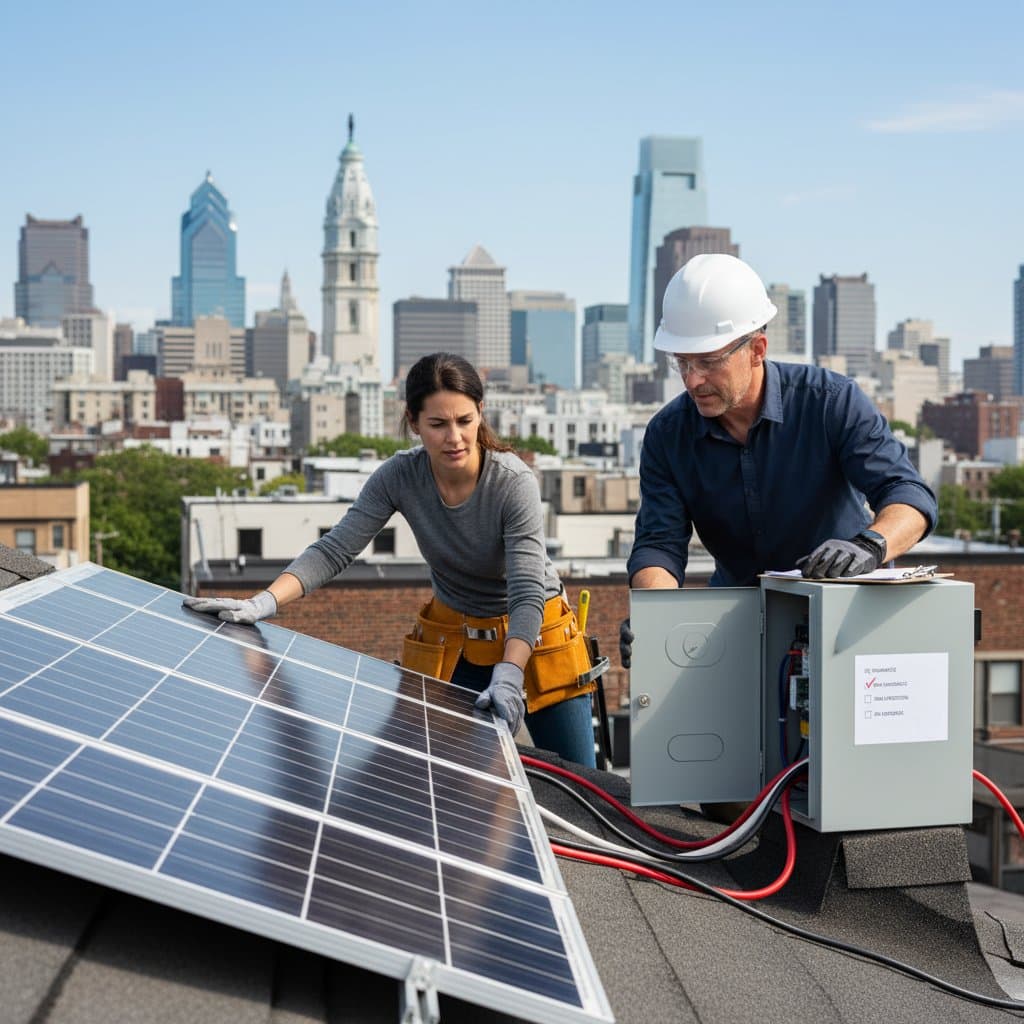
Achieving $15,000 in Savings with DIY Solar: Ensuring Code Compliance
Homeowners often examine the cost of solar panels and consider whether self-installation yields substantial savings. Vendors of solar kits frequently assert that complete systems install for less than half the expense of professional services. These savings prove attractive. However, electrical codes, permitting processes, and inspection protocols determine the success of any solar project. Systems that fail inspections or breach codes risk invalidating insurance policies, generating shock hazards, or igniting fires.
This guide delineates portions of solar installations that homeowners manage safely, elements requiring licensed electrician intervention, and methods to verify that DIY solar configurations satisfy code mandates in Philadelphia and comparable areas.
Recognizing When Professional Assistance Becomes Necessary
Homeowners initiate solar projects by pinpointing activities that enter licensed electrical domains.
Engage an electrician immediately if:
- The system requires integration with the primary electrical panel.
- Installation involves new breakers or service entrance upgrades.
- Uncertainty exists regarding conductor sizing or overcurrent protection.
- Verification of grounding and bonding continuity proves challenging.
- The home features aluminum wiring or an outdated service panel.
In such instances, professionals complete or oversee the tasks. Licensed electricians possess expertise in wire sizing, disconnect configuration, and code documentation for inspections.
Hazards Frequently Encountered in DIY Solar Projects
Homeowners often overlook the significant current output from solar arrays. Compact arrays generate hundreds of volts. Failed inspections commonly reveal these issues:
- Loose or inadequately sized wire connections that lead to heat accumulation.
- Absent equipment grounding conductors.
- Reversed polarity in DC circuits.
- Faulty backfeed wiring to the main panel.
- Lack of rapid shutdown mechanisms for emergency personnel.
Such problems may cause arcing, breaker trips, or inverter damage. Severe outcomes include fires within roof spaces or junction boxes. Torque all connections to manufacturer specifications using a torque screwdriver. Confirm wiring polarity with a digital multimeter prior to energization.
Essential Tools and Materials for Secure DIY Efforts
Partial DIY contributions demand appropriate tools and components. Refrain from makeshift solutions. Certified hardware and precise torque applications prevent heat and current failures.
Required tools:
- Non-contact voltage tester.
- Torque screwdriver.
- Digital multimeter.
- Wire stripper and crimper suitable for solar connectors.
- Ladder stabilizer for rooftop access.
Vital materials:
- UL-listed PV wire and MC4 connectors.
- DC disconnect switches with appropriate ratings.
- Grounding lugs and bonding jumpers.
- Weatherproof junction boxes equipped with strain relief fittings.
Apply labels to all disconnects and junction boxes as specified in NEC 690.31(G). These labels assist firefighters and inspectors in locating energized elements.
Indicators That Prompt Inspection Failures
Inspectors scrutinize particular indicators prevalent in DIY setups:
- Absence of rapid shutdown switches.
- Use of non-listed combiner boxes.
- Overloaded circuit breakers.
- Inaccessible disconnects at ground level.
- Reversed polarity in panel wiring.
Presence of these elements results in inspection rejection. Homeowners subsequently employ licensed professionals for corrections, potentially exceeding initial professional installation costs.
Completing Installation and Ongoing Upkeep
After successful inspection and utility authorization, document inverter performance metrics and test shutoff functions. Periodically clean panels using water and a soft brush. Inspect conduit fittings for tightness and corrosion absence.
Address reduced output or breaker activations by consulting a licensed electrician. Avoid removing inverter covers or conducting live tests without safety gear. Solar elements stay powered under sunlight exposure.
Homeowners adhering to codes, acknowledging electrical limits, and maintaining thorough records benefit from dependable solar energy and genuine cost reductions. Bypassing permits or inspections invites unsafe configurations, rejected insurance claims, and fire risks.
DIY solar delivers thousands in savings exclusively through proper installation, testing, and code approval. Collaborate with a licensed electrician versed in NEC 690 and Philadelphia-specific inspection protocols to attain this outcome securely.