
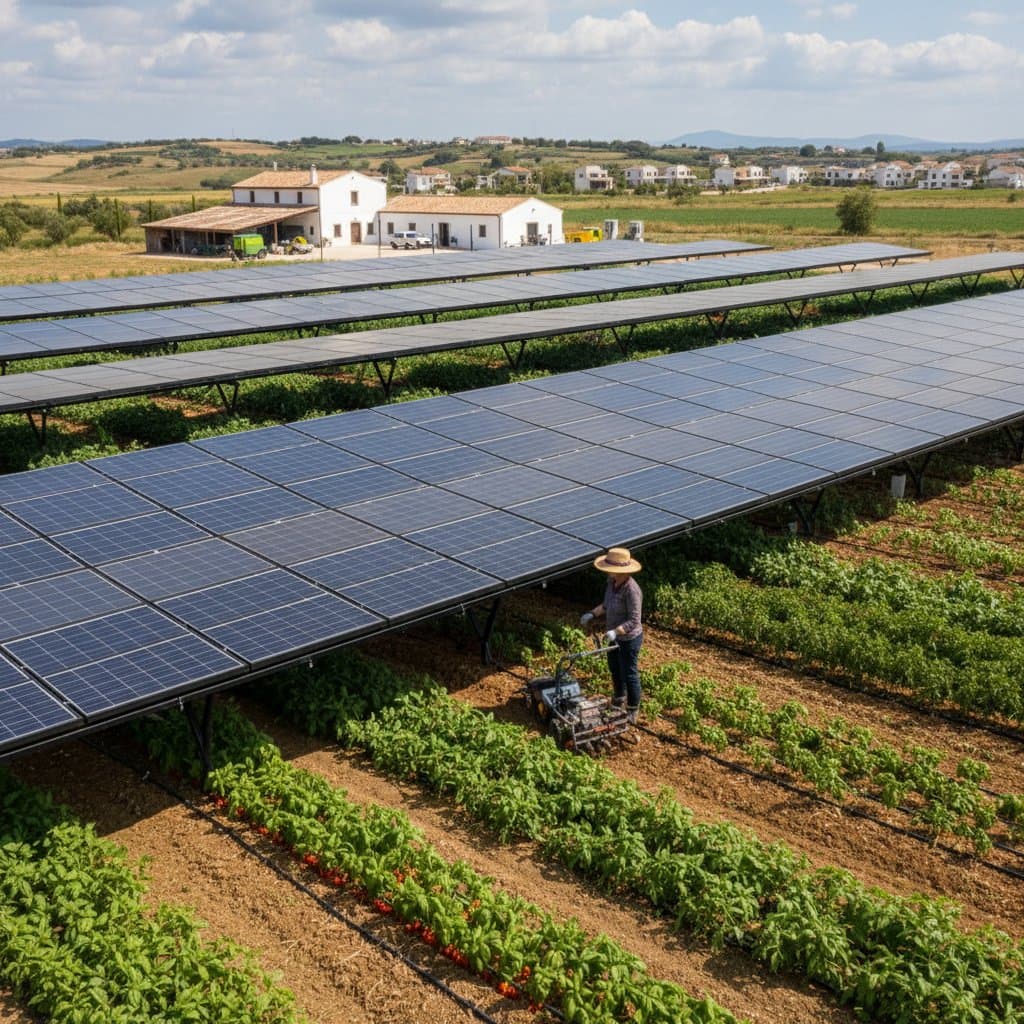
The Hidden Benefits of Dual-Use Solar Farming in 2026
Solar farming has evolved from a specialized effort into a key source of clean energy. An innovative approach, dual-use solar farming or agrivoltaics, integrates renewable energy production with agriculture on shared land. Elevated panels allow crops to grow beneath them or livestock to graze freely, enabling farmers to produce electricity alongside food. This method, once experimental, now delivers efficiency, resilience, and community benefits for sustainable development.
Why Dual-Use Solar Matters
Conventional solar installations frequently displace farmland, sparking conflicts in areas where agriculture defines local culture and resources are scarce. Dual-use solar resolves this by enabling simultaneous food and energy production, unlocking additional revenue for landowners. Farmers secure reliable income from power sales or leases amid volatile crop prices, while local grids receive distributed clean energy without reducing food supplies.
Rural economies gain stability as communities access renewable power that supports rather than competes with farming traditions. This synergy fosters harmony between energy needs and agricultural priorities.
Safety, Permitting, and Design Considerations
Property owners must adhere to electrical safety standards and secure permits before installing dual-use systems. The authority having jurisdiction reviews plans for electrical, structural, and environmental compliance. All solar components require listing under the National Electrical Code.
Licensed electricians handle modifications to wiring, inverters, or junction boxes to ensure proper grounding, bonding, and overcurrent protection. Unqualified attempts risk hazards. Inspectors verify panel height for crop access, conductor sizing, weatherproof connections, and maintenance clearances.
For underground wiring, maintain required trenching depths and utility markings. Engage licensed contractors to locate existing lines prior to excavation.
How Agrivoltaics Works
Dual-use setups feature elevated or adjustable solar arrays positioned to permit sunlight penetration to underlying crops. Structures optimize spacing, tilt, and airflow to support both energy output and plant growth.
In grazing applications, panels mount on poles or frames that accommodate animal movement. Sheep or goats manage vegetation, cutting mowing expenses and chemical applications while preserving soil integrity.
Tracking arrays adjust to the sun for balanced light distribution, and bifacial panels capture reflected light from the ground, enhancing efficiency on the same footprint.
Environmental and Agricultural Benefits
Thoughtful design in dual-use systems enhances soil health and water efficiency. Shade from panels curbs evaporation and tempers extreme temperatures, benefiting shade-tolerant crops like leafy greens.
Studies highlight key advantages: improved soil moisture from reduced wind, decreased irrigation needs, greater biodiversity with native plants, and less erosion on slopes through ground cover.
These elements create resilient ecosystems. Solar setups shield agriculture from heat and drought, promoting long-term productivity.
Economic Value and Long-Term Stability
Landowners benefit from dual revenue streams: steady electricity income via power agreements or net metering, plus ongoing crop or livestock yields. This diversification mitigates market risks.
Lenders view these farms favorably, improving credit access. Tax incentives and grants reward projects that sustain food production.
Research indicates a 60 percent rise in land productivity from combined outputs, far surpassing single-use scenarios.
Grid and Community Integration
Dual-use farms bolster local grids by generating power close to users, minimizing transmission losses. Battery integration aids peak demand management.
Community solar initiatives share agrivoltaic output, allowing non-host residents to subscribe while preserving local food systems.
In populated areas, compact projects serve as educational hubs, where schools grow produce and showcase renewables.
Technical Challenges and Maintenance
Balancing agriculture and solar operations demands precise coordination for irrigation, equipment, and livestock paths. Maintenance teams collaborate to prevent disruptions.
Common issues include panel soiling from debris, variable shading impacts, electrical risks near water or animals, and corrosion from fertilizers.
Conduct regular inspections for fasteners, wiring, and inverters. Use non-contact testers for safety and torque tools for connections. Address monitoring alerts promptly with certified technicians, avoiding unauthorized access to electrical parts.
Policy and Code Compliance
Agrivoltaics must meet electrical, building, and zoning codes, including the National Electrical Code and International Building Code. Local rules may classify it as agricultural, simplifying approvals.
Owners should: contact the authority having jurisdiction for reviews; ensure structures withstand wind and snow; select outdoor-rated components; and secure inspections before energizing.
Noncompliance invites penalties or removal. Keep records of designs, listings, and certifications.
Social and Educational Impact
These farms reinforce community bonds by illustrating renewable-agriculture harmony. Public tours dispel doubts, building support for energy shifts.
Academic and extension programs leverage sites for studies on shade effects or soil responses, sharing insights with prospective adopters.
Cooperatives enable shared management, distributing benefits and bolstering food networks.
Barriers and Misconceptions
Slower adoption stems from yield concerns, equipment interference fears, or initial costs. Pilot tests and consultations address these effectively.
Adjustable mounts accommodate machinery, and energy returns recoup investments quickly. Pair electricians with agricultural experts for compliant designs.
Climate and Resilience Advantages
Weather extremes challenge food and energy security. Dual-use systems distribute risks, with panels shielding crops from hail and vegetation cooling arrays.
Vegetation boosts panel efficiency during heat, while cover aids carbon storage and pollinators.
In vulnerable areas, this approach stabilizes microclimates, conserving water and sustaining output.
Steps for Homeowners and Small Landowners
- Assess the site for sunlight, slope, and soil suitability, steering clear of shaded or flood zones.
- Consult licensed electricians and agricultural experts for design.
- Engage the authority having jurisdiction early for permitting guidance.
- Choose UL-listed modules, inverters, and wiring.
- Ensure installation includes conduit protection, proper clearances, and verified grounding.
- Establish a maintenance schedule with documented inspections.
Bypass no safety devices. For issues like corrosion or faults, de-energize and summon professionals.
Pathways to Sustainable Land Use
Dual-use solar farming endures as a strategy for efficient energy and food production, soil conservation, and economic vitality. It suits scales from vast fields to modest plots, uniting stakeholders in balanced stewardship.
As demands for renewables and resilience grow, agrivoltaics delivers integrated solutions that enhance rather than divide land resources.