
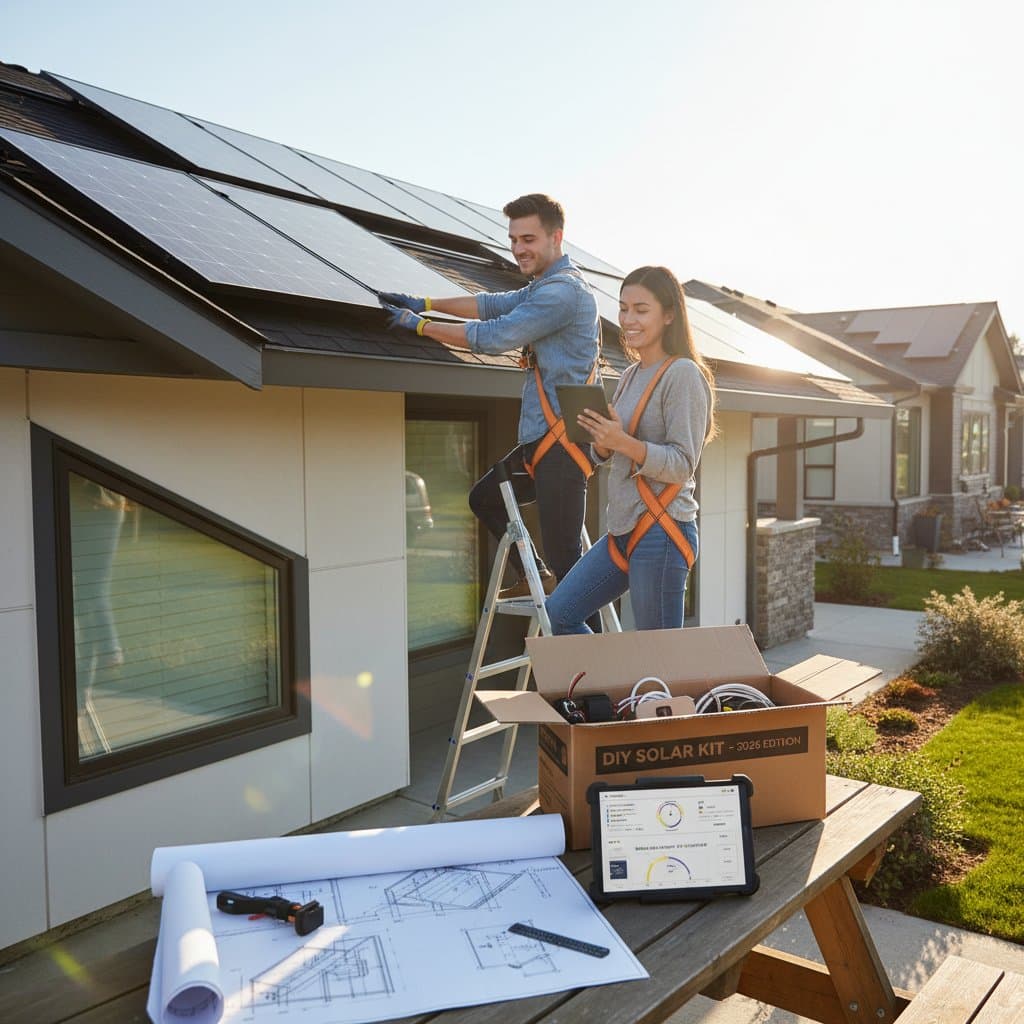
Bypass Installer Markups: Install DIY Solar Kits in 2026
Homeowners often express interest in solar energy yet pause upon reviewing professional quotes. Installer markups render solar installations seemingly unattainable for many. A rising movement shifts this dynamic. DIY solar kits empower individuals to manage their own setups, reduce expenses by thousands, and adhere to essential safety and permitting protocols. Proper preparation and grounded expectations allow cost reductions alongside the fulfillment of self-installing a system that energizes the household.
Reasons DIY Solar Attracts Homeowners
Labor and operational costs dominate solar project budgets. Professionals commonly apply 30 to 60 percent surcharges above hardware prices to address planning, approvals, and earnings. Homeowners assuming the role can eliminate this premium, lowering overall expenditures accordingly.
Consider a 7-kilowatt rooftop array with 18 panels. Contractor installation might total 2.20 dollars per watt, reaching 15,400 dollars prior to rebates. Purchasing equivalent components via a DIY kit drops to 1.20 dollars per watt, approximately 8,400 dollars. Incorporating racking, wiring, conduit, permit charges, and inspections keeps the sum below 10,000 dollars. Such savings extend the break-even timeline by multiple years.
Components of a DIY Solar Kit
Standard kits furnish all essentials for a operational array. Key elements encompass:
- Solar modules with ratings from 350 to 450 watts per unit
- Racking and mounting systems suited for sloped or level roofs
- Inverter options, including centralized string models or panel-specific microinverters
- Wiring and connectors built for exterior durability
- Monitoring gateway linking to residential networks
Certain packages incorporate compact batteries for reserve capacity, although grid-connected configurations prevail initially. Deliveries feature straightforward manuals, video tutorials, and schematic illustrations.
Step-by-Step DIY Solar Installation Process
- Assess the site. Employ online satellite imagery or conduct a shading analysis to verify roof direction, angle, and sunlight access. Orientations facing south or southwest optimize output.
- Gather utility records. Examine the prior year's statements to determine average monthly kilowatt-hour consumption.
- Plan the array. Kit providers frequently supply complimentary layout support, suggesting panel arrangements and inverter capacities.
- Secure permits. Submit designs to the municipal building authority and power provider for pre-installation endorsement.
- Attach racking. Secure rails to roof framing with leak-proof flashing.
- Position and connect panels. Link modules in series or parallel per guidelines, routing cables to the inverter.
- Arrange inspections. Post-setup, officials review compliance.
- Integrate with the grid. Following clearance, the utility adds a two-way meter to credit surplus generation.
Code adherence and precaution mark every phase. Participants should handle heights, equipment, and elementary wiring proficiently. Engaging a certified electrician for terminal linkages proves common.
Expense Breakdown and Return Projections
A full 7-kilowatt kit yielding roughly 9,100 kilowatt-hours annually counters about 2,180 dollars in yearly electricity expenses at 24 cents per kilowatt-hour. With a 10,000-dollar outlay covering all items, payback occurs in 4.6 years. Across two decades, cumulative gains surpass 30,000 dollars, excluding escalating tariffs.
Government programs enhance viability. Federal tax deductions offset hardware and approval costs. Utilities may provide reimbursements or net metering, reimbursing exports at full rates. Verify qualifications and documentation prior to procurement.
Navigating Permits and Safety Protocols
DIY efforts demand strict observance of regional electrical and construction regulations. Typical mandates include:
- Roof integrity assessment
- Detailed electrical schematics and tags
- Professional electrician oversight for grid linkage
- Proper grounding and bonding
- Roof clearance for fire safety
Approval charges span 100 to 500 dollars. Comprehensive submissions minimize processing times. Numerous vendors furnish inspection-ready paperwork for modest additional costs, streamlining endorsements.
Advantages Extending Past Savings
Self-managed solar yields rewards surpassing finances. Users gain insight into household power patterns. Real-time apps display output and usage, fostering efficient behaviors. Panels dampen roof heat absorption, cooling interiors and easing cooling demands during peak sun.
Such installations elevate real estate appeal. Properties featuring settled solar arrays attract quicker sales and higher offers, reflecting reduced ongoing costs for purchasers.
Addressing Typical Obstacles
Patience defines DIY solar. Administrative tasks rival physical labor in duration. Frequent issues involve provider delays, roof intricacies, and regulatory ambiguities. Methodical record-keeping and regular authority dialogue prevent complications.
Individuals often overlook panel mass or elevation demands. Enlisting assistance for hoisting and positioning enhances security. Steep or delicate surfaces warrant ground-based alternatives, which elevate mounting expenses yet ease upkeep.
Upkeep and Ongoing Management
Operational systems demand minimal intervention. Clear foliage and accumulation routinely. Rinse surfaces with water or gentle tools amid seasonal buildup. Monitor outputs weekly for anomalies. Inverters endure 10 to 15 years; panels lose 0.5 percent efficiency yearly. Examine junctions biennially for wear or slack.
Warranties persist for owner-installed units post-verification. Archive records centrally for claims and marketability.
Actionable Steps to Proceed
Trial with modest setups builds assurance. Portable single-panel units suit outbuildings or device charging. Progress to comprehensive rooftops thereafter. Solicit bids from specialists and kit sources to quantify premiums. Match hardware traits for genuine economies.
Review statements, inspect roofing, and inquire with officials on approval processes. Thorough inquiry and pragmatic outlooks yield expert outcomes at reduced rates.
FAQ
Can I legally grid-connect a DIY solar kit?
Yes, provided utility interconnection receives approval and inspections confirm standards.