
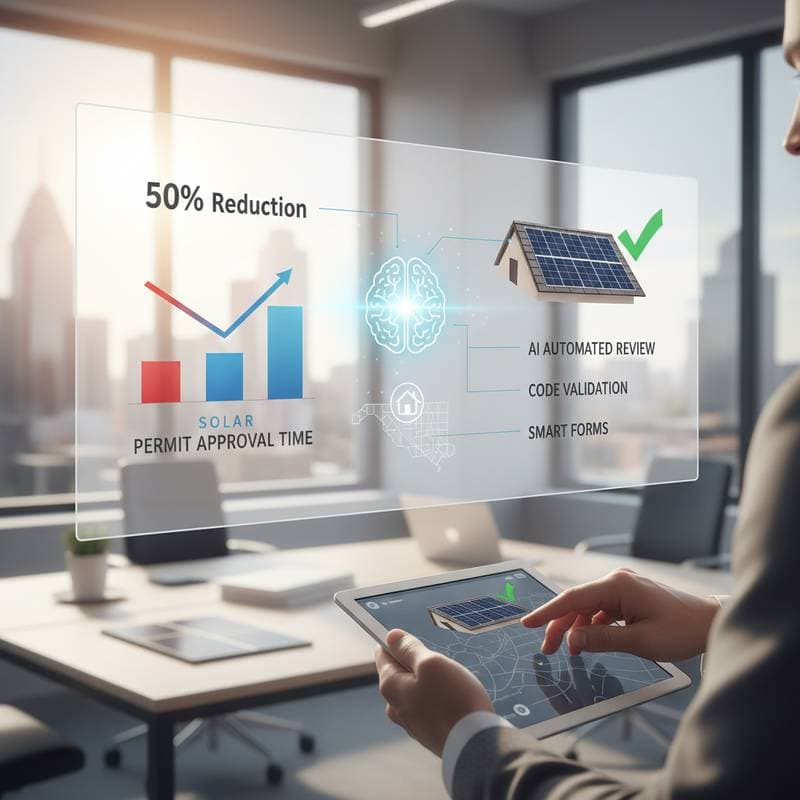
AI Innovation Halves DIY Solar Permitting Time
Homeowners in numerous cities encounter a common obstacle when pursuing solar panel installations. The physical setup often proceeds swiftly after materials arrive. However, the preceding permitting process, entangled in local regulations, frequently causes significant delays. In Philadelphia and similar areas, an overlooked document or inconsistent drawing can postpone projects for weeks. Emerging artificial intelligence systems now alter this scenario. These platforms automate document evaluation, form preparation, and compliance verification, reducing average DIY solar permitting durations by approximately 50 percent.
This shift extends beyond mere efficiency. It enhances precision, ensures safety, and builds assurance for homeowners embarking on solar projects amid bureaucratic challenges.
Mechanisms of AI in Accelerating Solar Permits
AI-enabled permitting solutions examine digital plan documents, confirm code alignments, and detect omissions. The technology replicates a human reviewer's workflow yet operates tirelessly. A robust AI model processes an entire residential solar blueprint within seconds.
Key efficiencies arise from three primary capabilities:
-
Intelligent Document Analysis
The AI interprets PDF files, pulls out specifics such as wiring configurations, and isolates critical details including inverter specifications or mounting capacities. It distinguishes between schematic illustrations and technical specifications. -
Systematic Code Compliance Checking
Extracted components undergo evaluation against prevailing electrical standards and municipal rules. Should elements like conductor dimensions, breaker capacities, or disconnect markings deviate from requirements, the system identifies discrepancies prior to submission. -
Dynamic Form Population
Municipalities often demand repeated data input across various applications. AI platforms repurpose confirmed details to populate fields automatically, ensuring uniform labeling of enclosures.
These processes curtail initial submission denials substantially. Preliminary results from demonstration initiatives indicate error decreases exceeding 40 percent. Such reliability transforms standard four-week approvals into achievable two-week timelines.
Distinguishing DIY Capabilities from Professional Requirements
DIY solar setups attract homeowners proficient in tools and basic electrical concepts. Nevertheless, certain phases demand expert supervision to safeguard operations.
Tasks Suitable for DIY
- Collecting certification documents from manufacturers for panels, inverters, and mounting hardware
- Submitting roof imagery and structural assessments via online permitting interfaces
- Verifying application completeness before filing
- Arranging inspection slots through portal systems
Tasks Requiring Licensed Professionals
- Linking electrical conduits to primary or secondary panels
- Fitting surge protection and earthing mechanisms
- Executing torque verifications on connection points
- Undertaking conclusive electrical assessments and activation
Always engage a certified electrician for procedures involving energized lines or central electrical integrations. The National Electrical Code mandates that solely trained individuals handle these operations.
Empirical Evidence of AI Effectiveness
In locales implementing AI-supported permitting, typical residential solar approval periods have declined from several weeks to about half that span. Outcomes vary based on the authority having jurisdiction's embrace of electronic procedures. Philadelphia's administrative bodies have initiated explorations of these technologies.
Research from the National Renewable Energy Laboratory reveals that uniform digital permitting lowers indirect expenses by up to 20 percent. AI further diminishes these by eliminating manual inputs and revisions. Homeowners benefit through reduced total costs and diminished unforeseen issues.
Dr. Elaine Morris, an energy systems expert at Temple University, observes, "Automation in permitting does not relax standards. It enforces them more consistently and gives inspectors time to focus on real risks." This perspective underscores the fundamental value: enhanced, rather than diminished, regulatory vigilance.
Alignment with Philadelphia's Solar Objectives
Philadelphia's environmental strategy promotes expanded solar deployment to alleviate grid pressures and bolster energy durability. Administrative bottlenecks have historically impeded progress. AI-facilitated permitting enables higher application volumes without proportional staff increases.
These solutions align with urban digital advancement by standardizing data structures and enabling distant filings. They also complement Pennsylvania's Solar Renewable Energy Credit system, which depends on authenticated installation records for allocations.
Municipal technical staff note that standardized electronic filings streamline archiving and coordination. Uniform formats expedite evaluations and foster interdepartmental collaboration.
Pioneering Tools and Platforms
Various enterprises and academic entities now deliver AI modules for solar permitting. These integrate with comprehensive product registries and regional code repositories. The platforms evolve through analysis of extensive approved permit datasets, enhancing precision over time.
Standard features encompass:
- Optical recognition for sketches and annotations
- Direct matching to National Electrical Code provisions
- Verification against zoning ordinances
- Secure cloud repositories with revision histories
Select options incorporate modeling utilities that assess output and obstructions pre-submission. These assure homeowners that designs satisfy codes while achieving projected energy yields.
Advantages Extending Past Efficiency
Expedited permitting represents a primary gain, yet AI bolsters archival reliability. Digital filings incorporate timestamps, iteration logs, and traceability records. This clarity benefits applicants and officials during subsequent inquiries.
Moreover, AI facilitates aggregated data assembly for strategic energy foresight. Compiled permit insights illuminate deployment patterns, equipment preferences, and scale variations. Officials leverage these to project network demands and refine support mechanisms.
Homeowners gain enduring predictability. Awareness of a standardized automated review sequence eliminates uncertainties, facilitating precise timelines for specialist engagements and verifications.
Indicators Prompting Expert Consultation
Summon a licensed electrician promptly if encountering:
- Discrepancies between AI evaluations and producer guidelines
- Doubts regarding earthing or connectivity protocols
- Ambiguities concerning primary panel load limits
- Evidence of thermal issues or degradation in current wiring
Preparing for Solar Permitting Success
Homeowners poised for solar transitions should first evaluate local digital platforms for AI features. Compile all requisite documentation early, including equipment certifications and site evaluations. Test form submissions through available simulations to preempt issues. Once approved, coordinate promptly with certified installers for seamless execution. This methodical approach maximizes AI's potential, turning regulatory hurdles into straightforward milestones toward sustainable energy independence.