
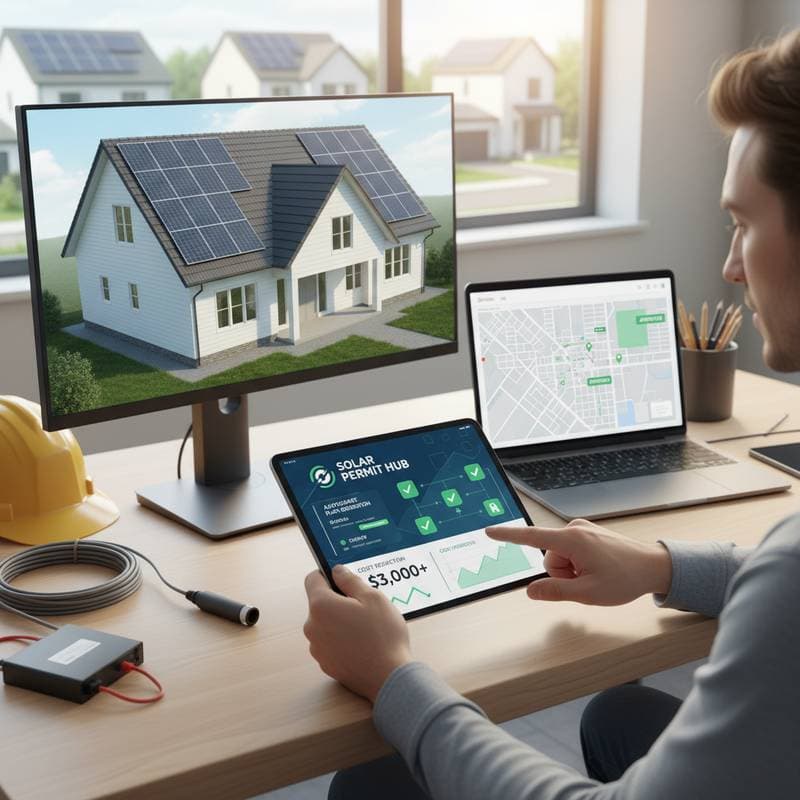
Innovative Apps Reduce Solar Permit Costs by $3,000 in 2026
Homeowners embarking on solar panel installations frequently encounter a significant obstacle before any panels are mounted: the permitting process. Intricate paperwork, delayed municipal reviews, and varying inspection criteria often postpone projects for months and inflate expenses by thousands of dollars. A emerging class of solar permitting applications alters this landscape. These platforms automate documentation, validate system designs against local regulations, and interface directly with municipal approval mechanisms. Numerous users report cost reductions of up to $3,000 per project, stemming from accelerated approvals and diminished reliance on professional services.
Barriers Posed by Permitting in DIY Solar Projects
All solar setups necessitate an electrical permit, and in most areas, a building permit as well. These documents verify that the installation adheres to safety protocols outlined in the National Electrical Code and enforced by the local authority. For homeowners, this involves providing diagrams, load assessments, and equipment specifications to demonstrate that the system remains safe, properly grounded, and regulation-compliant.
Absent digital assistance, the procedure proves tedious and perplexing. Individuals commonly incur costs for third-party designers or electricians solely to compile the necessary forms. Errors in submissions lead to rejections by permit offices, with each revision incurring additional charges.
Mechanisms of Modern Permitting Applications
Contemporary solar permitting platforms streamline operations through three primary functions:
-
Automated plan creation. Users input system parameters, including panel quantity, inverter model, and roof pitch. The application then produces comprehensive electrical and structural blueprints aligned with regional standards.
-
Compliance verification. Integrated assessment features evaluate the design against current codes concerning grounding, wire dimensions, and surge protection.
-
Seamless municipal submissions. Certain local governments now process electronic filings from vetted platforms. This connectivity bypasses physical documents and shortens review periods.
Such capabilities minimize inaccuracies that trigger expensive corrections. They also spare homeowners the expense of engaging design experts for straightforward systems rated below 15 kilowatts.
Prioritizing Electrical Safety
Despite the convenience of these applications, safety remains paramount in all electrical endeavors. The permitting framework safeguards individuals and structures from hazards like fire, electrocution, and collapse. Prior to commencing work, assess whether the residence's electrical infrastructure supports solar integration. Evidence of panel corrosion, improperly shared breakers, or inadequate wiring signals the need for immediate intervention by a licensed electrician.
Avoid accessing live components without employing a non-contact voltage detector. Warmth at the primary breaker or disconnect may indicate a faulty joint, warranting professional diagnosis.
DIY participants may manage physical elements such as panel attachment and conduit placement, yet high-voltage connections and linkages demand scrutiny, testing, and proper tightening by a certified electrician.
Capabilities and Limitations of Permitting Applications
These software solutions target conventional residential configurations utilizing certified components and standardized mounting systems. They excel at:
- Producing wiring schematics compliant with the National Electrical Code.
- Aligning inverter configurations to utility interconnection guidelines.
- Supplying torque specifications and wire gauges derived from producer information.
- Generating annotated illustrations prepared for examiner review.
However, they fall short in:
- Examining pre-existing wiring for concealed defects.
- Confirming structural integrity for non-typical roofs under added panel weight.
- Substituting an engineer's certification for intricate or distributed setups.
Understand that no application assures acceptance if on-site inspections reveal hazards. Adhere strictly to permit directives upon issuance.
Economic Advantages of Digital Permitting
In various locales, permitting expenses accumulate to thousands of dollars, encompassing design fees, engineering evaluations, and repeated filings. Automation of blueprint creation and checks often nullifies these outlays.
Homeowners who once required engineering for load computations can now employ validated templates incorporating wind and snow resistance for typical mounts. Systems qualifying as standard configurations frequently gain approval in hours rather than weeks.
This expediency lowers financing burdens and hastens grid connection. Overall savings, factoring in supplies, workforce, and delayed benefits, typically exceed $3,000.
Implementation Trends and Professional Perspectives
Local governments nationwide increasingly incorporate these platforms into their online permitting frameworks. Clean energy proponents note that this progression supports initiatives to ease household renewable integration.
Electrical inspector Robert Haines observes that incomplete or erroneous filings cause most holdups. "When digital blueprints arrive pre-aligned with code provisions, approvals proceed swiftly," he states. This streamlines operations, allowing inspectors to concentrate on actual site evaluations over clerical oversights.
Potential Hazards of Exclusive Software Dependence
Although benefits prove tangible, undue trust in automation invites dangers. Pre-set designs might overlook legacy homes featuring aluminum wiring, insufficient grounding, or imbalanced panels. Discrepancies, such as assuming copper lines in an aluminum setup, could yield hazardous breaker recommendations.
Conduct a thorough pre-installation audit:
- Ensure breakers suit backfeed applications.
- Validate grounding and bonding continuity.
- Confirm panel labeling clarity and circuit capacity.
Halt proceedings and engage a licensed electrician for any ambiguities.
Initiating a Secure DIY Solar Installation
-
Investigate regional permitting protocols via the pertinent city or county office. Determine digital submission eligibility.
-
Select a credible application featuring verified components and exhaustive records. Prioritize those endorsed by national solar certification bodies.
-
Compile producer documentation, encompassing inverter guides, schematics, and mounting details.
-
Employ the application to draft the blueprint package and scrutinize each element for precision.
-
File electronically where feasible, or submit printed versions to the authority.
-
Await authorization prior to proceeding. Refrain from equipment placement absent formal permission.
Ensuring Ongoing Regulatory Adherence
Post-inspection, retain approved schematics and reports. Subsequent modifications, like electrical expansions or roof repairs, may necessitate these files. Conduct monthly verifications of ground fault and arc fault safeguards. Monitor for alerts including breaker disengagement, inverter errors, or insulation degradation, which suggest connection issues or heat buildup.
Arrange quinquennial reviews by a licensed electrician to examine connections, fasteners, and grounding routes. Rigorous upkeep safeguards the asset and sustains manufacturer guarantees.
Advancing Your Solar Journey with Confidence
Digital permitting enhances DIY solar accessibility without supplanting expert guidance. Leverage these applications to craft precise submissions, avert mistakes, and curb overheads. Pair this proficiency with professional electrical validation to secure enduring reliability and performance.