
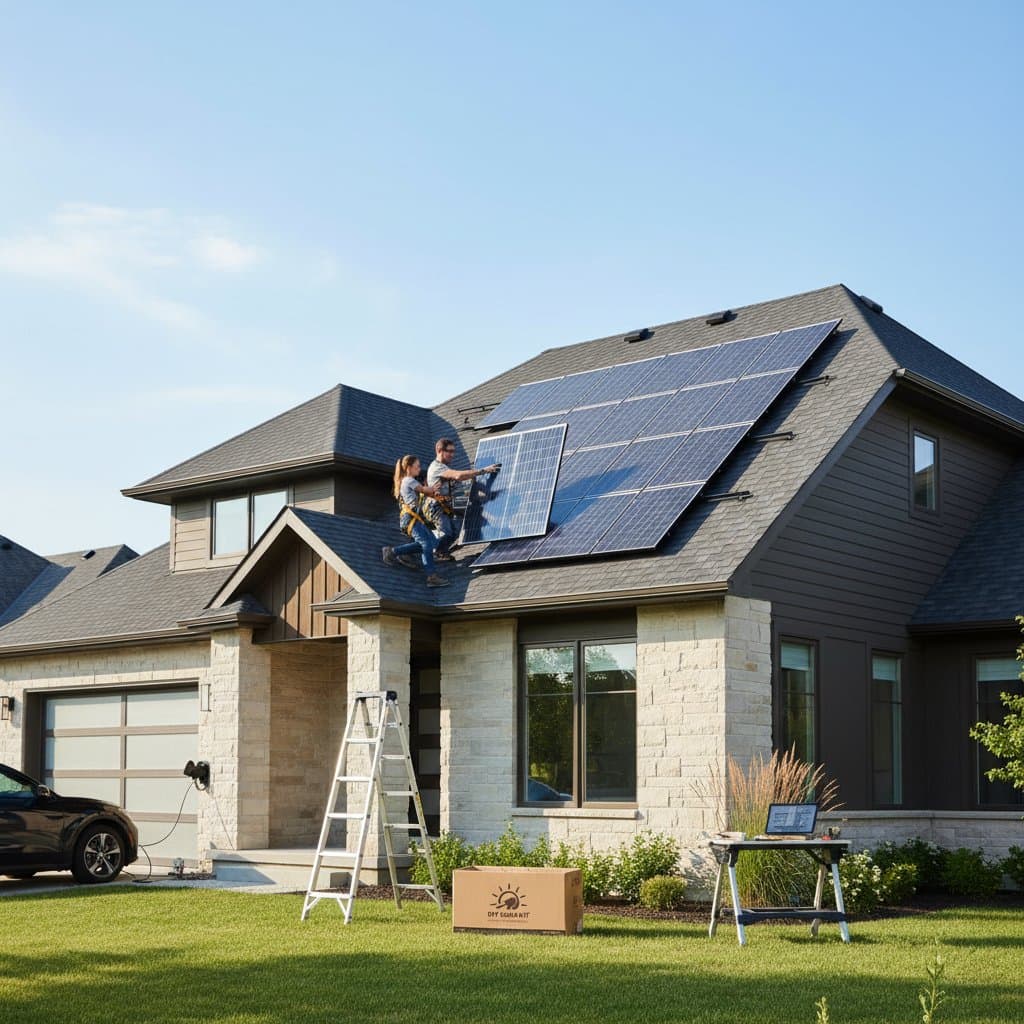
How to Save $8,000 on DIY Solar Panel Installation in 2026
Homeowners often explore solar power options yet pause when confronted with high installation expenses. A typical professional rooftop system ranges from $20,000 to $30,000. DIY solar kits now provide an accessible alternative, enabling savings of approximately $8,000 while delivering dependable performance over time.
Beyond financial advantages, DIY solar empowers individuals to understand their energy setup, manage power expenses, and embrace sustainable practices. Begin with a modest array of panels or scale up to full-home integration as needs evolve.
Understanding DIY Solar Kits
DIY solar kits consist of pre-assembled components tailored for self-installation by homeowners. Standard inclusions feature:
- Solar modules calibrated to the selected system capacity
- Mounting rails and secure roof fasteners
- DC wiring, connectors, and grounding equipment
- A central string inverter or individual microinverters
- Monitoring tools and comprehensive installation manuals
Reputable online vendors supply these kits along with technical assistance and custom design services. Submit roof dimensions and utility bill data for a complimentary system configuration.
The physical assembly proves manageable for those familiar with basic home repairs. Secure panels to rails that fasten directly to roof rafters. Route cables from panels to the inverter, which transforms DC electricity into AC compatible with household wiring. Engage a certified electrician solely for the grid interconnection at the main panel and inspection compliance; this limited involvement represents a minor expense.
Detailed Cost Analysis and Potential Savings
Consider a 7 kW professional system priced at $24,000 prior to rebates. An equivalent DIY kit totals around $16,000 for materials. Budget an additional $1,000 for permits, supplementary wiring, and electrician services for the final hookup, yielding a comprehensive outlay of $17,000. This approach yields savings of $7,000 to $8,000 compared to full-service options.
Post-installation, qualify for the federal solar investment tax credit based on material and eligible labor costs, including electrician fees. This rebate substantially lowers the effective expense by thousands of dollars.
Payback timelines vary by local electricity rates and solar irradiance. Assume annual savings of $2,180 against a $17,000 investment, resulting in an eight-year recovery period. With 25-year panel warranties, anticipate decades of cost-free energy generation thereafter.
Essential Steps for Effective DIY Installation
1. Evaluate Roof Suitability
Conduct a thorough shade analysis to gauge solar viability. Utilize digital simulators to model annual sunlight patterns. Target at least 80 percent roof coverage receiving unobstructed sun during prime daylight hours.
2. Analyze Energy Consumption
Gather 12 consecutive months of utility statements to determine usage patterns. Compute the average monthly kWh by dividing total annual consumption by 12. This figure guides precise system sizing.
3. Select Appropriate Kit Capacity
Opt for a 3 to 4 kW starter kit to power essentials like lighting and small appliances. Choose 7 to 10 kW for comprehensive household demands. Verify sufficient roof space and electrical panel capacity for potential expansions.
4. Verify Regulatory Requirements
Consult your local permitting office and utility provider prior to purchase. Obtain details on necessary diagrams, inspections, and interconnection protocols. Certain utilities mandate pre-installation applications.
5. Execute Safe Installation Procedures
Adhere strictly to provided guidelines. Confirm rafter positions before any penetration. Employ proper safety gear, including harnesses, for roof work. Organize and label all wiring to prevent hazards.
6. Engage Professional for Grid Integration
Professionals must handle the AC connection to maintain code adherence and preserve manufacturer warranties, regardless of prior experience.
7. Arrange Inspections and Activation
Local authorities review structural and electrical integrity. Upon clearance, the utility fits a net metering device. Activate the array and monitor initial output via the app.
System Performance and Upkeep
Contemporary solar arrays require minimal intervention. Routinely clear panels of dust and obstructions. Review monitoring data monthly to verify consistent production. Investigate reductions promptly, checking for encroaching foliage or accumulations.
Anticipate gradual efficiency loss of about 0.5 percent annually. Replace inverters every 10 to 15 years, though panels endure far longer. Kits typically offer 25-year performance guarantees and 10-year equipment protection.
Incorporate battery storage in future phases to enhance value. This allows nighttime utilization of daytime generation and backup during blackouts. Select a compatible inverter upfront for seamless later integration.
Advantages Extending Past Financial Gains
DIY solar fosters deep familiarity with personal energy infrastructure. Homeowners develop skills to address minor issues proactively. Reduced roof heat transfer often leads to cooler interiors and diminished noise.
Solar enhancements boost real estate appeal and accelerate sales. Prospective buyers value diminished utility burdens and self-reliant power sources. Environmentally, each system offsets thousands of pounds of carbon emissions annually, improving local air quality.
Practical Launch and Ongoing Management
Examine roof pitch and direction initially; south orientation maximizes yield, though east or west orientations suffice with adjusted expectations. Solicit proposals from at least two trusted kit providers, evaluating warranties, inverter specifications, and support quality.
Maintain organized records of transactions, approvals, and images for tax and claim purposes. Schedule biannual panel cleanings. Address snow or buildup with a soft tool to avoid damage.
Monitor generation against bills monthly to confirm efficiency. Engage community forums to exchange insights and inspire peers.
Consider complementary upgrades like efficient thermostats or enhanced insulation to amplify solar returns through reduced demand. These steps cultivate greater autonomy.
Collective adoption across neighborhoods eases grid strain and advances regional clean energy goals.
Frequently Asked Questions
Can homeowners legally install solar panels independently?
Yes, provided compliance with local construction and electrical standards. A licensed electrician must perform the grid tie-in in most jurisdictions.