
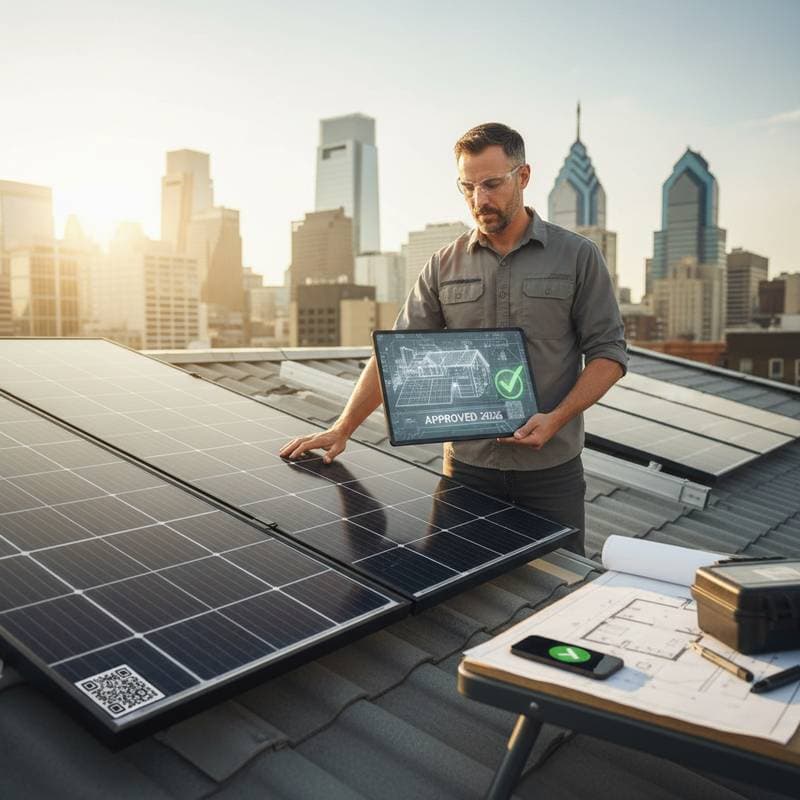
Streamline DIY Solar Permits with Philadelphia's 2026 Fast-Track Rules
Homeowners in Philadelphia often encounter extended delays when seeking solar permits. Applications frequently linger for weeks as city departments scrutinize electrical schematics, roof load assessments, and compliance details. The 2026 fast-track rules introduce a targeted solution for small-scale residential systems. These measures simplify the approval pathway for projects that fully align with safety protocols and building codes, without compromising essential oversight. The initiative balances efficiency with rigorous standards, ensuring that installations contribute reliably to the local grid.
Individuals pursuing do-it-yourself solar setups stand to gain the most from these updates, provided they approach the task with meticulous preparation. Compliance remains paramount, encompassing certified components, precise electrical configurations, and a solid grasp of safety principles. Expedited timelines do not alleviate the need for accountability; instead, they highlight the value of proactive planning.
Eligibility Criteria for Fast-Track Approval
Not all solar projects qualify for the fast-track pathway. To proceed under these rules, a residential installation must satisfy specific conditions:
- Incorporate grid-tied photovoltaic equipment certified by an accredited testing laboratory, such as UL-listed panels and inverters.
- Adhere to predefined capacity thresholds, typically capping at 10 kilowatts for single-family homes to minimize structural impacts.
- Employ a single central inverter or distributed microinverters, each equipped with built-in ground-fault protection mechanisms.
- Position roof-mounted arrays with appropriate spacing and total weight distribution that falls within established limits, avoiding excessive loads on older structures.
- Conform precisely to relevant sections of the National Electrical Code (NEC) and Philadelphia's structural guidelines, including provisions for wiring, mounting, and fire safety, without any deviations.
Projects exceeding these parameters shift to the conventional review process. This alternative route involves comprehensive engineering evaluations, mandatory utility notifications, and in-depth verifications of electrical loads and interconnection feasibility. Homeowners should assess their designs early to determine the appropriate track.
Navigating the Fast-Track Submission Process
The fast-track procedure relies on a streamlined application framework and standardized documentation templates, fostering efficiency from the outset.
Step 1: Assemble Essential Documentation
Begin by compiling key materials: manufacturer datasheets for all components, detailed structural drawings illustrating roof attachments, and a comprehensive single-line electrical diagram. Leverage the city's provided templates to ensure uniformity and completeness, which helps preempt review delays.
Step 2: Confirm Full Compliance
Validate that every element suits photovoltaic applications. Cross-reference against NEC requirements for critical areas, such as overcurrent protection devices, grounding electrode conductors, and rapid shutdown systems designed to deactivate arrays during emergencies.
Step 3: Submit via Digital Portal
Transmit all files through Philadelphia's online permitting platform. The system performs an initial scan to identify omissions or inconsistencies, allowing corrections prior to final submission and reducing administrative hurdles.
Step 4: Undergo Departmental Review
City reviewers evaluate submissions for alignment with code provisions. Upon verification, applicants receive a digital installation permit, often within days rather than weeks, enabling prompt commencement of work.
Step 5: Install and Arrange Inspection
After completing the setup, book an on-site inspection via the portal. Examiners focus on aspects like proper labeling of components, secure wire routing to prevent hazards, and the stability of mounting hardware against wind and weather.
Thorough submissions minimize iterative feedback loops, compressing the overall timeline from application to energized system.
Avoiding Pitfalls in Inspections
Data from permitting departments indicate that a significant portion of inspection failures stem from avoidable oversights. Common issues include absent bonding jumpers connecting mounting rails, improper conduit fittings at roof penetrations that compromise weatherproofing, unlabeled rapid shutdown initiators, and insecure connections at inverters or combiner panels.
Homeowners can sidestep these challenges through diligent practices. Develop a detailed installation checklist, capturing photographs of each phase for reference. Such records not only aid inspectors in their assessments but also bolster future warranty processes or troubleshooting efforts.
Optimizing Your Property for Permit Success
Prior to submission, conduct a thorough evaluation of your home's electrical infrastructure. Key checks involve confirming the main breaker serves as a reliable service disconnect, ensuring available slots in the distribution panel for backfed breakers, and inspecting the grounding electrode system for corrosion or degradation.
Outdated or compromised panels may necessitate upgrades before proceeding; reviewers frequently deny permits linked to substandard setups. Additionally, prepare the site with unobstructed roof access, prominently placed disconnect switches, and durable labeling that withstands environmental exposure. Select weatherproof materials and organized wire management solutions, such as UV-resistant clips, to facilitate a professional-grade installation that passes scrutiny effortlessly.
Actionable Steps to Launch Your Project
Initiate the process by accessing the official templates and compliance checklists on the city's permit portal. Cross-check your selected equipment against the roster of approved photovoltaic products to guarantee eligibility.
Engage your electric utility early to clarify interconnection protocols, including metering arrangements and any anti-islanding features required for grid stability. For complex elements, such as custom array layouts or panel integrations, consult a licensed electrician or a professional certified by the North American Board of Certified Energy Practitioners. This targeted guidance can avert expensive revisions and ensure seamless progression.
Philadelphia's 2026 fast-track rules empower diligent homeowners to transition efficiently from concept to operational solar generation. By emphasizing preparation and adherence, these provisions deliver accelerated timelines, heightened safety, and dependable energy solutions that align with urban sustainability objectives.