
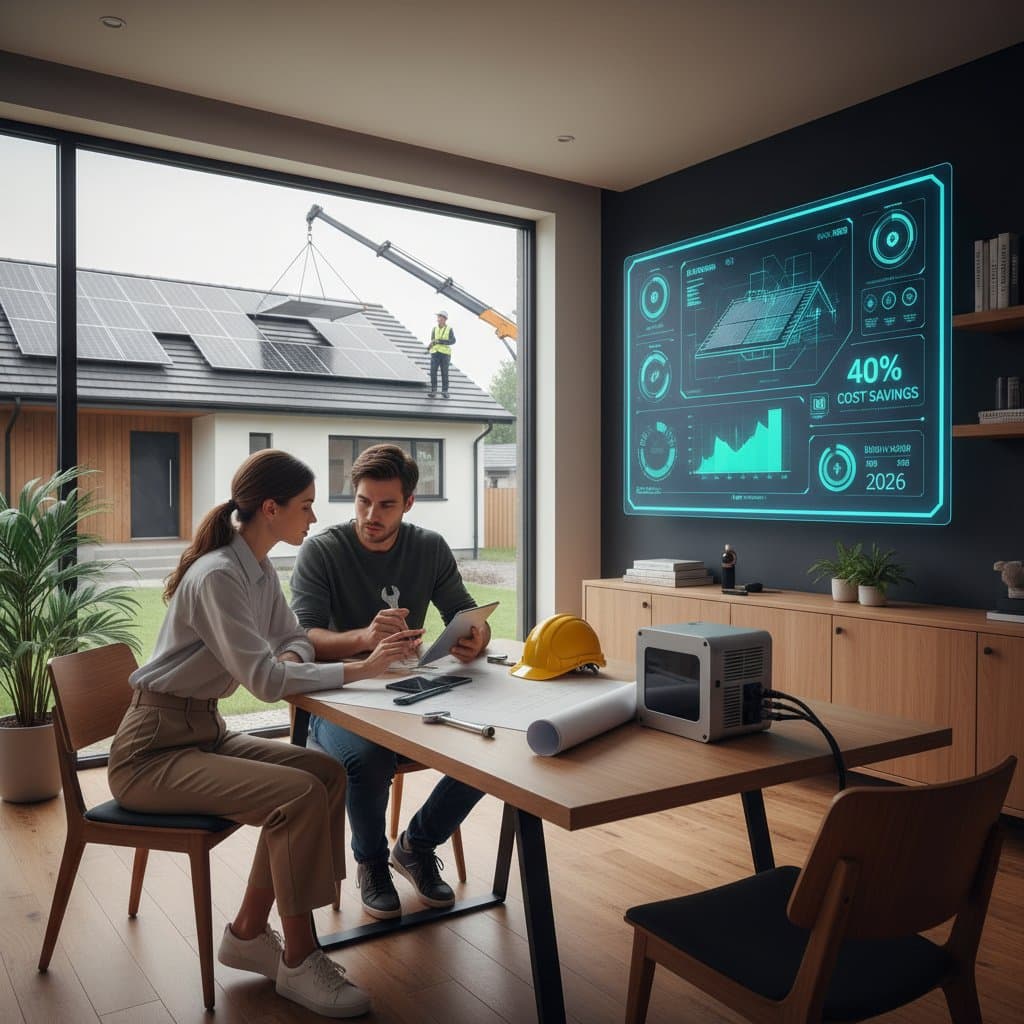
2026 Rules Unlock Legal DIY Solar Self-Installs
Homeowners have long anticipated the opportunity to install solar panels independently, combining legality with practicality. Recent regulatory updates now enable qualified individuals to perform safe, code-compliant installations on their residences. These developments open pathways for substantial savings and greater energy autonomy, all while minimizing reliance on expensive professional labor.
This evolution holds particular appeal for those who thrive on hands-on endeavors. It also equips prospective homeowners, including current renters, with essential knowledge about solar operations prior to engaging contractors. Professional services remain available, yet the framework enhances options and fosters greater transparency in the process.
Why DIY Solar Matters
Solar power delivers multiple benefits, including reduced electricity expenses, decreased carbon emissions, and bolstered energy security. In the Philadelphia region, a typical household consumes approximately 9,000 kilowatt-hours annually. A 7-kilowatt solar array, positioned on a sun-exposed roof, generates a comparable output. With utility rates at 24 cents per kilowatt-hour, such a system offsets roughly 2,160 dollars in yearly costs, excluding fixed charges.
Conventional professional setups contribute 25 to 40 percent to overall expenses. Under the revised guidelines, owners who adhere to prescribed safety protocols and inspections gain legal permission for self-installation, thereby capturing those savings. For numerous households, this accessibility accelerates the path to financial viability.
What the New DIY Rules Allow
The enhanced permitting process permits homeowners to acquire, secure, and integrate solar modules, inverters, and mounting hardware, provided specific criteria are satisfied:
- Training and certification: Participants complete a concise online or in-person program covering electrical safety, roofing practices, and fundamental code requirements.
- Design approval: An accredited engineer or licensed solar specialist reviews and approves the proposed layout prior to permitting.
- Inspection sequence: Municipal authorities examine mounting integrity, electrical connections, and grid linkage before activation.
- Insurance and liability: Coverage must align with utility standards for interconnection, safeguarding both the owner and the network.
These measures safeguard participants and infrastructure integrity. Moreover, compliant self-installed arrays remain eligible for net metering credits and various incentives.
Understanding Costs and Payback
Equipment for a standard 7-kilowatt kit ranges from 1.25 to 1.50 dollars per watt, totaling 8,750 to 10,500 dollars. Budget an additional 800 dollars for permitting and inspections, along with any necessary tools or protective equipment. Federal tax credits and state rebates can reduce net expenses to approximately 7,000 dollars.
Assuming annual savings of 2,160 dollars, the investment recoups in three to four years, assuming optimal solar exposure and reliable operation. Panels then provide cost-free power for 20 to 25 years, requiring only occasional upkeep.
Steps for a Legal DIY Solar Install
- Evaluate roof suitability. Confirm at least 15 years of remaining service life and minimal obstruction from vegetation or structures.
- Gather 12 months of utility statements. Use this data to determine appropriate system capacity based on consumption patterns.
- Enroll in required training. Obtain certification essential for authorized self-installers.
- Develop system design. Leverage supplier-provided digital calculators to project output, factoring in roof angle, orientation, and local sunlight availability.
- Submit permit application. Include comprehensive structural and electrical schematics.
- Mount racking and panels. Adhere precisely to manufacturer specifications for tension and alignment.
- Wire components and inverter. Organize conduits methodically and apply clear labels.
- Arrange inspections. Secure approvals for structural and electrical elements prior to grid integration.
- Commission and oversee performance. Employ inverter applications to monitor generation and identify potential faults promptly.
Common Barriers and How to Overcome Them
Concerns about warranty invalidation or installation errors persist for some. Leading manufacturers uphold coverage for owner-led projects that complete permitting and inspections successfully. Height-related risks in roofing can be mitigated by delegating that phase to specialists while managing electrical tasks personally; the regulations accommodate such combined strategies.
Securing funding presents another hurdle. Emerging loan products for DIY initiatives disburse payments post-inspection, offering security to financial institutions and applicants alike.
Beyond Installation: Operating and Maintaining Your System
Installed systems demand minimal intervention. Annual or biannual panel cleaning with a gentle brush and water preserves efficiency. Integrated monitoring tools notify users of inverter failures or suboptimal array yields. Inverters endure 10 to 15 years typically, whereas panels experience 0.5 percent degradation per year.
Future expansions include battery integration. A 10-kilowatt-hour unit sustains essential appliances amid power disruptions. Updated policies streamline storage additions as subsequent DIY phases.
Preparing for Your DIY Solar Journey
Initiate with a professional shade analysis or virtual evaluation tool. Compile utility records and diagram your roof configuration. Research kits from trusted vendors, ensuring UL certification for all parts. Consult your utility's interconnection department to verify net metering eligibility for your intended scale. Retain thorough records, as documented compliance enhances property appeal during sales.
These regulatory advancements empower broader participation in energy self-sufficiency. Each progression toward renewables strengthens individual and communal sustainability.