
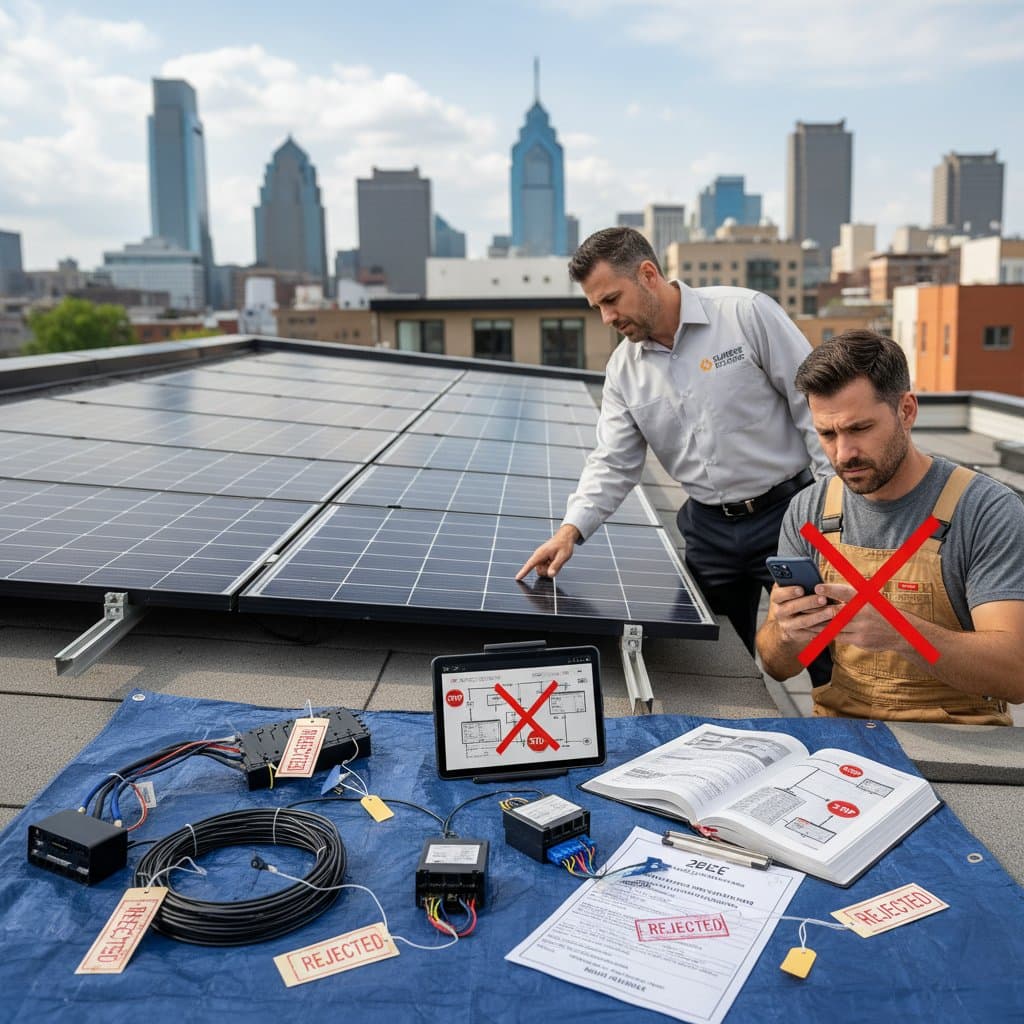
Essential 2025 DIY Solar Rules for Philadelphia Homeowners
Philadelphia homeowners increasingly pursue solar power to reduce utility bills and achieve energy independence. Do-it-yourself installations appeal for their potential cost savings and efficiency. However, recent regulatory updates impose stricter requirements on permits, codes, and inspections. Failure to comply may result in substantial fines, forced system shutdowns, or serious electrical hazards. These guidelines detail the critical steps for mounting panels, installing inverters, and integrating with the grid while adhering to local and national standards.
This resource provides a comprehensive overview of permit processes, recent code revisions, and essential safety protocols for both rooftop and ground-mounted solar arrays. It also delineates the boundaries between permissible homeowner tasks and those requiring licensed professionals.
Assess Safety and Project Scope First
Determine if your solar initiative qualifies as a homeowner-led effort before proceeding. Limited tasks on personal property remain feasible, but activities involving electrical wiring, inverter configuration, and grid connections typically necessitate professional involvement.
Engage a licensed electrician without delay if:
- Connection to the primary service panel or utility meter is required.
- The existing electrical system features aluminum wiring or cloth insulation.
- Structural assessment of the roof for panel load-bearing capacity is needed.
- Wire gauge or breaker ratings cannot be confidently identified.
- Backfeeding electricity into the home's grid-tied system is planned.
Risks such as electric shock, arc faults, and structural fires pose significant dangers. While a non-contact voltage tester verifies de-energized circuits, it does not evaluate grounding integrity or insulation effectiveness. Certified electricians possess the specialized tools and expertise to perform these validations.
Critical Updates from the National Electrical Code
The 2024 edition of the National Electrical Code, effective in Philadelphia for 2025 projects, introduces and refines provisions impacting residential solar setups. These changes prioritize firefighter safety, system reliability, and long-term durability.
Rapid Shutdown Requirements
Rooftop photovoltaic systems now mandate rapid shutdown functionality. This mechanism enables emergency responders to swiftly de-energize conductive elements. The shutdown initiator must remain readily accessible, bear permanent labeling, and limit voltage to safe thresholds along the path from solar array to inverter.
Grounding and Bonding Protocols
Solar panel frames and mounting hardware require secure bonding to the home's grounding electrode system via approved connectors. Inadequate grounding contributes to equipment corrosion, heightened shock hazards, and inverter malfunctions. Apply torque wrenches to secure connections precisely to manufacturer specifications, ensuring optimal conductivity.
Overcurrent Protection Specifications
Each string circuit extending from the photovoltaic array to the inverter demands appropriately rated overcurrent devices aligned with conductor ampacity. Fuses or breakers that are too small risk overheating, whereas oversized units compromise wire safeguarding. Calculate ratings based on module output and cable specifications to achieve balanced protection.
Labeling and Component Identification
All disconnect switches, junction boxes, and conduits housing solar conductors must feature durable, weatherproof labels. These markings should clearly indicate photovoltaic circuits and hazard warnings. Inspectors frequently reject installations due to absent or faded labeling, underscoring the need for high-quality, compliant materials.
Wiring and Enclosure Standards
Exclusively employ PV wire rated for sunlight resistance and wet environments. Conventional THHN conductors prove unsuitable for outdoor applications lacking enclosure. Route all exposed wiring through rigid or flexible conduit, or select cables with built-in ultraviolet inhibitors to prevent degradation over time.
Navigating Inspections and Testing
Philadelphia building officials conduct thorough evaluations prior to granting operational approval. Anticipate scrutiny of several installation elements, including:
- Secure attachment of mounts with proper roof flashing to prevent leaks.
- Continuity in grounding conductors verified through resistance testing.
- Accurate polarity and voltage measurements at all disconnect locations.
- Compatibility of certifications among inverters, modules, and interconnects.
- Unobstructed roof access routes for maintenance and emergencies.
Certain inspections omit internal wiring checks once surfaces are enclosed. The installer bears full accountability for concealed work quality. Maintain photographic records of all conduit installations prior to covering them to demonstrate compliance if questioned.
Selecting Compliant Solar Equipment
All components, from modules to inverters and connectors, must carry certifications from accredited bodies like UL or ETL. Non-certified or uncertified imported items invariably fail regulatory review.
Prioritize equipment displaying these standards:
- UL 1703 or UL 61730 for photovoltaic modules.
- UL 1741 for inverters and associated power conditioning devices.
- UL 2703 for mounting and racking assemblies.
Compile a dedicated project folder with datasheets, warranties, and compliance certificates. Present these documents promptly during inspector visits to expedite approvals.
Steps to Ensure Inspection Success
Schedule a minimum of two inspections: one during the rough-in phase and another upon completion. Prepare the following in advance:
- Posted copies of the approved building permit.
- Unrestricted entry to electrical panels, disconnects, and accessible roof areas.
- Revised as-built diagrams accounting for any on-site modifications.
- Documented results from voltage, insulation, and continuity tests performed by qualified personnel.
Maintain a tidy, hazard-free worksite. Inspectors require safe navigation around equipment, avoiding contact with panels or accumulation of materials.
Achieving Reliable, Code-Compliant Solar Savings
Adhering to these 2025 rules safeguards your investment and enhances home safety. Compliant installations not only pass inspections seamlessly but also preserve warranties and qualify for incentives. Consult local authorities or certified installers early to tailor your project to Philadelphia's specific ordinances. With proper planning, DIY solar efforts can deliver sustainable energy benefits for years to come.