
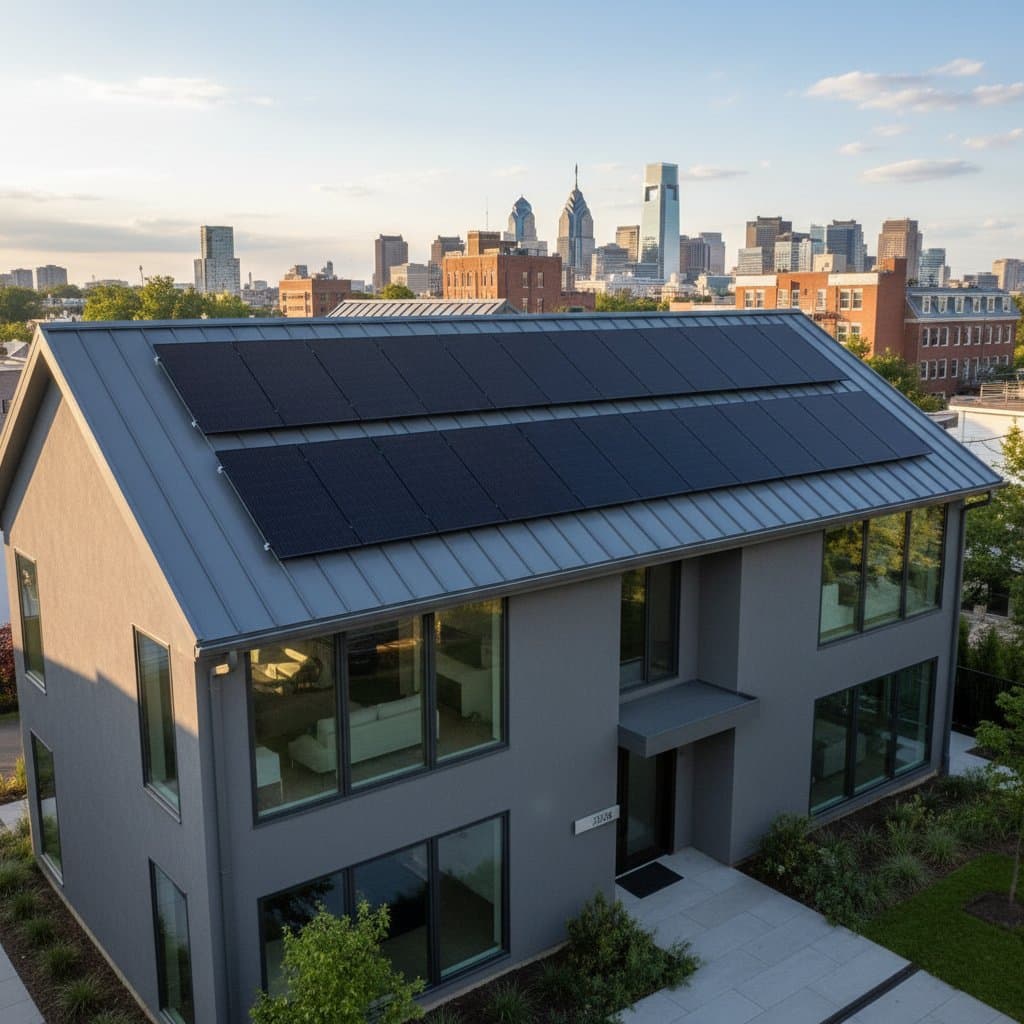
Metal Roofs Enable 50 Years of Reliable Solar Energy
Homeowners in the Philadelphia area increasingly turn to solar energy to reduce utility bills and enhance home resilience. A key consideration involves selecting the optimal roof type for solar panel installation. Although asphalt shingles remain prevalent, metal roofs emerge as the superior long-term partner for solar systems. A well-installed metal roof endures for 50 years or longer, aligning closely with the lifespan of premium solar arrays. This integration yields a robust, low-maintenance platform for clean energy generation over decades.
The Synergy Between Metal Roofs and Solar Systems
Solar systems typically produce electricity for 25 to 30 years, contingent on panel and component quality. Many conventional roofs require replacement before this period concludes, necessitating panel removal and reinstallation. Such processes incur additional expenses and potential damage risks. Metal roofs address this issue effectively. Their 50-year durability accommodates at least one complete solar lifecycle, thereby reducing interruptions, costs, and enhancing overall investment returns.
Metal roofs facilitate seamless solar attachments. Standing seam configurations employ clamps that secure to the seams without penetrating the surface, preserving the waterproof integrity. This approach simplifies subsequent maintenance. For corrugated or ribbed variants, purpose-built brackets ensure watertight seals. The inherent lightness of metal materials allows solar panels to integrate without compromising structural integrity.
Solar Energy Production on Metal Roofs
Sunlight striking a solar module activates photons within silicon cells, exciting electrons to generate electric current. This current travels through wiring to an inverter, which transforms it into alternating current suitable for household use. In the Philadelphia region, a standard 7-kilowatt system generates approximately 9,100 kilowatt-hours annually, assuming 1,300 kilowatt-hours per kilowatt installed. With utility rates averaging 24 cents per kilowatt-hour, this output offsets around 2,180 dollars in yearly electricity costs, excluding fixed fees.
Roof pitch, orientation, and shading significantly influence output. Metal roofs provide uniform slopes and smooth finishes that repel debris effortlessly. Reflective coatings on these roofs mitigate heat accumulation, enabling solar panels to maintain lower operating temperatures. Elevated temperatures reduce efficiency, with each degree increase diminishing performance marginally. Pairing reflective metal surfaces with high-efficiency solar modules can elevate actual energy yields by several percentage points relative to darker, heat-absorbent roofing options.
Financial Considerations and Return on Investment
Initial costs for metal roofs exceed those of asphalt shingles, yet their extended service life and minimal upkeep justify the premium. A quality steel or aluminum installation ranges from 10 to 14 dollars per square foot, varying by design and coating. In contrast, asphalt shingles cost 5 to 7 dollars per square foot but endure only 20 years at most. Roof replacement beneath solar panels incurs substantial labor and reinstallation charges, often thousands of dollars. Sidestepping this requirement preserves funds and simplifies ownership.
Combining solar with a metal roof influences payback timelines based on consumption patterns, system scale, and available incentives. Consider a 7-kilowatt system priced at 18,000 dollars pre-incentives; federal and state rebates substantially lower this figure. With nearly 2,000 dollars in annual savings, payback occurs within 8 to 10 years. Subsequent electricity generation incurs minimal expenses beyond routine maintenance. This setup, augmented by a durable roof, delivers compelling lifetime financial benefits.
Environmental Advantages and Indoor Comfort
Metal roofs incorporate recycled materials and prove fully recyclable upon decommissioning. Their high reflectivity surpasses that of dark shingles, countering urban heat islands in populated areas. This property decreases attic temperatures, thereby cooling interior spaces during summer months. Depending on insulation and ventilation quality, such reductions can lower air conditioning demands by 10 to 20 percent.
Solar panels mounted on metal roofs provide additional shading, further insulating the structure from direct solar heat. The combined system functions as an effective thermal barrier, promoting consistent indoor temperatures. Residences remain cooler amid heat waves and warmer during winter, fostering enhanced comfort year-round. These improvements align with reduced energy consumption and utility expenses.
Installation Process and Ongoing Maintenance
Installation commences with a comprehensive site evaluation, including roof orientation, shading analysis, and structural assessment. A detailed shade study refines production projections. Following design finalization and permit acquisition, roof and solar installations integrate efficiently, embedding mounting hardware seamlessly. Existing functional metal roofs accommodate solar additions without full replacement. For new constructions, simultaneous implementation minimizes redundant labor.
Maintenance demands remain low for both components. Periodic cleaning and inspections suffice. Natural rainfall performs most cleansing, though annual removal of leaves or debris optimizes airflow and aesthetics. Metal surfaces resist moss and algae accumulation, outperforming porous alternatives. Inverter systems and monitoring tools detect anomalies promptly, ensuring sustained performance.
Enhancing Home Resilience and Market Value
A solar-equipped metal roof promotes energy independence. Integrating batteries enables operation during grid failures, powering critical loads. A 10-kilowatt-hour battery sustains lighting, refrigeration, and communication devices for hours nightly. This capability provides reassurance amid storms or disruptions.
This configuration elevates property desirability. Prospective buyers value enduring durability and operational efficiencies. Market analyses indicate solar-integrated homes sell more rapidly and command premium prices over similar properties. Contemporary metal roofing complements diverse architectures, from historic rowhouses to modern townhomes.
Practical Steps for Philadelphia Homeowners
- Collect 12 months of utility statements to analyze consumption trends.
- Solicit a professional shade assessment to gauge solar viability.
- Obtain multiple quotes specifying identical system capacities, output forecasts, and equipment standards.
- Investigate federal, state, and local incentives to offset initial investments.
- Align timelines, particularly if replacing an aging roof, to consolidate installations.
- Verify warranties, targeting 25 years for panels and 40 to 50 years for roof coatings.
- Arrange annual visual inspections to uphold long-term efficiency.
Opting for a metal roof paired with solar panels constitutes a strategic, resilient energy upgrade. Each element bolsters the other, forging a framework resilient to evolving climates, escalating rates, and shifting needs. Such decisions advance Philadelphia toward a more sustainable energy landscape.
Frequently Asked Questions
Can solar panels install on any metal roof type?
Yes, compatibility extends to most configurations. Standing seam roofs prove simplest, as clamps secure panels without surface penetration, maintaining integrity.