
Sodium-Ion Batteries: A Viable Alternative to Lithium-Ion for Home Storage?
Homeowners who install solar panels frequently encounter a key challenge: storing generated energy affordably. Lithium-ion batteries have served as the primary solution for residential applications, yet their high costs and reliance on scarce resources prompt the search for alternatives. Sodium-ion batteries present a compelling option that enhances affordability and sustainability in home energy storage.
The Importance of This Transition
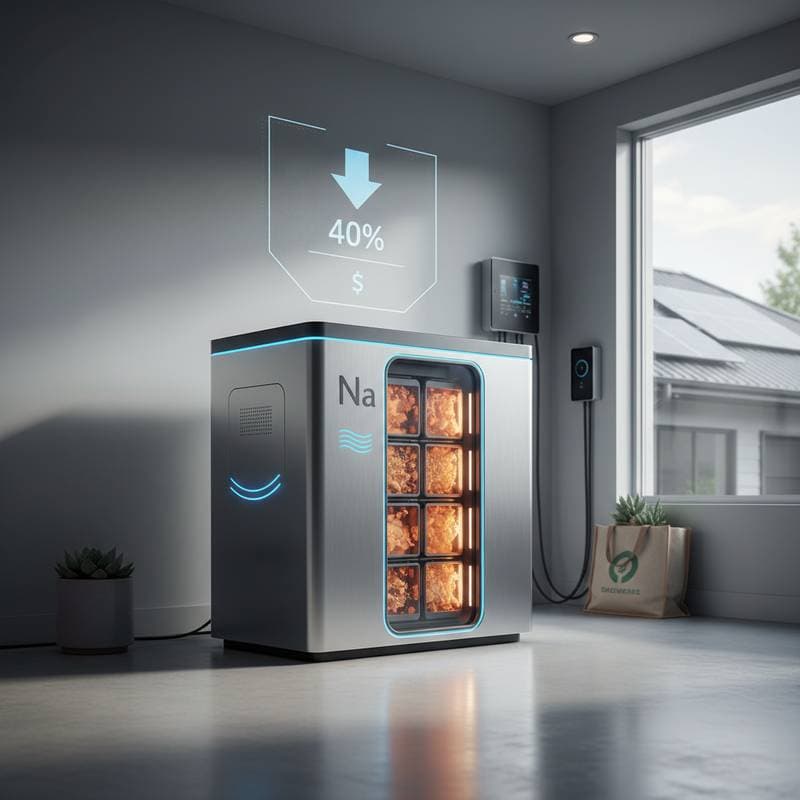
Lithium proves effective yet expensive due to mining, refining, and transportation processes, which also raise environmental issues. Sodium, derived from plentiful salt deposits and seawater, offers abundance and low cost. Adoption of sodium-ion technology has the potential to decrease battery expenses by 20 to 40 percent, varying by system scale and material composition. Such reductions render solar-plus-storage systems accessible to a broader range of households.
Energy independence, reduced utility bills, and environmentally conscious living represent common homeowner aspirations. Cost-effective storage transforms these objectives into reality. A sodium-ion battery enables families to power household appliances or electric vehicles with self-generated solar energy, even during evenings or outages.
Fundamentals of Sodium-Ion Battery Operation
Sodium-ion batteries operate on principles similar to those of lithium-ion batteries. Ions shuttle between the cathode and anode via an electrolyte during charging and discharging cycles. The primary distinction involves the use of sodium ions, which are larger than lithium ions, influencing energy density and voltage output. Consequently, sodium-ion batteries achieve marginally lower energy storage per unit weight. Researchers continue to refine electrode materials to narrow this disparity.
A standard sodium-ion cell incorporates a layered oxide or phosphate cathode, a carbon-based anode, and a liquid electrolyte with sodium salts. During charging, sodium ions migrate from the cathode to the anode. Upon discharge, they return, generating electrical current from stored energy. This chemistry eliminates the need for scarce metals such as cobalt or nickel, thereby minimizing costs and ecological footprints.
Comparing Costs and Performance
A complete lithium-ion battery installation for residential use typically ranges from 10,000 to 15,000 dollars for 10 kilowatt-hours of capacity. Prototypes of sodium-ion batteries indicate that equivalent storage could cost 7,000 to 10,000 dollars upon full-scale production. These savings stem from inexpensive raw materials and streamlined manufacturing techniques.
Energy density for sodium-ion batteries stands at approximately 120 watt-hours per kilogram, compared to 180 to 250 watt-hours per kilogram for lithium-ion counterparts. This requires a modestly larger enclosure for identical capacity. For most homeowners with garage or basement space, the size difference pales against the financial benefits.
Cycle life, defined as the number of charge-discharge cycles before significant capacity loss, appears robust in sodium-ion designs, often reaching 3,000 to 5,000 cycles—comparable to residential lithium-ion systems. These batteries also excel in temperature resilience, maintaining efficiency in extreme cold or heat, which benefits homes in varied climates.
Environmental Benefits and Safety Considerations
Sodium-ion batteries employ readily available and recyclable materials, including sodium, iron, manganese, and carbon, all of which prove non-toxic. The exclusion of lithium and cobalt mitigates supply chain vulnerabilities and ethical concerns associated with mining practices.
The inherent stability of their chemistry and reduced operating voltage lowers fire hazards. This feature reassures families concerned about safety, particularly in confined installation areas. Recycling sodium-ion components often requires fewer chemicals, simplifying end-of-life processes.
Current State of Development
Multiple companies advance sodium-ion production through pilot facilities. Initial deployments occur in small-scale grid applications and electric scooters, with residential products anticipated soon. The principal hurdle involves achieving production volumes that rival lithium-ion economies of scale. Successful scaling promises swift cost declines.
Residential offerings will likely feature modular configurations, allowing homeowners to begin with a 5 kilowatt-hour unit and expand as needed. This approach aligns with the incremental adoption preferences of many households.
Seamless Integration with Solar Installations
In a solar-equipped home, a sodium-ion battery interfaces via existing inverters and control systems. Panels charge the battery during daylight hours, with stored energy supplying the household at night or amid low sunlight. For a 7 kilowatt solar array producing 1,300 kilowatt-hours per kilowatt annually—totaling 9,100 kilowatt-hours—a 10 kilowatt-hour sodium-ion battery cycling daily could manage about 3,600 kilowatt-hours yearly. At a utility rate of 24 cents per kilowatt-hour, this yields approximately 860 dollars in annual savings. Over the system's lifespan, these offsets accelerate return on investment, augmented by applicable incentives.
Practical Steps for Homeowners
Regional variations affect costs and availability, yet proactive measures remain essential.
- Gather energy usage data. Review 12 months of electricity bills to identify consumption patterns.
- Solicit quotes for solar and storage. Inquire with installers about forthcoming sodium-ion or hybrid options.
- Research incentives. Federal and local programs frequently subsidize batteries integrated with renewables.
- Evaluate installation space. Determine suitability for a slightly larger, yet safer, battery enclosure.
- Embrace modular expansion. Initiate with a compact system and scale up as technology evolves.
Ongoing Maintenance and Future Outlook
Sodium-ion batteries demand little maintenance, akin to lithium-ion systems. Built-in software tracks voltage and temperature for optimal performance. Maintain a clean, ventilated environment, monitor manufacturer advisories, and assess system metrics annually. Proper care ensures over a decade of reliable service.
While sodium-ion batteries will not supplant lithium-ion immediately, they herald an equitable energy landscape. Their reduced costs, secure materials, and dependable supply chains position them for broad adoption. Homeowners who investigate these innovations contribute to market growth and technological progress. Begin by analyzing your energy profile, engaging reputable installers, and tracking product advancements.
Frequently Asked Questions
What makes sodium-ion batteries cheaper than lithium-ion?
Sodium-ion batteries utilize abundant, low-cost materials like sodium from salt, avoiding expensive mining for lithium, cobalt, and nickel. This results in 20 to 40 percent lower production costs at scale.
Are sodium-ion batteries safe for home use?
Yes, their stable chemistry reduces fire risks compared to lithium-ion, and they perform well in extreme temperatures, making them suitable for residential settings.
When will sodium-ion batteries be available for homes?
Pilot productions are underway, with residential systems expected within the next few years as manufacturing scales up.
How do sodium-ion batteries impact solar payback?
By lowering storage costs, they shorten the time to recoup solar investments through utility bill savings and incentives.