
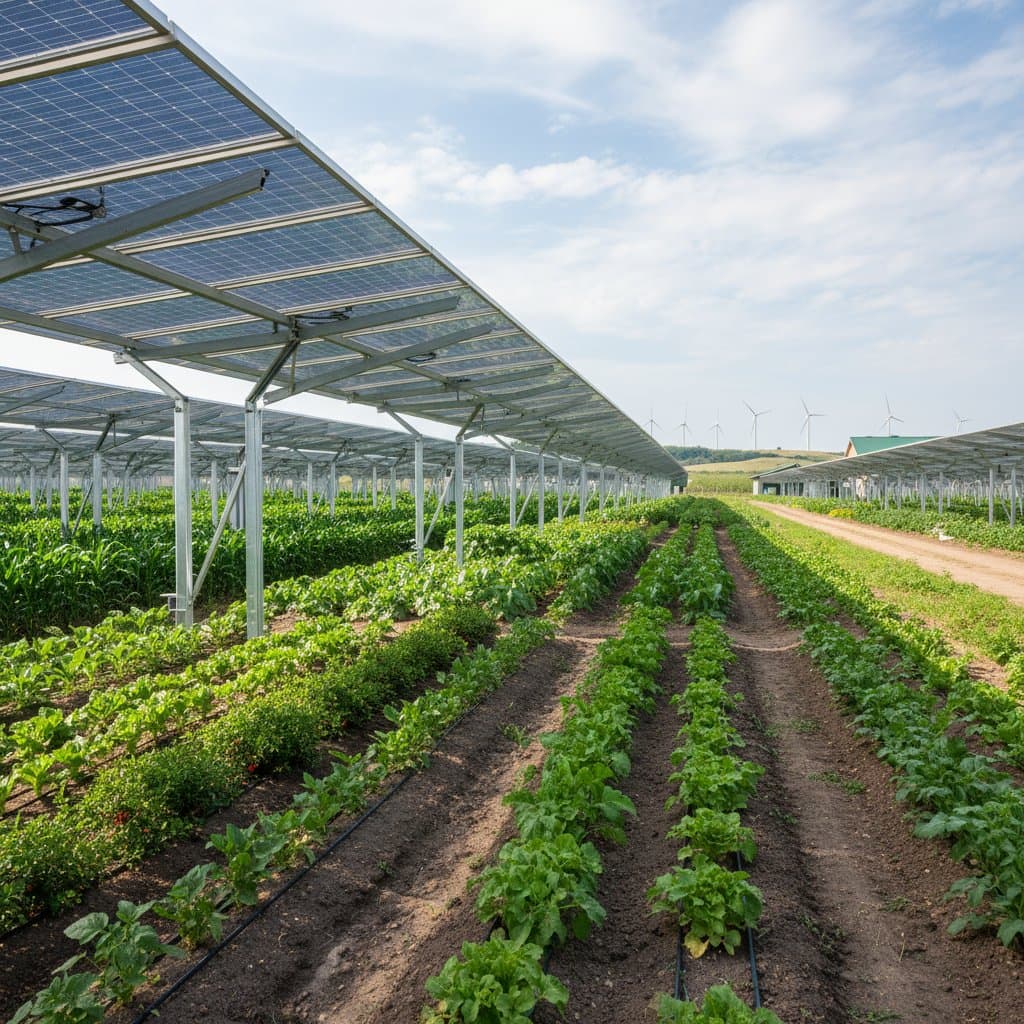
Introduction to Agrivoltaics
Agrivoltaics represents an innovative approach to land use that combines solar photovoltaic systems with agricultural production. This method positions solar panels at elevated heights above fields, enabling crops and livestock to thrive in the shaded space below. Farmers gain dual outputs: clean electricity generation and enhanced food production.
The concept addresses key challenges in modern agriculture, such as land scarcity and climate variability. By optimizing shared resources, agrivoltaics promotes resilience against extreme weather while reducing reliance on fossil fuels. Early adopters report yield increases of up to 20 percent for certain crops due to moderated microclimatespanels.
Projections indicate widespread adoption by 2026, driven by technological advancements and supportive policies. This integration not only sustains food security but also accelerates the transition to renewable energy sources.
Economic and Environmental Benefits
Agrivoltaic systems offer compelling financial returns alongside environmental gains. For a typical mid-sized farm, crop revenue can increase by approximately 50,000 dollars annually through improved yields and reduced water needs. Electricity generated from the panels adds significant value, often exceeding 312,000 dollars per year based on current market rates.
The combined payback period ranges from four to six years, influenced by financing options and available incentives. Over the system's lifespan, which typically surpasses 25 years, owners realize substantial net gains. Environmentally, these setups conserve water by up to 30 percent through shade-induced reductions in evaporation and enhance soil health by minimizing erosion.
Many regions provide funding for dual-use solar initiatives, including grants for pilot projects. Agricultural agencies support these efforts with resources for research plots and upgrades to irrigation systems. Such backing ensures long-term viability and broadens access for diverse farm sizes.
Design Choices and Crop Compatibility
Effective agrivoltaic designs prioritize flexibility to accommodate various farm operations. Key elements include panel height, row spacing, and orientation, all tailored to balance light distribution and equipment access. Tracking systems that follow the sun can further optimize energy capture without overly restricting under-panel agriculture.
Crops selected for agrivoltaic sites must tolerate partial shade while maximizing space efficiency.
Suitable crop categories include:
- Vegetables: Species such as lettuce, spinach, peppers, and tomatoes adapt well to dappled light, often showing faster growth rates and higher quality in shaded conditions.
- Fruit and berries: Strawberries and blueberries prosper with protection from intense midday sun, which reduces heat stress and preserves fruit integrity.
- Forage and pasture: Grasses and clovers support grazing for sheep or goats, providing nutritious feed while utilizing the vertical space effectively.
- Pollinator habitats: Wildflower mixtures attract bees and other pollinators, which in turn boost yields across adjacent fields by improving pollination services.
Farmers adjust planting configurations to align with solar infrastructure. For instance, interspersing shade-tolerant and sun-loving crops between panel rows maximizes productivity. Pre-installation planning incorporates irrigation conduits and machinery pathways to prevent operational disruptions.
Strategies for Implementation
Agrivoltaics integrates seamlessly into broader sustainability practices for homes and properties of all scales. Participants can select approaches based on their resources and goals, starting small to build expertise.
High-impact strategies:
- Collaborate with community solar developers to install panels on existing farmland, sharing revenue from energy sales.
- Deploy a compact agrivoltaic array on homesteads or greenhouses to power operations while cultivating high-value crops.
- Integrate solar canopies with precision drip irrigation to enhance water use efficiency and crop health.
Medium-impact strategies:
- Introduce shade-adapted plants beneath current solar carports or parking structures to create micro-farms.
- Utilize movable solar frames for rotational vegetable gardens, allowing seasonal adjustments.
- Join community-supported agriculture programs that incorporate solar-generated power for farm activities.
Accessible entry points:
- Research local zoning regulations regarding dual-use solar installations to identify feasible options.
- Perform site-specific assessments of shade patterns and soil moisture levels using simple tools.
- Tour operational agrivoltaic sites in the vicinity to observe real-world layouts, crop performance, and maintenance routines.
These progressive steps foster practical knowledge and encourage wider adoption. As visibility grows, agrivoltaics gains momentum in both rural expanses and suburban settings.
Guidance for Prospective Implementers
Landowners interested in agrivoltaics should begin with a thorough site evaluation. Assess terrain slope, soil composition, water availability, and current crop rotations to determine suitability. Analyze a complete year's utility statements to gauge potential energy savings and offset opportunities.
Engage multiple solar specialists with agricultural expertise for proposals. Ensure each quote employs consistent parameters, such as panel capacity and projected output, to enable accurate comparisons.
Essential preparation steps:
- Commission a detailed shade analysis and soil assessment from qualified professionals.
- Evaluate competing solar bids, focusing on realistic energy production forecasts.
- Verify eligibility for regional incentives and grid interconnection protocols.
- Discuss crop selection and management with an agricultural extension specialist.
- Outline ongoing maintenance protocols and ensure clear access for equipment.
These measures instill assurance and align the project with integrated energy and agricultural objectives. Principles of agrivoltaics scale effectively to smaller operations, including community gardens in urban fringes.
Realizing Dual Gains in Food and Energy
Adopting agrivoltaics yields multifaceted advantages that extend beyond individual farms. Communities benefit from localized clean energy, reduced transmission losses, and preserved open spaces. Farmers secure diversified income streams, buffering against market fluctuations in either sector.
Environmental contributions include lower carbon emissions and biodiversity support through habitat creation. As systems mature, they demonstrate scalable solutions for global food-energy challenges. Landowners who embrace this model position themselves at the forefront of resilient, forward-thinking land stewardship.
Frequently Asked Questions
What defines agrivoltaics?
The term describes the simultaneous practice of agricultural activities and solar electricity generation on the same parcel of land, yielding benefits for both food production and power supply.
In what ways does it differ from traditional solar farms?
Agrivoltaic configurations elevate panels and widen spacing to permit farming or grazing underneath, whereas conventional solar farms allocate land solely to energy production without agricultural integration.
Which crops perform optimally beneath solar panels?
Leafy greens, berry varieties, and forage grasses excel in these environments, as they leverage reduced sunlight intensity to decrease evaporation and mitigate heat-related stresses.