
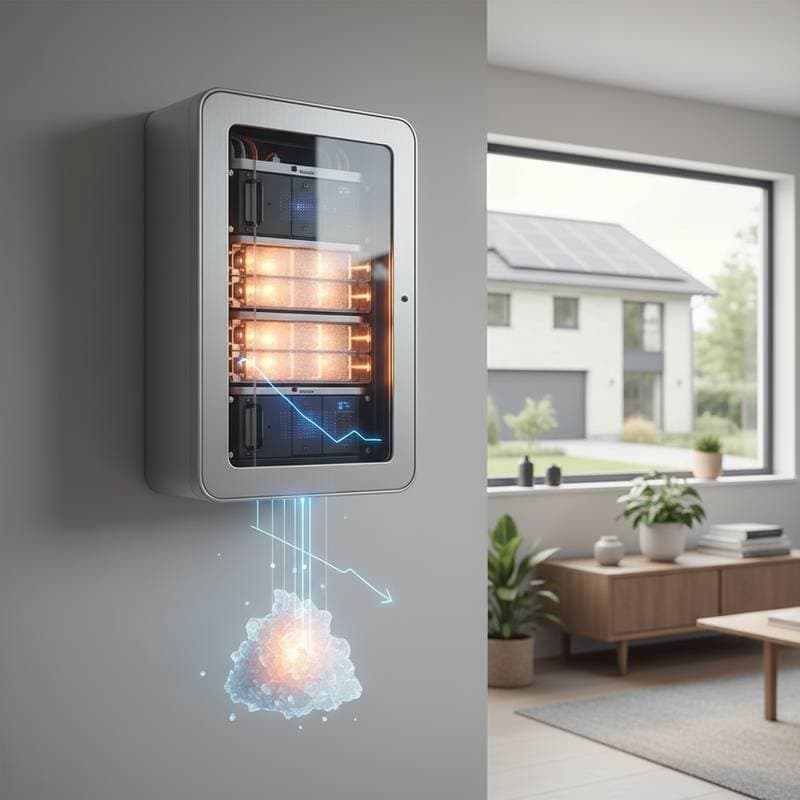
Sodium Ion Batteries Offer Lower Cost Home Storage
Homeowners seeking reliable solar storage have relied on lithium ion batteries for years. These systems deliver solid performance yet carry high prices tied to scarce materials. Sodium ion batteries now move from laboratories into commercial production. They use abundant salt based materials to lower costs while maintaining practical performance for stationary use.
Core Advantages of Sodium Technology
Sodium ion cells replace lithium with common sodium ions in the electrolyte. The anode uses hard carbon instead of graphite, and the cathode relies on layered oxides or Prussian blue compounds. These substitutions reduce material expenses and eliminate dependence on limited mining regions. Supply chains become more stable and less vulnerable to price swings.
Energy density falls 20 to 30 percent below lithium ion levels. For home installations the larger cabinet size presents a minor inconvenience compared with thousands of dollars in savings. Homeowners gain a practical trade off that favors stationary applications over mobile ones.
Cost and Payback Analysis
A typical 10 kilowatt hour lithium ion system costs about 11,000 dollars installed. Sodium ion equivalents target 7,000 dollars for the same capacity. At an electricity rate of 24 cents per kilowatt hour, shifting 3,000 kilowatt hours from the grid each year saves roughly 720 dollars. Payback drops from approximately 15 years to 10 years under these conditions.
Early sodium ion units achieve more than 3,000 full cycles before capacity falls to 80 percent. This performance supports eight to ten years of daily residential cycling. Wider temperature tolerance reduces cooling requirements and simplifies placement near electrical panels.
Supply Chain and Environmental Benefits
Sodium extraction from seawater or salt deposits avoids heavy water use and difficult labor conditions associated with lithium and cobalt mining. Recycling occurs at lower temperatures with non toxic components. Manufacturers and homeowners both benefit from simpler end of life processing.
Practical Installation Steps
Mount the unit on a wall or floor near the main panel and connect it through an existing inverter. Standard home sizes range from 5 to 15 kilowatt hours. Stack multiple units for larger properties. Most models support common monitoring apps and communication protocols already used with lithium systems.
Check local utility interconnection rules and confirm national safety certifications before purchase. Warranties of five to ten years now cover both product and performance. Incentives such as tax credits and peak demand payments apply equally to sodium ion and lithium ion equipment.
Daily Operation and Upkeep
Keep the enclosure dry and ventilated. Review the monitoring app monthly to track charge patterns and capacity trends. Annual inspections focus on dust removal and connection tightness. Thermal stability reduces fire risk compared with lithium chemistries.
Recommended Home Energy Actions
Pair sodium storage with heat pump systems to shift heating and cooling loads onto stored solar power. Schedule major appliances during periods of full battery charge. Add a critical load panel to maintain essential circuits during outages.
Begin with a portable sodium pack to test the technology on a small scale. Monitor household usage patterns with a smart meter to determine optimal battery size. Compare detailed quotes from multiple installers that model both chemistries under identical assumptions.
Moving Toward Energy Independence
Sodium ion storage lowers the financial barrier to solar self sufficiency. Homeowners obtain meaningful independence from grid price spikes without relying on scarce minerals. Early planning and careful system sizing position households to capture these benefits as production scales.